Taxes and financial planning are essential aspects of a sound financial strategy, offering multiple opportunities to save money and boost future wealth. Whether you are a high-income earner or a small business owner, understanding how taxes fit into your financial decision-making is crucial. Here’s a quick overview of key considerations:
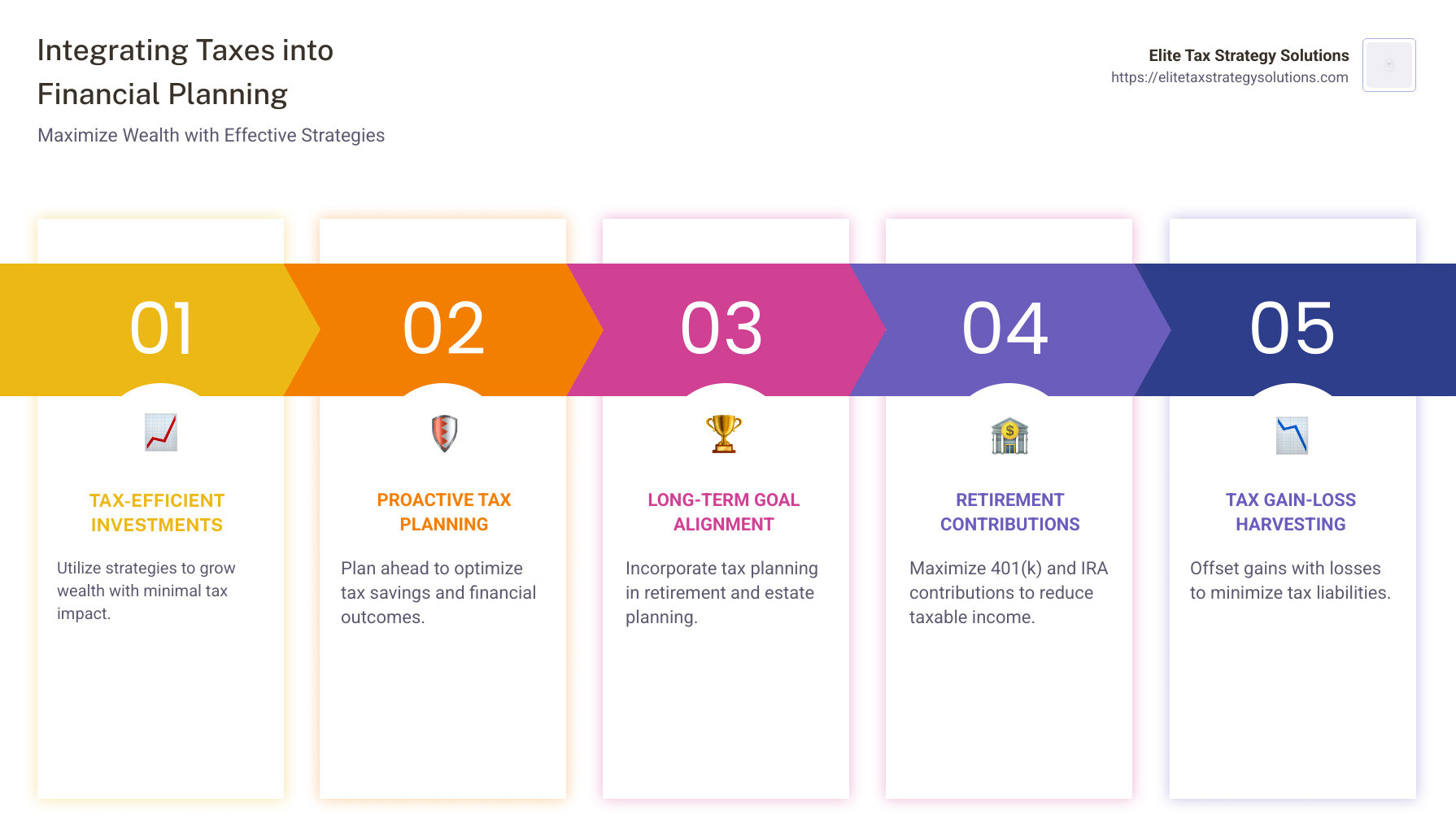
- Proactively plan for tax savings to optimize your financial outcomes.
- Use tax-efficient investment strategies to grow wealth over time.
- Incorporate tax planning with long-term financial goals—think retirement or estate planning.
I’m David Fritch, and I’ve spent the last four decades mastering the intricacies of both law and tax management. As the owner of Elite Tax Strategy Solutions, I’ve helped numerous clients integrate taxes and financial planning into their wealth-building strategies effectively.
Quick taxes and financial planning definitions:
– benefits of tax planning
– high net worth tax strategies
– proactive tax planning opportunities
Understanding Tax Planning
When it comes to tax planning, the goal is simple: pay the least amount of taxes legally possible. Achieving this involves understanding a few key concepts like tax efficiency, income timing, and expenditure planning. Let’s break these down.
Tax Efficiency
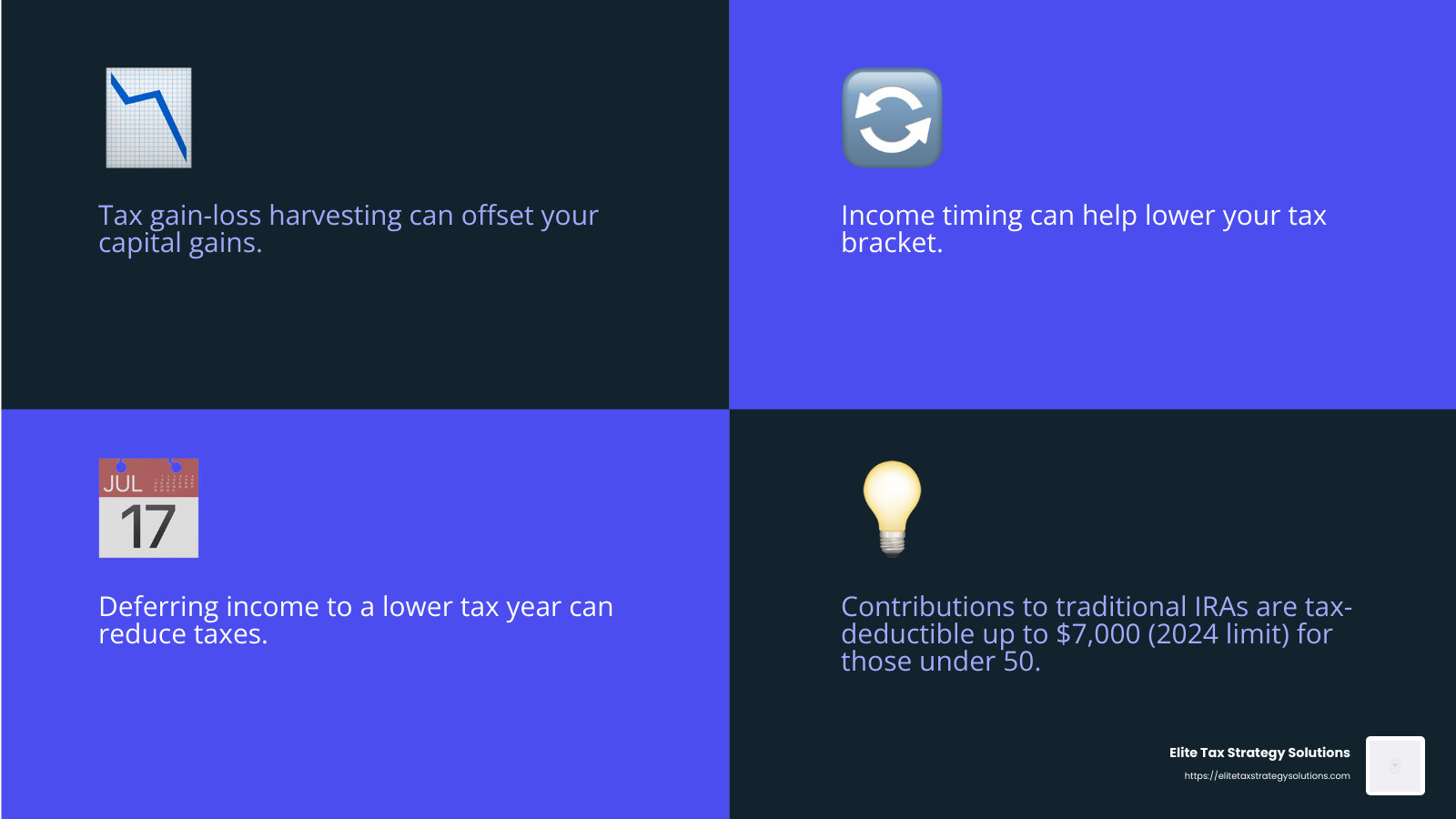
Tax efficiency is all about minimizing your tax liability. This means structuring your finances in a way that reduces the amount of taxes you owe. For instance, investing in a traditional IRA can lower your taxable income, as contributions are tax-deductible up to certain limits. In 2024, you can contribute up to $7,000 if you’re under 50, and an additional $1,000 if you’re older.
Another strategy is tax gain-loss harvesting. This involves selling investments at a loss to offset any capital gains you’ve made. By doing this, you can reduce your overall taxable income.
Income Timing
Timing is everything, especially when it comes to income. By carefully planning when you receive income, you can manage your tax bracket and potentially pay less in taxes. For example, if you expect to be in a lower tax bracket next year, you might defer certain income to take advantage of the lower rate.
Expenditure Planning
Expenditure planning is about organizing your expenses to maximize tax deductions. This can involve “bunching” itemized deductions into a single year to surpass the standard deduction threshold. For example, if your medical expenses are close to the 7.5% AGI threshold, you might delay or accelerate certain expenses to optimize your deductions.
Consider the story of Jane, a small business owner in Jasper, Indiana. By bunching her charitable donations and medical expenses into one year, she was able to itemize her deductions and significantly lower her taxable income. This is a clear example of how strategic expenditure planning can lead to substantial tax savings.

Understanding these elements of tax planning can help you create a more tax-efficient financial strategy. Whether you’re saving for retirement or planning for future investments, integrating these concepts can make a significant difference in your financial well-being.
Taxes and Financial Planning
Taxes play a crucial role in your overall financial strategy. Let’s explore how understanding tax liability, making retirement contributions, and practicing tax-efficient investing can work together to improve your financial health.
Tax Liability
Your tax liability is essentially the total amount of tax you owe to the government. Managing this effectively is key to keeping more money in your pocket. One way to reduce tax liability is through strategic use of deductions and credits. For instance, by itemizing deductions like medical expenses or charitable contributions, you can lower your taxable income. Remember Jane from Jasper, Indiana? By bunching her deductions, she managed to significantly reduce her tax bill.
Retirement Contributions
Contributing to retirement accounts is not just about saving for the future; it’s also a powerful tax strategy. For example, contributing to a 401(k) or a traditional IRA can lower your current taxable income. In 2024, you can contribute up to $23,000 to a 401(k), which reduces your adjusted gross income and, consequently, your tax liability. The money in your retirement account grows tax-deferred, meaning you won’t pay taxes on it until you withdraw it in retirement, ideally when you’re in a lower tax bracket.
Tax-Efficient Investing
Investing with taxes in mind can greatly improve your returns. Tax-efficient investing involves placing investments in the right accounts to minimize taxes. For instance, holding tax-inefficient investments like bonds in a tax-advantaged account, such as a Roth IRA, can shield you from unnecessary taxes. Additionally, strategies like tax-loss harvesting allow you to offset capital gains by selling investments at a loss, which can be a smart move in a volatile market.
By understanding and integrating these elements—tax liability, retirement contributions, and tax-efficient investing—you can create a robust financial plan that not only prepares you for the future but also minimizes your tax burden today.
Next, we’ll dive into specific tax planning strategies that can further optimize your financial strategy.
Tax Planning Strategies
When it comes to tax planning strategies, three key approaches can help you keep more of your hard-earned money: income deferral, tax gain-loss harvesting, and Roth conversions.
Income Deferral
Income deferral is a tactic that involves postponing the receipt of income to a later tax year. This can be particularly useful if you expect to be in a lower tax bracket in the future. For example, if you receive a year-end bonus, you might defer it to the next year to avoid pushing yourself into a higher tax bracket this year. This strategy can also apply to retirement savings. By contributing to a 401(k) or a traditional IRA, you defer taxes on that income until you withdraw it in retirement.
Tax Gain-Loss Harvesting
Tax gain-loss harvesting is a technique used to offset capital gains with capital losses. Here’s how it works: if you have investments that have lost value, you can sell them to realize the loss. This loss can then be used to offset any gains you’ve made from other investments, reducing your overall tax bill. According to the IRS, long-term losses must offset long-term gains first, and any remaining loss can offset short-term gains. This strategy can be particularly beneficial in a volatile market, allowing savvy investors to turn market downturns to their advantage.
Roth Conversions
A Roth conversion involves moving funds from a traditional IRA to a Roth IRA. While you’ll pay taxes on the converted amount now, the benefit is that your money grows tax-free, and you won’t owe taxes on withdrawals in retirement. This strategy can be advantageous if you expect to be in a higher tax bracket in the future. However, analyze your current tax situation to determine if a Roth conversion makes sense for you. Consider consulting a tax professional to weigh the benefits against the immediate tax impact.
By employing these tax planning strategies, you can effectively manage your tax liability and improve your financial strategy. Next, we’ll explore how tax-efficient retirement saving can further bolster your financial health.
Tax-Efficient Retirement Saving
When planning for retirement, understanding tax-efficient retirement saving can make a big difference. Here, we’ll look at three important aspects: 401(k) contributions, IRA contributions, and Required Minimum Distributions (RMDs).
401(k) Contributions
A 401(k) is a popular retirement savings plan offered by many employers. You contribute pre-tax dollars, which means you don’t pay taxes on the money until you withdraw it in retirement. This lowers your taxable income now and helps you save more for the future. For 2025, you can contribute up to $23,500, or $30,500 if you’re 50 or older, thanks to catch-up contributions. The combined employee/employer contribution can’t exceed $70,000, or $77,500 with catch-up. This makes a 401(k) a powerful tool for reducing your tax liability while boosting your retirement savings.
IRA Contributions
An Individual Retirement Account (IRA) offers another way to save for retirement. There are two main types: Traditional and Roth. With a Traditional IRA, contributions are often tax-deductible, and you pay taxes on withdrawals in retirement. In contrast, Roth IRA contributions are made with after-tax dollars, but withdrawals are tax-free. For 2025, individuals can contribute up to $7,000, or $8,000 if they’re 50 or older. It’s wise to consider your current and future tax situation when deciding between a Traditional and Roth IRA.
Required Minimum Distributions (RMDs)
Once you reach age 72, the IRS requires you to start taking RMDs from your Traditional IRA and 401(k) plans. These distributions are taxed as ordinary income. If you don’t take your RMDs, you could face a hefty penalty—50% of the amount not withdrawn. To manage your tax liability, it might be beneficial to start taking distributions earlier or consider a Roth conversion. This way, you can spread out the tax burden and potentially lower your overall tax rate in retirement.
By understanding these elements of tax-efficient retirement saving, you can make informed decisions that align with your financial goals. Next, we’ll address some common questions about how taxes fit into your financial strategy.
Frequently Asked Questions about Taxes and Financial Planning
How do taxes influence financial planning?
Taxes are a crucial part of financial planning. They can impact how much money you save and how you spend it. By understanding tax rules, you can make choices that reduce your tax liability and maximize your savings. For instance, contributing to retirement accounts like a 401(k) or IRA can lower your taxable income, giving your retirement savings a boost.
Example: If you earn $75,000 a year and contribute $7,000 to a Traditional IRA, your taxable income drops to $68,000. This not only reduces your current tax bill but also helps grow your retirement nest egg tax-deferred.
Does a financial planner help with taxes?
Yes, a financial planner can be a valuable ally in managing your taxes. They help you prepare and file tax returns, but their role goes beyond that. They focus on tax-minimization strategies that align with your overall financial goals. This might include timing your income, planning expenditures, or choosing tax-efficient investments.
Quote: “A financial planner doesn’t just prepare your taxes; they help you plan for them,” says a financial advisor from Covenant Wealth.
What is the difference between tax planning and financial planning?
Tax planning focuses specifically on minimizing your tax bill. It includes strategies like deferring income, tax gain-loss harvesting, and choosing the right retirement accounts. The goal is to pay the least amount of taxes possible.
Financial planning, on the other hand, looks at your entire financial picture. It includes budgeting, saving, investing, and planning for future goals like buying a home or retiring comfortably. While tax planning is a part of financial planning, the latter is more comprehensive.
Comparison Table:
| Aspect | Tax Planning | Financial Planning |
|---|---|---|
| Focus | Minimizing taxes | Overall financial health |
| Includes | Tax returns, deductions, credits | Budgeting, investing, retirement |
| Goal | Reduce tax liability | Improve financial position |
By integrating taxes and financial planning, you can ensure that every part of your financial strategy works together effectively. This holistic approach helps you achieve financial stability and reach your long-term goals.
Conclusion
At Elite Tax Strategy Solutions, we understand that proactive tax planning is not just about saving on taxes today. It’s about building a solid foundation for your financial future. Our approach is designed to help high earners and closely held businesses steer the complexities of tax regulations while ensuring financial stability.
By focusing on personalized strategies, we help our clients minimize tax liabilities and align their tax plans with their broader financial goals. This includes everything from optimizing retirement contributions to implementing tax-efficient investing strategies. Our clients benefit from a comprehensive view of their finances, allowing them to make informed decisions that support their long-term objectives.
Proactive tax planning is more than a yearly task—it’s a continuous process. By staying informed about tax law changes and adjusting strategies accordingly, you can maximize your financial well-being. Our team of experts is here to guide you every step of the way, ensuring that your tax strategy evolves with your financial needs.
Incorporating taxes into your financial planning is crucial for achieving lasting financial success. Let us help you create a robust tax strategy that complements your financial goals. Visit our Innovative Tax Planning page to learn more about how we can assist you in securing your financial future.