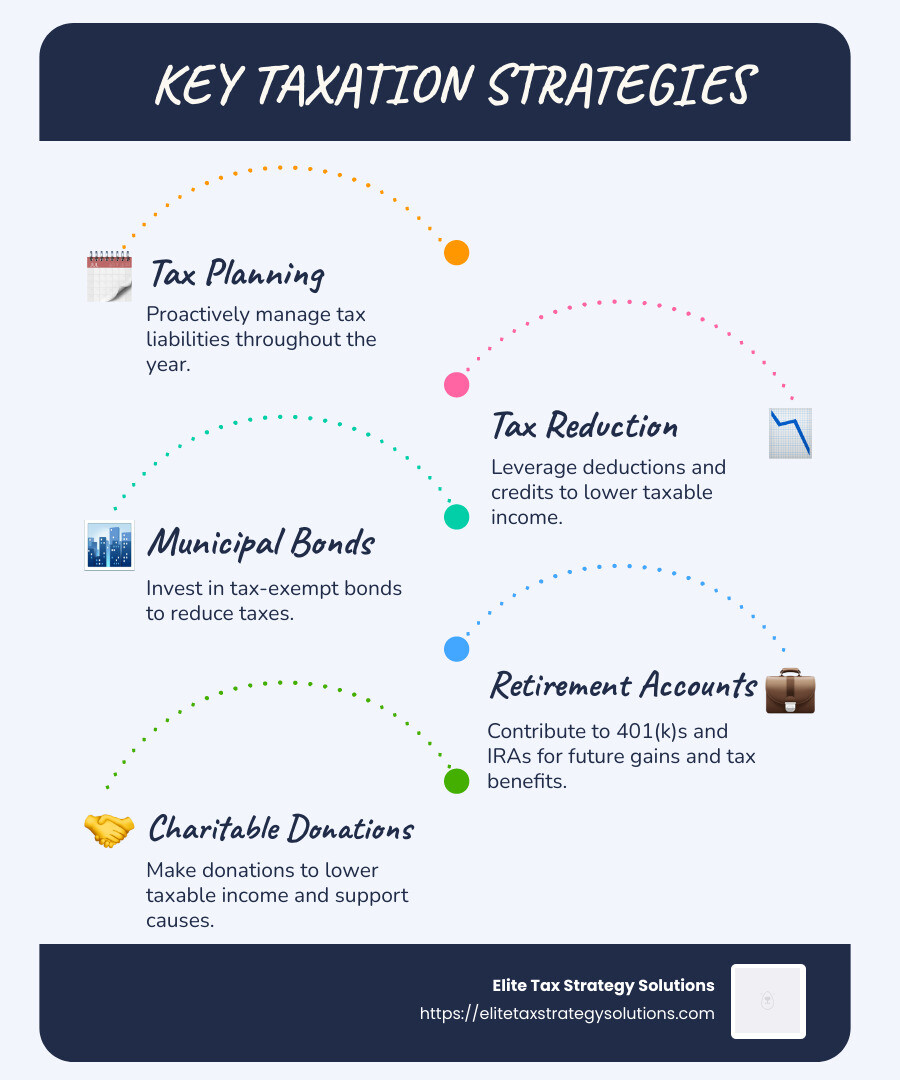
Taxation strategies are essential tools that can help maximize your earnings, reduce taxable income, and achieve financial stability. Whether you’re a high-income earner or a small business owner, understanding and implementing effective tax strategies can provide significant benefits. Key approaches include:
- Tax Planning: A proactive approach to managing tax liabilities throughout the year.
- Tax Reduction: Utilizing deductions and credits to lower the taxable amount legally.
With these strategies, individuals and businesses can optimize their finances and ensure compliance with evolving tax regulations.
My name is David Fritch, and with over 40 years of experience in tax planning and consulting, I specialize in providing strategic solutions for high-income earners and small business owners. At Elite Tax Strategy Solutions, I focus on personalized taxation strategies to help clients successfully steer complex tax landscapes. Now, let’s dive deeper into understanding these strategies to maximize your financial outcomes.
Simple guide to taxation strategies terms:
– benefits of tax planning
– business tax savings strategies
– proactive tax
Understanding Taxation Strategies
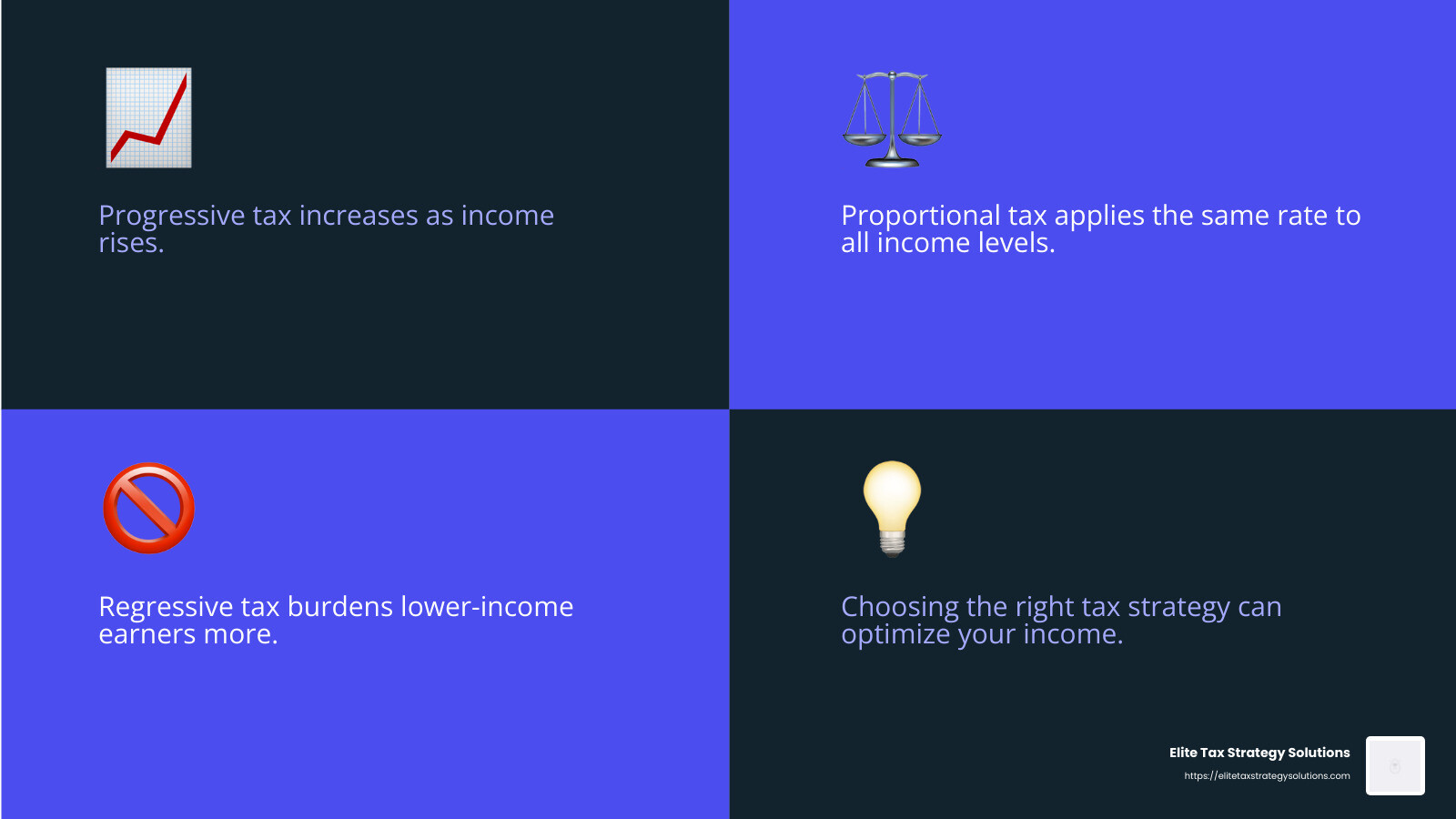
When it comes to taxation strategies, it’s important to grasp the different types of tax systems that can affect your financial planning. Let’s break down the three primary forms of taxation: progressive, proportional, and regressive taxes.
Progressive Tax
A progressive tax system means that as your income increases, the rate at which you are taxed also increases. This system is designed to ensure that higher-income earners pay a larger percentage of their income in taxes compared to lower-income earners. The U.S. federal income tax is an example of a progressive tax system. Here’s how it works:
- Low Income: Pay a lower tax rate.
- High Income: Pay a higher tax rate.
This system aims to reduce income inequality by taxing individuals based on their ability to pay.
Proportional Tax
A proportional tax, also known as a flat tax, levies the same tax rate on everyone, regardless of income level. This means that whether you earn $30,000 or $300,000, you pay the same percentage of your income in taxes.
- Example: If the tax rate is 10%, someone earning $30,000 pays $3,000, and someone earning $300,000 pays $30,000.
Proportional taxes are often seen as simpler and more predictable, but they don’t adjust for income inequality like progressive taxes do.
Regressive Tax
In a regressive tax system, lower-income individuals pay a higher percentage of their income compared to higher-income earners. Sales taxes are a common example of regressive taxes. Since everyone pays the same amount on purchases, those with lower incomes spend a larger portion of their earnings on these taxes.
- Impact: Disproportionately affects those with less income.
This system can place a heavier burden on those who are less financially capable, making it crucial to consider when planning your taxation strategies.
Understanding these tax systems is key to crafting effective taxation strategies that align with your financial goals. By knowing how each system impacts your income, you can better steer the tax landscape and make informed decisions to optimize your financial outcomes.
Next, we’ll explore the top taxation strategies for individuals, focusing on ways to minimize tax liabilities and maximize savings through investments and accounts.
Top Taxation Strategies for Individuals
Navigating the tax landscape can be daunting, but with the right taxation strategies, you can minimize your tax liabilities and maximize your savings. Let’s explore some of the top strategies for individuals:
1. Invest in Municipal Bonds
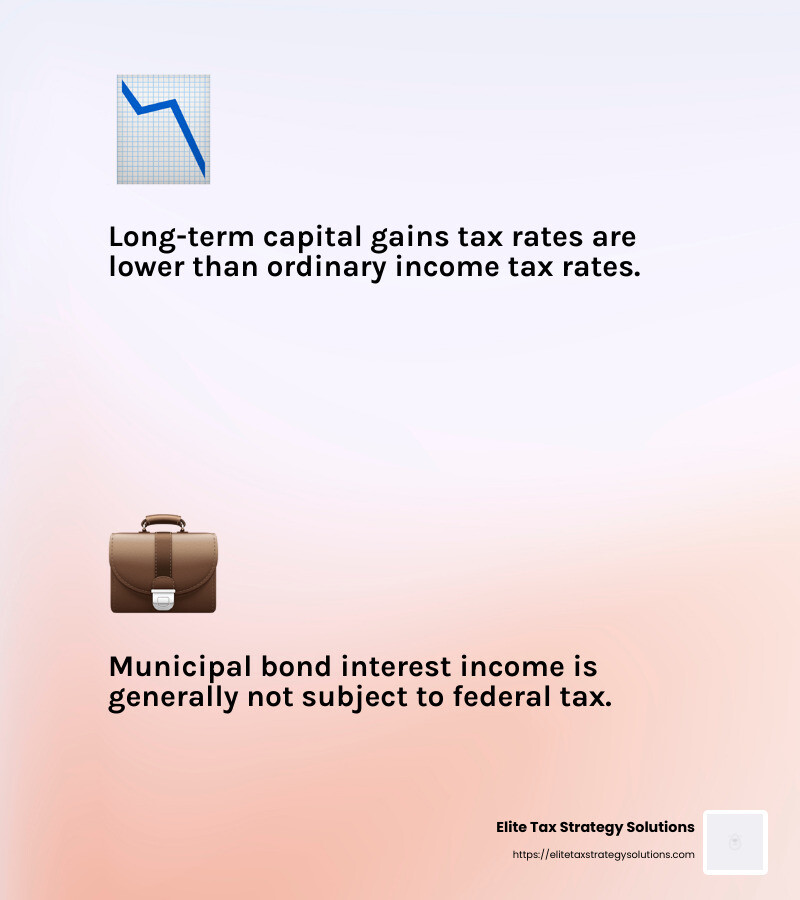
Municipal bonds, or “munis,” are a smart investment if you’re looking to save on taxes. These bonds are issued by local governments to fund public projects like roads and schools. The best part? The interest earned is generally not subject to federal income tax.
- Local Advantage: If you live where the bond is issued, you might avoid state and local taxes too.
- Safety Net: Historically, municipal bonds have lower default rates than corporate bonds, making them a safer investment choice.
2. Aim for Long-Term Capital Gains
Investing in assets like stocks and real estate can be a great way to grow wealth. Holding these assets for over a year qualifies them for long-term capital gains tax rates, which are lower than ordinary income tax rates.
- Tax Rates: Depending on your income, these rates can be 0%, 15%, or 20%.
- Tax-Loss Harvesting: If you sell at a loss, you can offset gains and reduce your taxable income. This strategy isn’t useful in retirement accounts like a 401(k) or IRA.
3. Maximize Retirement Accounts
Contributing to retirement accounts such as a 401(k) or IRA can offer significant tax advantages.
- Pre-Tax Contributions: Reduce your taxable income now and defer taxes until withdrawal.
- Roth IRA: Pay taxes upfront and enjoy tax-free withdrawals in retirement.
4. Use a Health Savings Account (HSA)
An HSA is a triple-tax-advantaged account that can be a powerful tool for saving on healthcare expenses.
- Contributions: Made with pre-tax dollars, reducing your taxable income.
- Growth: Funds grow tax-free.
- Withdrawals: Tax-free if used for qualified medical expenses.
5. Claim Tax Credits
Tax credits directly reduce the amount of tax you owe, making them more valuable than deductions.
- Popular Credits: Earned Income Tax Credit (EITC), Child Tax Credit, and education credits.
- Eligibility: Varies based on income, family size, and other factors.
By leveraging these taxation strategies, individuals can effectively reduce their tax burdens and improve their financial well-being. Next, we’ll dig into strategies specifically custom for high-income earners, including charitable donations and estate planning.
Taxation Strategies for High-Income Earners
High-income earners face unique challenges and opportunities when it comes to taxes. Here’s how you can make the most of taxation strategies to keep more of your hard-earned money:
1. Charitable Donations
Giving to charity is not only a noble act but also a smart tax strategy. By donating to qualified charities, you can reduce your taxable income.
- Beyond Cash: Consider donating appreciated assets like stocks or real estate. This way, you can avoid capital gains taxes and still deduct the full market value.
- Bunching Donations: Combine several years’ worth of donations into one year to surpass the standard deduction threshold and maximize your deductions.
2. Tax-Loss Harvesting
Offsetting capital gains with losses is a clever way to reduce your tax liability.
- Year-End Strategy: Sell underperforming investments to realize losses that can offset gains elsewhere in your portfolio.
- Avoid the Wash-Sale Rule: Don’t repurchase the same or a similar security within 30 days to ensure your losses are deductible.
3. Estate Planning
Effective estate planning can minimize taxes on your wealth transfer.
- Gifts: Give up to $18,000 per person per year without affecting your lifetime estate tax exemption.
- Trusts and Life Insurance: Use these tools to manage estate taxes and provide liquidity for heirs.
4. Roth IRA Conversion
Converting a traditional IRA to a Roth IRA can be beneficial, especially if you expect to be in a higher tax bracket in the future.
- Pay Now, Save Later: Pay taxes on the conversion now, and enjoy tax-free withdrawals in retirement.
- Offset with Donations: Consider making a large charitable donation in the conversion year to offset the increased taxable income.
By employing these taxation strategies, high-income earners can effectively manage their tax liabilities and secure their financial future. Next, we’ll explore strategies custom for businesses, including starting a business and home office deductions.
Taxation Strategies for Businesses
Running a business comes with its own set of taxation strategies that can help reduce your tax burden and increase profitability. Here are some key strategies to consider:
Start a Business
Starting a business can open up numerous tax advantages. Many expenses related to running your business can be deducted, lowering your overall taxable income.
- Deductible Expenses: These can include office supplies, travel, and even part of your home expenses if you qualify for the home office deduction.
- Profit Intent: To claim these deductions, you must intend to make a profit. The IRS generally expects to see a profit in at least three of every five years.
Home Office Deduction
If you use part of your home exclusively for business, you might qualify for a home office deduction. This can include a portion of your rent or mortgage, utilities, and internet costs.
- Strict Requirements: The IRS has specific guidelines, so ensure you meet them to qualify for this deduction.
- Simplified Option: There’s a simplified method where you can deduct $5 per square foot, up to 300 square feet of your home office space.
Employee Benefits
Offering employee benefits is not only good for business morale but can also provide tax advantages.
- Fringe Benefits: Contributions to retirement plans, health insurance, and flexible spending accounts can lower taxable income for both you and your employees.
- Non-Taxable Benefits: Benefits like group term life insurance (up to $50,000) and transportation reimbursements can be excluded from employee income.
SECURE Act
The Setting Every Community Up for Retirement Improvement (SECURE) Act provides incentives for businesses to offer retirement plans.
- Multiple-Employer Plans: Businesses can join together to offer retirement plans, reducing costs and administrative burdens.
- Increased RMD Age: The act increased the age for required minimum distributions, allowing for more tax-deferred growth.
By leveraging these taxation strategies, businesses can optimize their tax positions and improve their financial health. Next, we’ll dive into some frequently asked questions about taxation strategies to clear up any lingering doubts.
Frequently Asked Questions about Taxation Strategies
What are the 3 forms of taxation?
Taxes come in three main forms: progressive, proportional, and regressive.
-
Progressive Tax: This means the more you earn, the higher your tax rate. It’s like climbing a ladder. As your income increases, you move up to higher rungs with higher rates. The U.S. federal income tax is an example of this.
-
Proportional Tax: Also known as a flat tax, this tax is the same percentage for everyone, no matter how much you earn. Imagine everyone paying the same slice of the pie, regardless of the pie’s size.
-
Regressive Tax: This type of tax takes a larger percentage from lower-income earners. Sales taxes are often considered regressive because they take a bigger chunk of income from those who earn less.
What is the meaning of tax strategy?
A tax strategy is a plan to reduce taxes and increase savings. It involves long-term objectives and financial considerations. Think of it as plotting a course on a map. You want to reach your destination—financial stability—by using the best routes and avoiding roadblocks like high tax rates.
-
Long-term Objectives: These are your financial goals, like saving for retirement or buying a home. A good tax strategy aligns with these goals.
-
Financial Considerations: This means looking at your entire financial picture. Consider income, expenses, investments, and future plans.
What are the 5 D’s of tax planning?
The 5 D’s are events that can impact your taxes: death, disability, divorce, disagreement, and distress.
-
Death: When someone passes away, their estate may face taxes. Proper planning can minimize this burden for heirs.
-
Disability: If you become disabled, your income and tax situation might change. Planning ahead can provide financial stability.
-
Divorce: Divorce can affect your tax filing status, exemptions, and deductions. It’s important to understand these changes.
-
Disagreement: This refers to disputes, such as with business partners or family, that can have tax implications. Resolving disagreements can prevent financial strain.
-
Distress: Financial distress, like losing a job, impacts your taxes. Strategies like using savings or adjusting withholdings can help manage this.
Understanding these forms, meanings, and events can help you steer the complex world of taxation strategies. Next, we’ll explore how these strategies can be applied to achieve financial stability.
Conclusion
At Elite Tax Strategy Solutions, we believe that proactive tax planning is key to achieving long-term financial stability. Our approach is all about being ahead of the game, not just reacting to tax deadlines or last-minute changes.
Proactive Tax Planning means looking at your financial picture throughout the year, not just at tax time. By regularly reviewing your income, expenses, and investments, we can help you make informed decisions that align with your financial goals. This includes maximizing deductions, utilizing credits, and strategically timing income and expenses.
Our expertise is in crafting personalized tax strategies for high earners and closely held businesses. We understand the unique challenges you face, and we tailor our strategies to fit your specific needs. Whether it’s through charitable donations, tax-loss harvesting, or estate planning, we aim to minimize your tax liabilities while maximizing your savings.
Financial stability isn’t just about paying less in taxes today; it’s about planning for your future. We integrate tax planning with broader financial goals, like retirement savings and wealth transfer, to ensure that you’re on a solid path forward.
For more detailed strategies and to learn how we can help you steer the complex world of taxes, visit our Innovative Tax Planning page. Let’s work together to secure your financial future.