Tax planning for consultants is a vital part of managing your financial future. As a consultant, you gain flexibility and independence, but with this freedom comes the responsibility of handling your own taxes. To stay ahead, ensure compliance and minimize your tax liabilities, consider these quick tips:
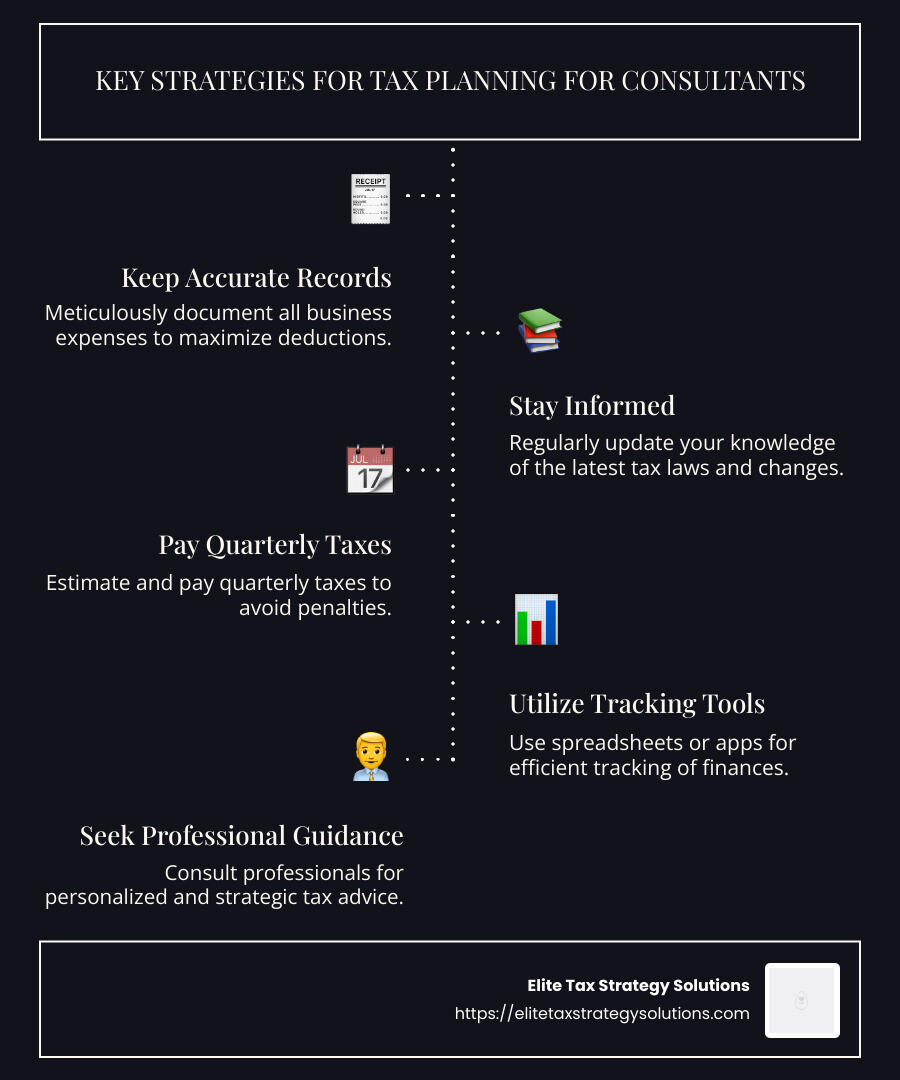
- Keep meticulous records of all business expenses for deductions.
- Regularly update your knowledge of tax laws and changes.
- Estimate and pay quarterly taxes on time to avoid penalties.
- Use resources like spreadsheets or apps for tracking finances.
- Seek professional guidance for personalized tax strategies.
Tax planning is not just about compliance; it’s about strategically maximizing your income and reaching your long-term financial goals. Elite Tax Strategy Solutions is here to help consultants like you steer the complex world of taxes. We specialize in offering custom tax-saving strategies to align with your unique financial situation, ensuring you optimize your tax position for maximum benefit.
My name is David Fritch, and I have over 40 years of experience in tax planning and consulting. I’ve dedicated my career to helping professionals like yourself optimize their taxes and achieve financial stability. Let’s dive deeper into the intricacies of tax planning for consultants and explore strategies that can significantly improve your financial well-being.
Tax planning for consultants terms you need:
– tax planning for freelancers
– business tax planning strategies
– advanced tax planning strategies
Understanding Consultant Taxes
As a consultant, understanding how taxes work is crucial. Unlike traditional employees, consultants are self-employed. This means you’re responsible for your own taxes, including self-employment tax, income tax, and contributions to Social Security and Medicare.
Self-Employment Tax
Self-employment tax covers Social Security and Medicare. Since you don’t have an employer to split these costs with, you pay the full amount. This tax is 15.3% of 92.35% of your net earnings. It’s essential to account for this when planning your finances.
Income Tax and Tax Brackets
Your income tax is based on tax brackets, which determine the rate at which your income is taxed. For example, if you earn $100,000 as a consultant, your income will fall into various brackets, with only a portion taxed at the highest rate. Understanding these brackets helps in estimating your tax liability.
Social Security and Medicare
Social Security tax is applicable up to a certain income limit ($168,600 for 2024). However, all your earnings are subject to the Medicare self-employment tax. This means you need to plan for these contributions as part of your overall tax strategy.
Key Takeaways
- Self-employment tax: Covers Social Security and Medicare, calculated at 15.3% of 92.35% of net earnings.
- Income tax: Based on tax brackets; only a portion of your income is taxed at the highest rate.
- Social Security and Medicare: Contributions are mandatory, with Social Security capped annually.
By understanding these components, you can better plan your taxes and avoid surprises. Tax planning for consultants is not just about compliance; it’s about optimizing your financial position. Elite Tax Strategy Solutions is here to guide you through this process, ensuring you make informed decisions and maximize your tax benefits.
Key Tax Deductions for Consultants
As a consultant, maximizing your tax deductions is key to reducing your tax bill. This means keeping track of all your business expenses and understanding which ones you can deduct. Let’s explore some of the most common deductions available for consultants.
Business Expenses
Consultants often incur a range of business expenses that are deductible. These include:
- Office Supplies: Items like paper, pens, and printer ink are deductible.
- Software Subscriptions: Tools like Google Drive, Adobe Creative Suite, and Microsoft Office are considered business expenses.
- Utilities and Internet: If you pay for internet services or utilities specifically for your business, these costs are deductible.
Home Office Deduction
If you work from home, you might qualify for a home office deduction. To claim this, you need a dedicated space in your home that you use exclusively for business. You can deduct a portion of your rent or mortgage, utilities, and home insurance based on the size of your office relative to your home.
Travel Expenses
Traveling for client meetings or industry conferences? You can deduct:
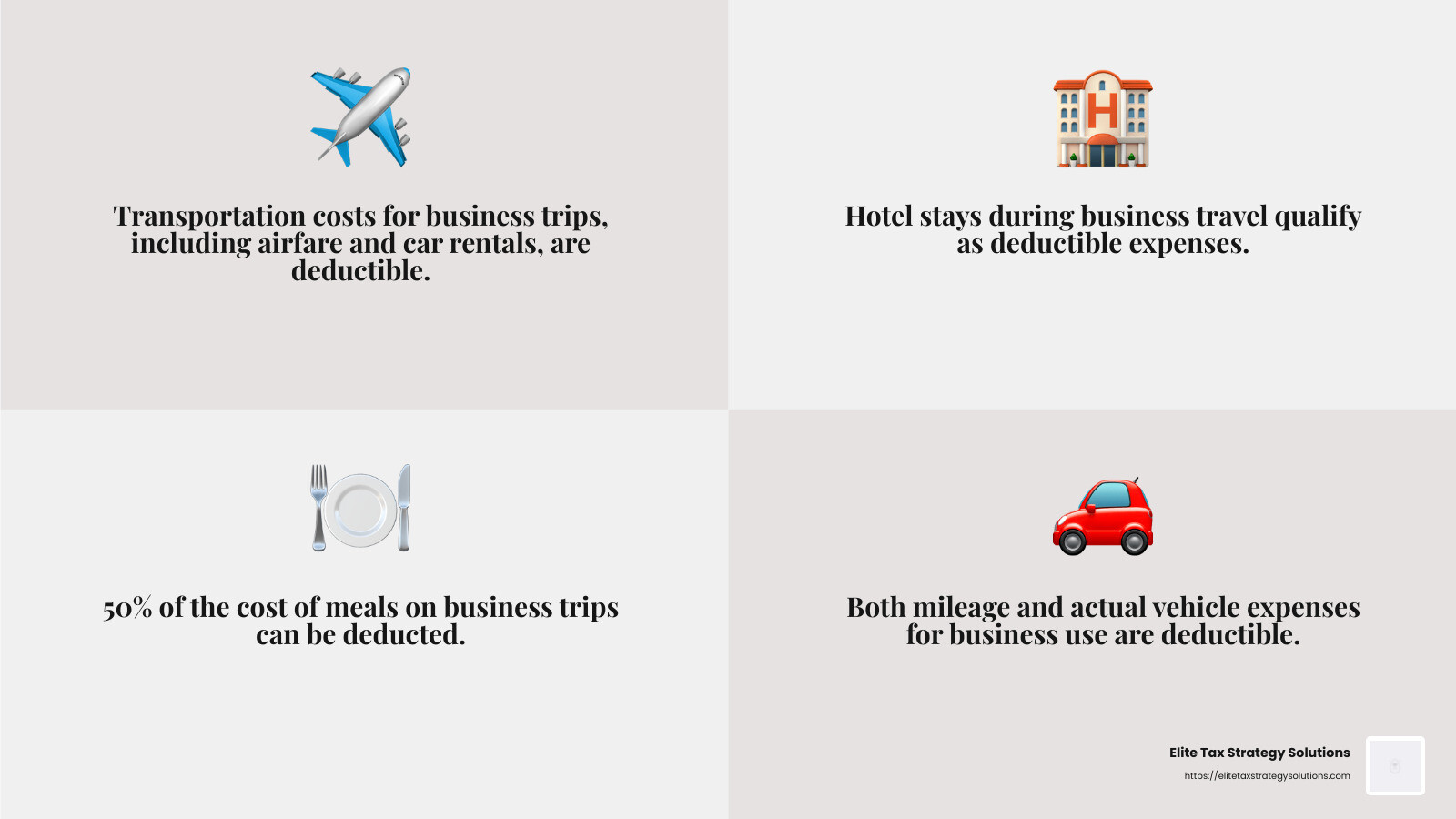
- Transportation Costs: This includes airfare, train tickets, or car rentals.
- Lodging: Hotel stays during business trips are deductible.
- Meals: You can deduct 50% of the cost of meals when traveling for work.

Professional Services
Fees paid to attorneys, accountants, or other professionals for business-related services are deductible. This includes costs for tax preparation, legal advice, or consulting services.
Marketing Costs
Promoting your consulting business can also lead to deductions. This includes:
- Website Costs: Expenses for web hosting, domain registration, and website design.
- Advertising: Costs for online ads, brochures, and business cards.
Health Insurance
If you’re self-employed, you can deduct 100% of your health insurance premiums. This includes premiums for medical, dental, and long-term care insurance for yourself, your spouse, and dependents.
Vehicle Expenses
If you use your car for business purposes, you can deduct:
- Mileage: Track your business miles and use the standard mileage rate to calculate your deduction.
- Actual Expenses: This includes gas, repairs, and insurance, but you must keep detailed records.
Being aware of these deductions can significantly impact your tax liability. By keeping meticulous records and understanding what you can deduct, you ensure that you’re not leaving money on the table. Elite Tax Strategy Solutions is here to help you steer these deductions and optimize your tax situation.
Let’s move on to explore strategies for minimizing your taxes.
Strategies to Minimize Taxes
When it comes to tax planning for consultants, knowing how to minimize your taxes can make a huge difference in your financial health. Let’s explore some strategies that can help you keep more of your hard-earned money.
Qualified Business Income (QBI) Deduction
The QBI deduction allows eligible consultants to deduct up to 20% of their qualified business income. This deduction is available to those operating as sole proprietors, partnerships, or S corporations. It’s a significant benefit, but there are specific income thresholds and limitations, so consulting a tax professional is wise to maximize this deduction.
Retirement Contributions
Saving for retirement is not only smart for your future but also beneficial for your taxes. Contributions to retirement plans like a SEP IRA or a Solo 401(k) are tax-deductible. These plans allow you to save a substantial amount while reducing your taxable income. For instance, a Solo 401(k) lets you contribute both as an employer and an employee, potentially maximizing your savings.
Charitable Donations
Donating to charities is a noble act, and it can also provide tax benefits. You can deduct contributions made to qualified organizations, which reduces your taxable income. Remember to keep receipts and records of your donations to ensure they qualify as itemized deductions.
Itemized Deductions
Itemizing deductions can be beneficial if they exceed the standard deduction. This includes expenses like mortgage interest, state and local taxes, and certain medical expenses. By itemizing, you can potentially lower your taxable income more than by taking the standard deduction.
Brokerage Transactions
If you invest in stocks or other securities, consider tax implications. Strategies like tax-loss harvesting can offset gains with losses, reducing your taxable income. Consult with a financial advisor to explore these options and ensure you’re making the most of your investments.
Employer Benefits
If you have employees or work with contractors, offering benefits can also provide tax advantages. Contributions to employee health insurance, retirement plans, and other benefits may be deductible. This not only helps your team but can also reduce your overall tax burden.
By implementing these strategies, you can significantly minimize your tax liability. Each consultant’s situation is unique, so tailor these strategies to fit your specific needs. Elite Tax Strategy Solutions can guide you in creating a customized plan that aligns with your financial goals.
Next, we will discuss the importance of record-keeping and documentation to ensure you’re fully prepared for tax season.
Tax Planning for Consultants
Effective tax planning for consultants is crucial to managing your finances and staying compliant with tax laws. Let’s explore some key aspects that can help you optimize your tax situation.
Forecasting Tax Payments
As a consultant, estimate your taxes accurately. This involves predicting your annual income, expenses, and deductions. By doing so, you can make informed decisions about how much to set aside for taxes. Alan Salus, a CPA, emphasizes the importance of not leaving business expenses “on the table.” Keeping track of all deductible expenses can significantly reduce your taxable income.
Customized Tax Plans
Every consultant’s financial situation is unique, which is why a one-size-fits-all approach doesn’t work. Creating a customized tax plan custom to your specific needs can help you maximize deductions and credits. This involves understanding your income streams, expenses, and potential deductions. Working with a tax professional can ensure that your plan is both effective and compliant with current tax laws.
Tax Optimization
Tax optimization involves using strategies to reduce your tax liability legally. This can include taking advantage of deductions, credits, and retirement contributions. For example, contributing to a Solo 401(k) not only helps you save for retirement but also reduces your taxable income. Additionally, utilizing the Qualified Business Income (QBI) deduction can offer significant tax savings.
Compliance
Staying compliant with tax regulations is non-negotiable. This means filing taxes on time, making accurate quarterly payments, and keeping detailed records of your financial activities. Sherman Standberry, a licensed CPA, advises subscribing to newsletters from reputable tax sites or the IRS to stay updated on changes that might affect your tax situation.
By focusing on these elements, you can effectively manage your taxes and keep more of your hard-earned money. Elite Tax Strategy Solutions can assist you in developing a robust tax plan that aligns with your financial goals.
Next, we’ll dive into the importance of record-keeping and documentation to ensure you’re fully prepared for tax season.
Record Keeping and Documentation
Keeping accurate records is like having a roadmap for your tax journey. As a consultant, it’s crucial to maintain detailed records of your income and expenses. This not only ensures compliance but also helps you take full advantage of deductions and credits.
Importance of Record Keeping
Good record keeping is your best defense against potential audits. It provides a clear picture of your financial activities and supports the deductions you claim. Dana Ronald, CEO of Tax Crisis Institute, highlights that consultants often overlook the importance of meticulous records, which can lead to missed deductions and increased tax liabilities.
Tracking Income and Expenses
Tracking your income and expenses is simpler than it sounds. Start by categorizing your expenses into business-related categories like travel, office supplies, and marketing. This organization makes it easier to identify deductible expenses. Consider using a separate bank account for your business transactions to keep personal and business finances distinct.
Using Software Tools
Manual logs are becoming a thing of the past. Automated systems, like BQE CORE, can help you track and manage your finances efficiently. These tools often come with features that allow you to import bank transactions, categorize expenses, and even forecast tax liabilities. They simplify the process, making it easier to stay organized and compliant.
Hiring Professionals
While software tools are helpful, nothing beats the expertise of a professional. A qualified CPA or tax advisor can provide insights custom to your specific situation. They ensure that you’re not only compliant but also optimizing your tax strategy to save money. Alan Salus suggests that consultants should seek professional help to steer complex tax scenarios and maximize tax savings.
By focusing on effective record keeping and leveraging technology and professional expertise, you can streamline your tax process and reduce stress during tax season. Next, we’ll address frequently asked questions about tax planning for consultants to further clarify any lingering doubts you might have.
Frequently Asked Questions about Tax Planning for Consultants
How are consultants taxed?
Consultants, often working as independent contractors, face a unique tax situation. Unlike traditional employees, they must handle both self-employment tax and income tax. Self-employment tax is crucial because it covers Social Security and Medicare contributions, which are typically split with an employer. For consultants, this means paying the full 15.3% on net earnings.
In addition to self-employment tax, consultants pay income tax based on their total earnings. These taxes are calculated using tax brackets, which vary depending on the total income and filing status. It’s important to understand your tax bracket to estimate your tax liability accurately.
How to minimize taxes as a consultant?
Minimizing taxes involves strategic planning and taking advantage of available deductions. Here are some key strategies:
-
Deductions: Consultants can reduce taxable income by claiming deductions for business expenses such as home office costs, travel, and professional services. Keeping detailed records is essential to support these deductions.
-
Qualified Business Income (QBI) Deduction: This allows eligible consultants to deduct up to 20% of their qualified business income, potentially lowering their taxable income significantly.
-
Retirement Contributions: Contributing to retirement accounts like a SEP IRA or Solo 401(k) not only prepares you for the future but also provides immediate tax benefits.
-
Charitable Donations: Donating to qualified charities can reduce your taxable income. Be sure to keep receipts and documentation for all charitable contributions.
What tax form do consultants get?
Consultants typically receive 1099 forms instead of W-2 forms. The 1099-MISC or 1099-NEC forms report income earned from clients who paid them $600 or more during the tax year. Unlike W-2 forms, which detail taxes withheld by an employer, 1099 forms do not withhold taxes, leaving it to the consultant to manage their tax obligations.
Understanding these forms and how they impact your taxes is essential for accurate tax filing. If you’re unsure about your forms or tax situation, consulting with a tax professional can provide clarity and ensure compliance.
In the next section, we’ll tie everything together and emphasize the importance of proactive tax planning for consultants, helping you steer the complexities of tax season with confidence.
Conclusion
In consulting, taxes can be a daunting maze. But with proactive tax planning, you can steer this maze with ease and confidence. Being ahead of the game means not only understanding your tax obligations but also knowing how to minimize them effectively.
A well-rounded tax strategy starts with awareness. Knowing what deductions you qualify for, such as business expenses, travel costs, and home office deductions, is crucial. These deductions can significantly reduce your taxable income, lowering your tax bill.
But tax planning is more than just deductions. It’s about forecasting tax payments, optimizing your tax situation, and ensuring compliance with ever-changing tax laws. This requires a personalized approach, something that we at Elite Tax Strategy Solutions specialize in. Our custom tax planning services help high earners and closely held businesses maximize savings and ensure financial stability.
Tax laws are not static. They change frequently, and staying informed is key. By subscribing to reputable tax newsletters or consulting with tax professionals, you can keep abreast of these changes and adjust your strategies accordingly.
At Elite Tax Strategy Solutions, our proactive approach to tax optimization and compliance ensures that you are not just filing taxes, but strategically planning for them. This not only helps you save money but also gives you peace of mind.
For more information on how we can help you with tax planning for consultants, visit our Innovative Tax Planning page. Let us help you transform your tax strategy into a powerful tool for financial success.