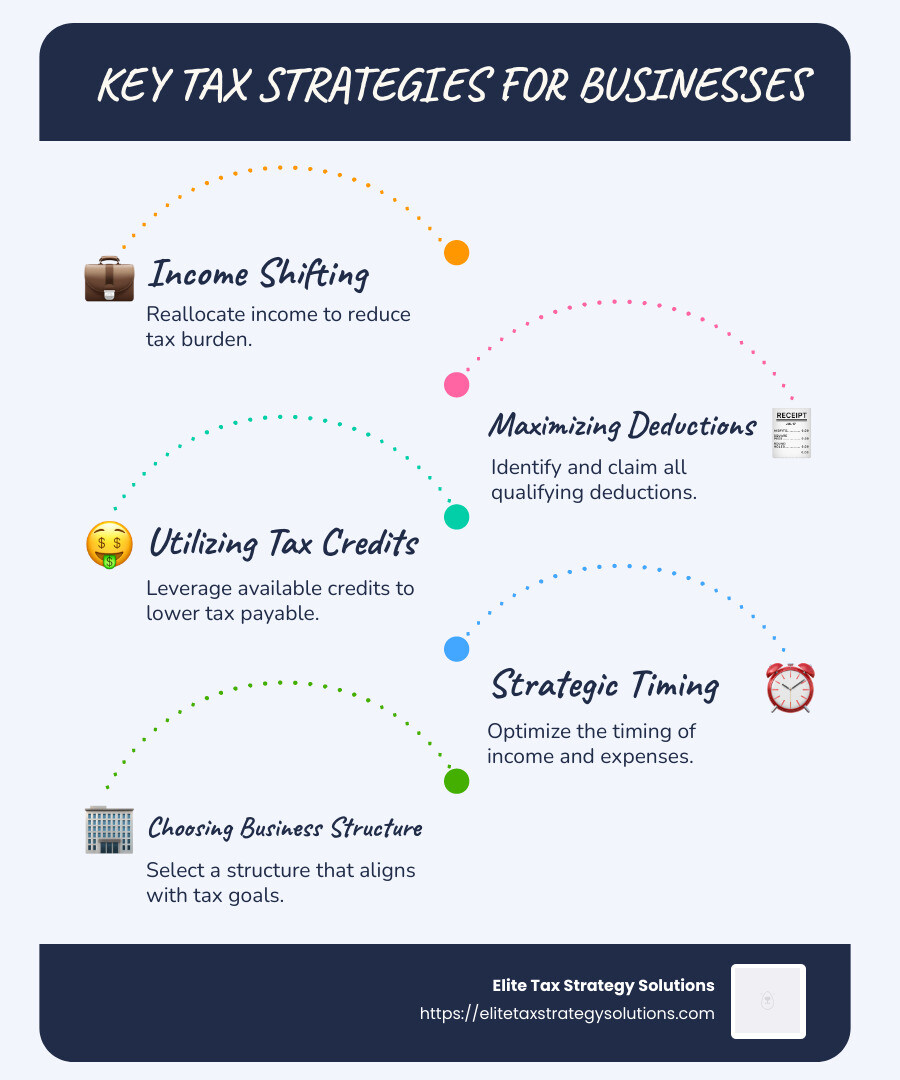
Tax planning for businesses is essential for securing financial stability and growth. At its core, it involves strategies to minimize tax liabilities while ensuring compliance with changing regulations. Businesses can achieve this through:
- Income Shifting
- Maximizing Deductions
- Utilizing Tax Credits
- Strategic Timing of Purchases and Income
- Choosing the Right Business Structure
Early and effective tax planning can lead a company toward prosperity, helping it thrive in competitive markets.
My name is David Fritch, and for over 40 years, I have assisted small business owners in solveing the complexities of tax planning for businesses. My experience spans from founding a law firm to leading innovative tax strategy solutions, always focusing on optimizing financial outcomes for clients. Now, let’s dive deeper into understanding how to strategically manage your business taxes for sustainable growth.
Tax planning for businesses word guide:
– comprehensive financial planning
– how to optimize tax deductions
Understanding Business Tax Planning
Tax planning for businesses is like a puzzle. Each piece must fit perfectly to minimize taxes and boost financial growth. Let’s break down some of the key elements:
Income Shifting
Income shifting is a clever tactic to reduce taxes by spreading income to others in lower tax brackets. For instance, a family business might pay wages to family members, lowering the overall tax liability. It’s all about finding the right balance to keep more money in your pocket.
Tax Deductions
Deductions are your best friend when it comes to tax planning. They reduce taxable income, which means you pay less in taxes. Common tax deductions include business expenses like office supplies, travel, and even some utilities. Every penny you save here counts!
Tax Credits
Unlike deductions, tax credits directly reduce the amount of tax you owe. Small businesses can benefit from credits like the Work Opportunity Tax Credit, which rewards hiring from specific groups. It’s a great way to save money while supporting community growth.
Exemptions
Exemptions can also lower the taxable income of a business. Certain small businesses might qualify for exemptions based on their activities or locations. Always check with a tax professional to see what exemptions your business might be eligible for.
Incentives
Governments often offer incentives to encourage specific business activities. These can be in the form of tax breaks for investing in research and development or for using green energy. Taking advantage of these incentives not only reduces taxes but also aligns your business with future trends.
Understanding these elements of tax planning for businesses helps create a robust strategy that keeps your business financially healthy. Next, we’ll explore the top tax planning strategies that businesses can use to optimize their tax position further.
Top Tax Planning Strategies for Businesses
When it comes to tax planning for businesses, a few smart strategies can make a big difference. Here are some top tactics to consider:
Strategic Income Management
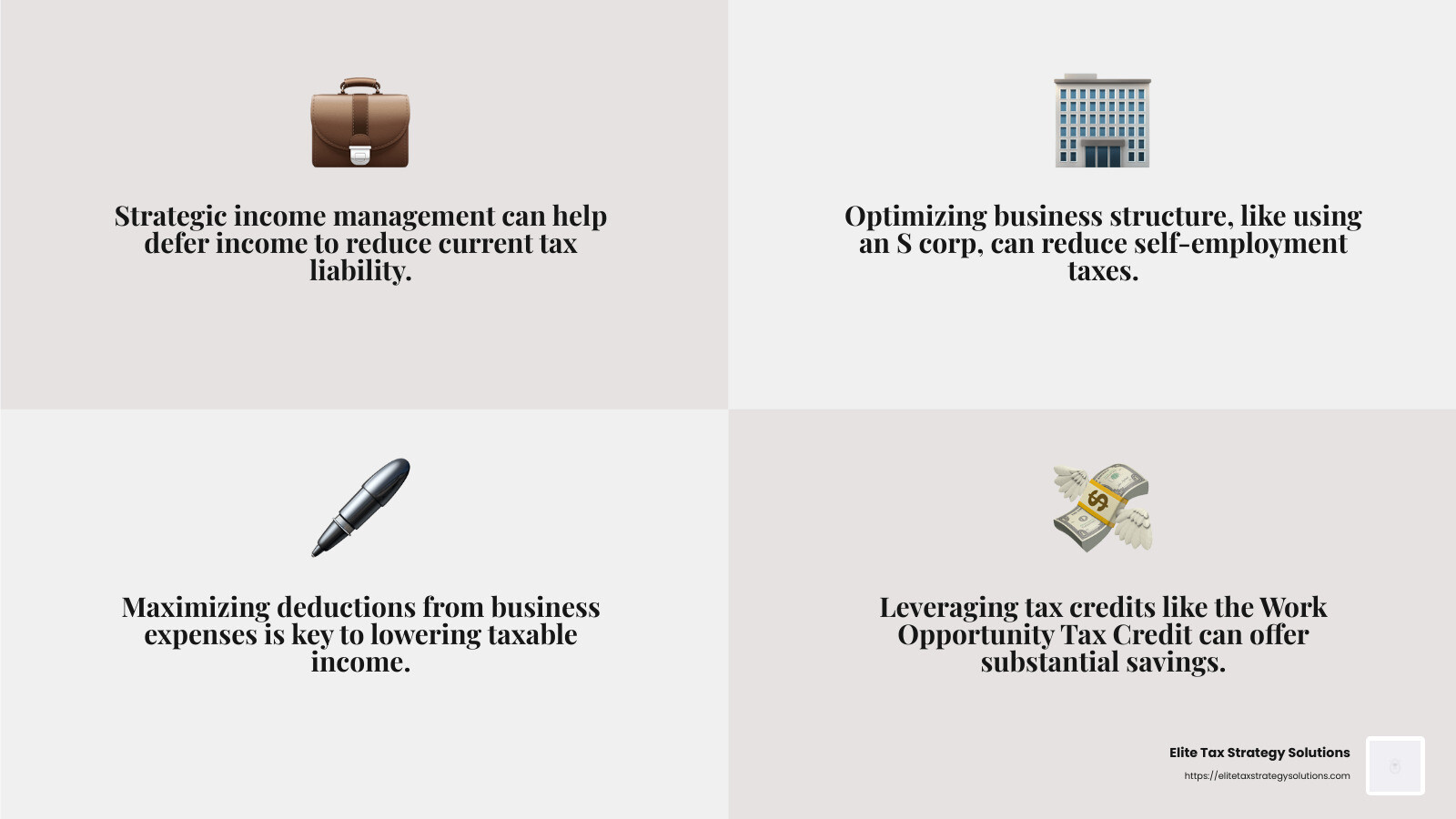
One way to manage taxes is by timing your income and expenses. For example, if you expect to be in a lower tax bracket next year, you might defer income until then. This can reduce your tax liability for the current year. A consulting business in Florida might delay invoicing until January to take advantage of this strategy.
Optimize Business Structure
Choosing the right business structure is crucial. Whether you operate as a sole proprietorship, LLC, or corporation, each has different tax implications. For instance, an S corporation can help reduce self-employment taxes. Regularly reviewing and adjusting your business structure can lead to significant tax savings.
Maximize Deductions
Deductions are key to lowering taxable income. Track all eligible business expenses, from office supplies to travel costs. Don’t forget the home office deduction if you work from home. Using the simplified method, you can claim $5 per square foot for up to 300 square feet.
Leverage Tax Credits
Tax credits reduce your tax bill dollar-for-dollar. Look into credits like the Work Opportunity Tax Credit or the Disabled Access Credit. These can offer substantial savings while encouraging positive business practices.
Retirement Accounts
Contributing to retirement accounts not only secures your future but also provides tax benefits. Options like Traditional IRAs or employer-sponsored 401(k) plans can lower your taxable income. For instance, contributing $7,000 to a traditional IRA can reduce your taxable income by that amount.
These strategies can help businesses optimize their tax position and improve financial health. In the next section, we’ll dig into key considerations for effective tax planning.
Tax Planning for Businesses: Key Considerations
When it comes to tax planning for businesses, understanding the nuances of tax laws can save you a lot of money. Here are some key considerations:
Business Structure
Your business structure greatly impacts your taxes. Whether you’re a sole proprietor, LLC, or S corporation, each has its own tax benefits and drawbacks. For instance, LLCs offer flexibility in tax classification, allowing owners to choose how they are taxed. Regularly reviewing your structure can ensure it aligns with your financial goals and minimizes your tax burden.
Tax Status Change
Sometimes, changing your tax status can lead to savings. For example, an LLC might elect to be taxed as a C corporation to take advantage of the lower corporate tax rate. This was made more attractive after the Tax Cuts and Jobs Act reduced the top corporate tax rate to 21%. However, before making any changes, consult with a tax professional to weigh the pros and cons.
Qualified Business Income Deduction
The Qualified Business Income (QBI) deduction can be a significant benefit for pass-through entities like sole proprietorships, partnerships, and S corporations. It allows eligible business owners to deduct up to 20% of their qualified business income. But there are income thresholds and limitations, especially for specified service trades or businesses (SSTBs). If you’re in an SSTB, your QBI deduction phases out once your income exceeds $191,950 for single filers or $383,900 for married couples filing jointly.
Home Office Deduction
For those who work from home, the home office deduction can be a valuable tax-saving tool. To qualify, the space must be used exclusively and regularly for business. You can choose between the simplified method, which allows a deduction of $5 per square foot (up to 300 square feet), or the actual expenses method, which involves calculating the percentage of your home used for business and deducting that portion of expenses like mortgage interest, utilities, and repairs.
Understanding these key considerations can help businesses steer the complex tax landscape more effectively. In the next section, we’ll answer some frequently asked questions about tax planning for businesses.
Frequently Asked Questions about Tax Planning for Businesses
What is business tax planning?
Business tax planning is a strategic approach to managing a company’s financial affairs to minimize tax liabilities and maximize financial health. It’s not just about filing your taxes; it’s about proactively planning how your business earns and spends money. This includes understanding tax deductions, credits, and the timing of income and expenses. For example, strategic income management can help businesses defer income to a year with a lower tax rate, reducing overall taxes owed.
How to structure a business to reduce taxes?
Choosing the right business structure can significantly influence your tax obligations. Whether you operate as a sole proprietorship, partnership, LLC, or corporation, each structure has unique tax implications. For instance, LLCs offer flexibility in tax classification, allowing you to choose how you’re taxed, potentially reducing your tax burden. By contrast, C corporations face double taxation but benefit from a lower corporate tax rate, especially after the Tax Cuts and Jobs Act reduced it to 21%. Consult a tax professional to determine the best structure for your financial goals and tax situation.
How to pay the least amount of taxes as a small business owner?
To minimize taxes, small business owners can employ several strategies:
-
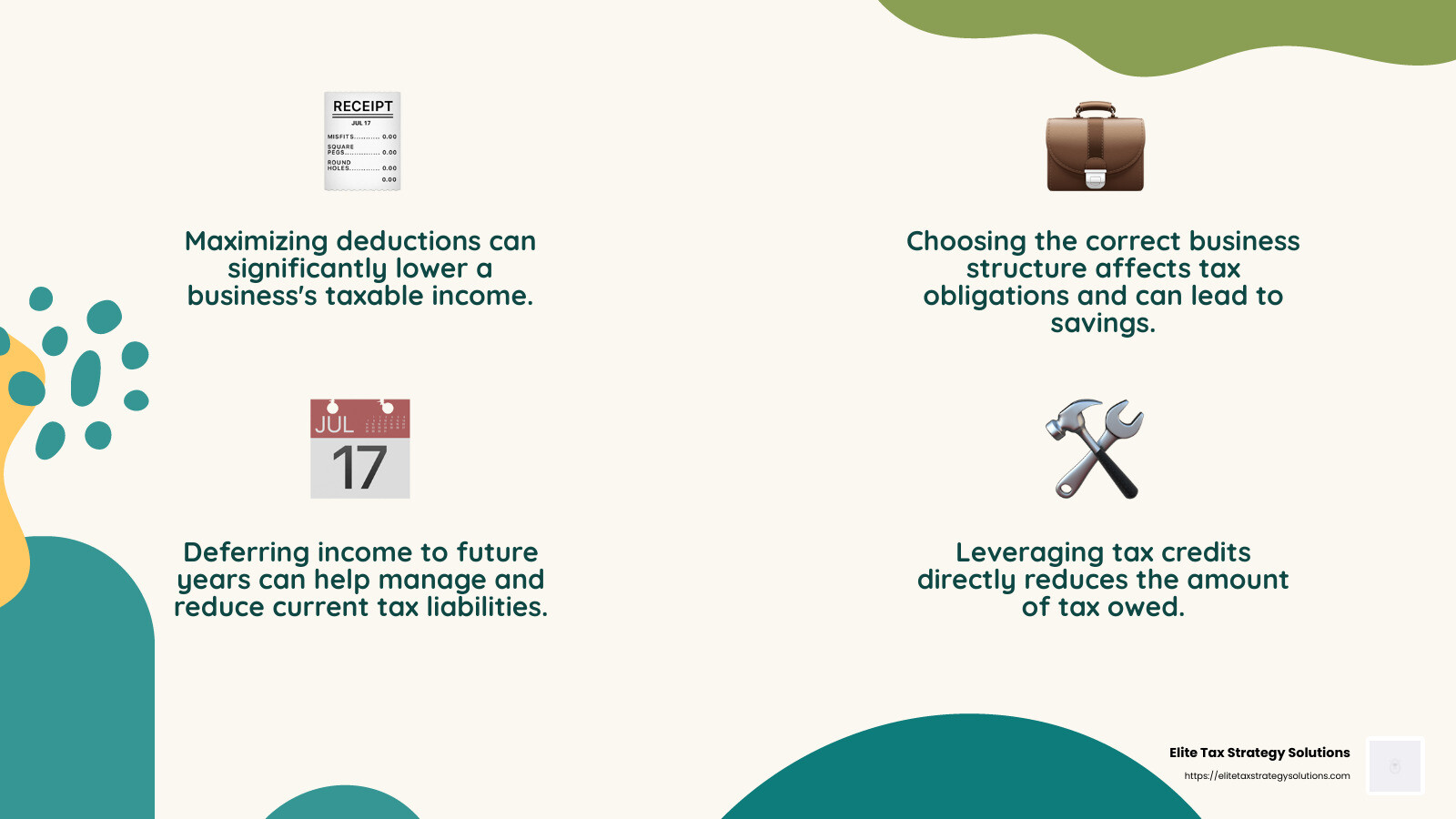
Maximize Deductions: Track all business expenses carefully. Deductions can include office supplies, travel expenses, and even a home office deduction if you qualify.
-
Leverage Tax Credits: Use available tax credits like the Work Opportunity Tax Credit to directly reduce your tax liability.
-
Retirement Contributions: Set up or contribute to a retirement plan like a SEP IRA or 401(k). Contributions are often tax-deductible, reducing taxable income.
-
Optimize Income Timing: If possible, defer income to a future year or accelerate expenses into the current year to lower taxable income.
-
Choose the Right Business Structure: As mentioned, your business structure can affect your taxes. Consider whether an LLC, S corporation, or C corporation is most beneficial for your situation.
By integrating these tactics into your business strategy, you can effectively manage your tax burden and improve your financial prosperity.
These strategies and more can help you steer the complexities of business tax planning. In the next section, we’ll dig into more advanced strategies and considerations for optimizing your business taxes.
Conclusion
At Elite Tax Strategy Solutions, we believe that proactive tax optimization is key to achieving financial stability and business prosperity. Our personalized approach helps high earners and closely held businesses steer the complex world of tax planning with confidence. By focusing on maximizing tax savings and ensuring compliance, we empower our clients to make informed decisions that align with their long-term financial goals.
Compliance is not just about ticking boxes; it’s about understanding the intricacies of tax laws and using them to your advantage. Our team of seasoned experts stays ahead of the latest tax regulations and updates, ensuring you remain compliant while optimizing your tax position.
Our comprehensive services go beyond basic tax filing. We provide custom strategies that include income shifting, maximizing deductions, leveraging tax credits, and more. This thorough approach allows us to identify opportunities that others might miss, ensuring you get the full benefit of your tax planning efforts.
By choosing Elite Tax Strategy Solutions, you’re not just getting a service; you’re gaining a partner dedicated to your financial success. Let us help you steer the complexities of tax planning for businesses and secure a prosperous future.
For more information on how we can assist you in optimizing your taxes and achieving financial stability, visit our High-Income Individual Tax Planning page.