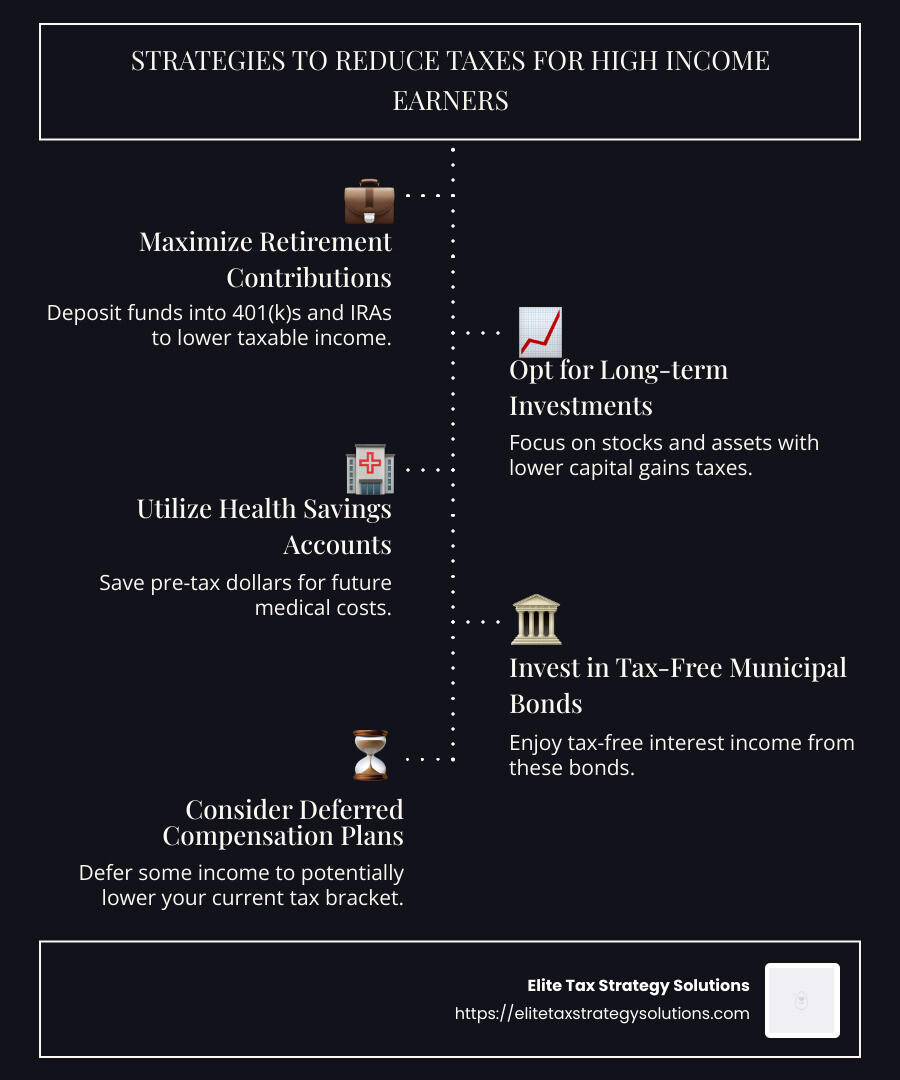
Strategies to reduce taxes for high income earners are crucial for managing the substantial tax burden that comes with substantial earnings. Here’s a quick rundown of some key tactics that can help:
- Maximize Retirement Contributions: Deposit funds into retirement accounts like 401(k)s and IRAs.
- Opt for Long-term Investments: Focus on stocks and assets that benefit from lower capital gains taxes.
- Use Health Savings Accounts: Put away pre-tax dollars for future medical costs.
- Invest in Tax-Free Municipal Bonds: Enjoy tax-free interest income.
- Consider Deferred Compensation Plans: Push some income into the future to potentially lower your tax bracket today.
Balancing the financial requirements of being a high-income earner with tax obligations can be daunting. That’s why proactive tax planning is essential.
I’m David Fritch, your guide through the maze of effective tax reduction. With over 40 years of experience in law and CPA practices, I know how to craft personalized strategies to reduce taxes for high income earners. Join me as we explore how these strategies can bring you closer to long-term financial stability.
Quick look at strategies to reduce taxes for high income earners:
– high income individual tax planning
– tax planning strategies for high income earners
– wealth management tax planning
Strategies to Reduce Taxes for High Income Earners
Navigating the tax landscape can be challenging for high-income earners. But with strategic planning, you can significantly reduce your tax burden. Let’s explore some of the most effective strategies to reduce taxes for high income earners:
Maximize Retirement Contributions
Retirement accounts like 401(k)s, 403(b)s, and IRAs are powerful tools for tax reduction. By maximizing contributions, you reduce your taxable income today and defer taxes until retirement, when you may be in a lower tax bracket.
-
401(k) and 403(b) Plans: Contributing the maximum allowed amount can substantially lower your taxable income. For 2025, the contribution limit is $23,500, with a catch-up contribution of $7,500 for those over 50.
-
SIMPLE IRAs: These are another great option, with contribution limits of up to $16,500, and higher limits for certain plans.
Roth IRA Conversions
A Roth IRA conversion can be a strategic move, especially in years with lower income. While contributions are made with post-tax dollars, the growth and withdrawals are tax-free. This can be a smart way to manage taxes over the long term, especially if you anticipate being in a higher tax bracket in the future.
Invest in Municipal Bonds
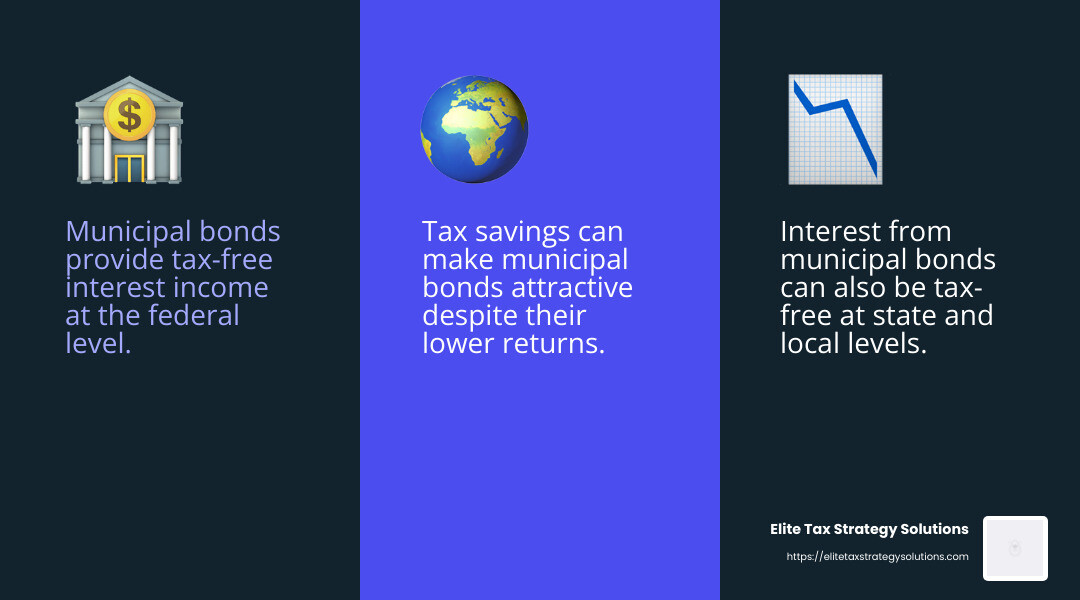
Municipal bonds offer tax-free interest income at the federal level, and often at the state and local levels if you live where the bond is issued. Although they may offer lower returns than taxable bonds, the tax savings can make them an attractive option for high-income earners.
Use Health Savings Accounts
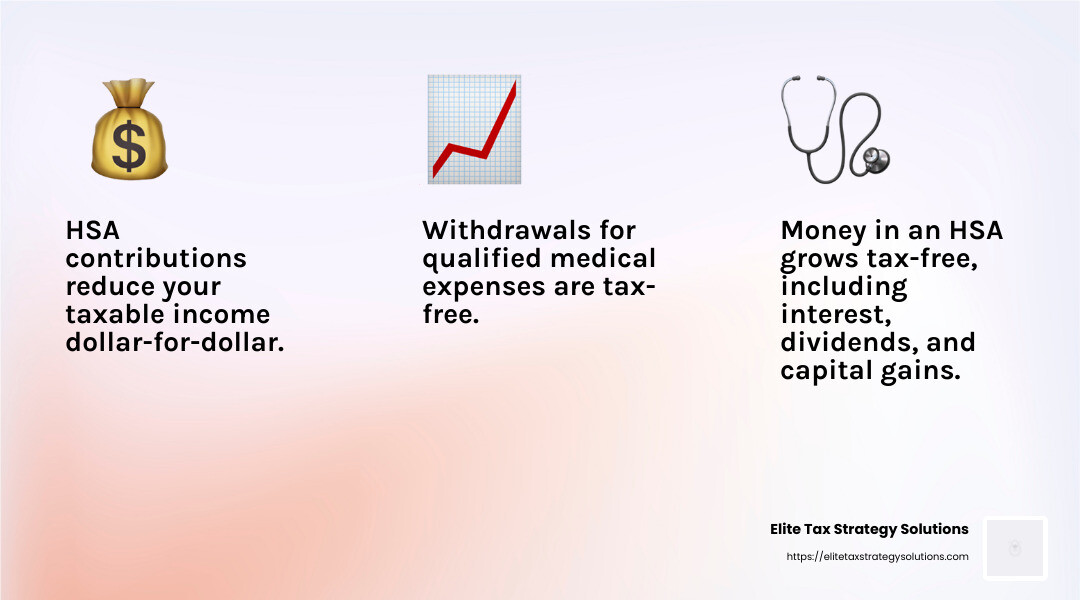
A Health Savings Account (HSA) is another effective way to reduce taxable income. Contributions are tax-deductible, and withdrawals for qualified medical expenses are tax-free. The growth in an HSA is also tax-free, making it a triple tax-advantaged account.
- Contribution Limits: For 2024, individuals can contribute up to $4,150, and families up to $8,300. Those 55 and older can add an extra $1,000.
These strategies, when used effectively, can lead to significant tax savings. By incorporating them into your financial plan, you can manage your tax liabilities and work towards greater financial stability.
Next, we’ll explore how changing the character of your income can further optimize your tax strategy.
Maximize Retirement Contributions
Retirement accounts are a cornerstone for high-income earners looking to reduce their tax burden. By maximizing contributions to accounts like 401(k)s, 403(b)s, and SIMPLE IRAs, you can significantly lower your taxable income and defer taxes until retirement.
401(k) and 403(b) Plans
These employer-sponsored plans are excellent tools for tax savings. You can contribute up to $23,500 in 2025. If you’re over 50, you can make an additional catch-up contribution of $7,500. This means you can potentially put away $31,000 each year, reducing your taxable income by the same amount.
SIMPLE IRAs
For small business owners or those without access to a 401(k), SIMPLE IRAs are a great option. In 2025, you can contribute up to $16,500. Some plans allow up to $17,600. Catch-up contributions for those over 50 range from $3,500 to $3,850, depending on the plan type. This allows older workers to accelerate their retirement savings while enjoying tax benefits.
Catch-Up Contributions
Catch-up contributions are a fantastic way for those over 50 to boost their retirement savings. They provide an additional opportunity to reduce taxable income. For example, catch-up contributions in 401(k) and 403(b) plans can add $7,500 to your annual contribution limit, while SIMPLE IRAs offer a smaller but still valuable increase.
By taking full advantage of these retirement contribution strategies, high-income earners can effectively lower their taxable income and plan for a financially secure future.
Next, we’ll look at how changing the character of your income can further optimize your tax strategy.
Change the Character of Your Income
Changing the character of your income can be a smart way to reduce taxes for high-income earners. By shifting how your income is taxed, you can keep more of what you earn. Let’s explore three powerful strategies: Roth IRAs, tax-exempt bonds, and index mutual funds.
Roth IRA
A Roth IRA is a retirement account that allows your investments to grow tax-free. Unlike traditional IRAs, you pay taxes on your contributions upfront. However, once you reach 59½ and meet the five-year rule, your withdrawals, including earnings, are tax-free. This means you won’t have to worry about taxes on your future income, making it a great option for those expecting to be in a higher tax bracket during retirement.
Converting a traditional IRA to a Roth IRA can be beneficial, especially if you anticipate tax rates rising. By paying taxes now, you can enjoy tax-free income later. Plus, Roth IRAs are not subject to required minimum distributions (RMDs), allowing your savings to grow longer.
Tax-Exempt Bonds
Investing in tax-exempt bonds, like municipal bonds, can also help high-income earners reduce their tax burden. These bonds are issued by local governments and often offer federal tax-free interest income. If you live in the state where the bond is issued, the interest may also be exempt from state taxes.
Municipal bonds are particularly attractive because they are generally low-risk and provide a steady income stream. They are a smart choice for those in higher tax brackets looking to preserve capital while minimizing taxes.
Index Mutual Funds
Index mutual funds and exchange-traded funds (ETFs) are known for their tax efficiency. Unlike actively managed funds, index funds typically have lower turnover rates, which means fewer taxable events. This can help reduce the taxes you pay on your investments each year.
By investing in tax-efficient index funds, you can diversify your portfolio and reduce your annual tax bill. This is especially important for taxable accounts, where minimizing taxes can significantly impact your overall returns.
By strategically using Roth IRAs, tax-exempt bonds, and index mutual funds, high-income earners can effectively manage their tax liabilities and increase their net income. Next, we’ll explore how Health Savings Accounts can further improve your tax strategy.
Use Health Savings Accounts
Health Savings Accounts (HSAs) are a powerful tool for high-income earners looking to reduce their tax burden. They offer a triple tax advantage: contributions are tax-deductible, the account grows tax-free, and withdrawals for qualified medical expenses are also tax-free.
HSA Contributions
Contributing to an HSA is a smart move. For 2024, individuals can contribute up to $4,150, while families can add up to $8,300. If you’re 55 or older, you can contribute an extra $1,000. These contributions reduce your taxable income dollar-for-dollar, which means you pay less tax now.
Tax-Free Growth
Once your money is in an HSA, it grows tax-free. This means any interest, dividends, or capital gains earned within the account aren’t taxed. Over time, this can significantly increase your savings.
Qualified Medical Expenses
HSAs are not just for saving; they’re also for spending. You can use the funds to pay for qualified medical expenses tax-free. This includes things like doctor visits, prescription medications, and even some over-the-counter items. By using your HSA for these expenses, you avoid paying taxes on the money you withdraw.
To qualify for an HSA, you need to have a high-deductible health plan. This type of plan often has lower premiums, which can help you save more money in the long run.
By taking full advantage of HSAs, high-income earners can effectively lower their taxable income, enjoy tax-free growth, and cover medical expenses without paying taxes on withdrawals. Next, we will look at how investing in tax-efficient assets can further optimize your tax strategy.
Invest in Tax-Efficient Assets
Investing in tax-efficient assets is a smart way to reduce your tax burden. Here are some options to consider:
Municipal Bonds
Municipal bonds, or “munis,” are issued by local governments to fund public projects like roads and schools. The big advantage? The interest you earn is usually tax-free at the federal level. If you live in the state where the bond is issued, you might also dodge state and local taxes. This makes munis a great choice for high-income earners. Plus, they have a very low default rate—just 0.08% compared to 6.9% for corporate bonds.
Dividend-Paying Companies
Investing in companies that pay qualified dividends can be another tax-efficient strategy. Qualified dividends are taxed at a lower rate than ordinary income. The maximum federal tax rate for qualified dividends is 20%, which is often less than what you’d pay on regular income. When investing in dividend-paying companies, make sure they meet the IRS criteria for qualified dividends to enjoy these tax benefits.
Opportunity Zones
Opportunity Zones offer a unique way to defer taxes on capital gains. By investing in these designated areas, you can defer taxes on prior gains until 2026. If you hold the investment for at least 10 years, you can even avoid paying taxes on any additional gains. This can be a powerful strategy for high-income earners looking to reduce their tax liability while contributing to community development.
By focusing on these tax-efficient assets, high-income earners can potentially lower their tax bills while growing their wealth. Next, we’ll dive into some frequently asked questions about tax reduction strategies.
Frequently Asked Questions about Tax Reduction Strategies
How can high-income earners reduce taxes?
High-income earners have several strategies to reduce taxes. One of the most effective is maximizing contributions to retirement plans like 401(k)s and IRAs. These contributions reduce your taxable income, which means you pay less in taxes. Additionally, using tax credits can also lower your tax bill. For example, energy-efficient home improvements can qualify for tax credits, directly reducing the amount of tax you owe.
How do rich people reduce taxable income?
Rich people reduce taxable income through a combination of asset growth and strategic holding. They often invest in assets that appreciate over time, like real estate or stocks, and hold them long enough to qualify for long-term capital gains tax rates, which are lower than ordinary income tax rates. By holding these investments for over a year, they can take advantage of these favorable rates.
What are the 3 ways you can reduce your taxes deducted?
-
Municipal Bonds: Investing in municipal bonds can reduce the taxes deducted from your income because the interest earned is generally tax-free at the federal level and possibly state and local levels.
-
Long-Term Capital Gains: Holding investments for more than a year allows you to benefit from lower long-term capital gains tax rates. This strategy can significantly reduce the amount of taxes deducted when you sell these investments.
-
Business Deductions: If you own a business, you can take advantage of various deductions. These include expenses for the business use of your home, vehicle costs, and even hiring minor children without having to withhold payroll taxes. These deductions lower your taxable income, reducing the taxes deducted from your earnings.
By understanding and applying these strategies, high-income earners can effectively manage and reduce their tax liabilities. Stay tuned as we explore more ways to optimize your tax planning in the upcoming sections.
Conclusion
Tax planning is not just about saving money; it’s about achieving financial stability and peace of mind. For high-income earners, navigating the complex tax landscape can be daunting. But with the right strategies, you can significantly reduce your tax burden.
At Elite Tax Strategy Solutions, we specialize in helping high earners and closely held businesses maximize tax savings. Our proactive approach ensures that you’re not just reacting to tax changes but anticipating them.
Financial stability is within reach when you integrate tax planning into your overall financial strategy. By leveraging retirement contributions, tax-efficient investments, and strategic asset management, you can keep more of what you earn.
Tax laws are always changing. Staying informed and working with experts can make all the difference. If you’re ready to optimize your tax position and secure your financial future, our team at Elite Tax Strategy Solutions is here to guide you every step of the way. Reach out to us today and take the first step towards a more financially secure tomorrow.