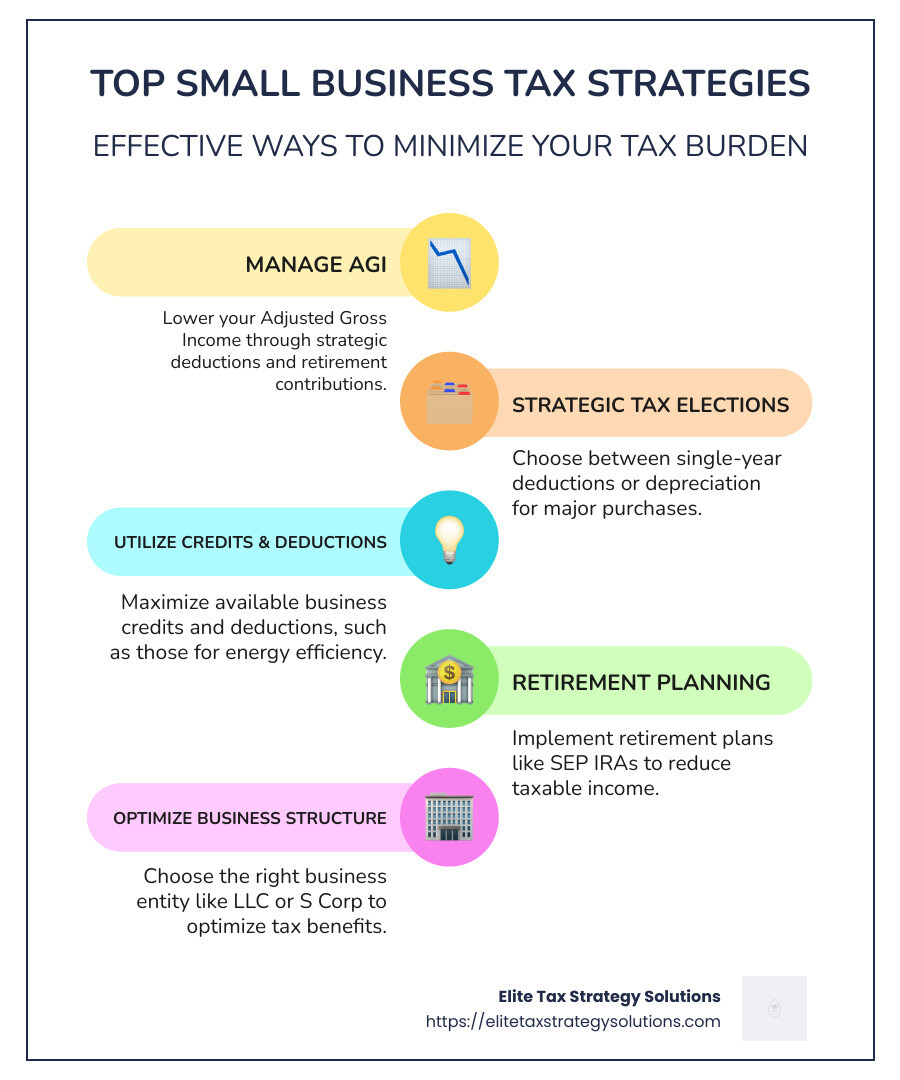
Small business tax strategies are essential for any entrepreneur looking to maximize profits and reduce tax burdens. Here’s a quick overview of effective strategies to consider:
- Adjusted Gross Income (AGI) Management: Aim to lower your AGI through retirement contributions and careful deductions.
- Strategic Tax Elections: Decide between single-year deductions or depreciation for major purchases like equipment.
- Credits and Deductions: Take advantage of any available business credits, including those for energy efficiency and new hires.
- Retirement Planning: Implement retirement plans like SEP IRAs to reduce taxable income.
Tax planning doesn’t have to be daunting. By strategically planning your taxes, you can save considerable amounts every year. A smart approach can open up substantial tax savings, ensuring that more of your hard-earned money stays in your pocket.
I’m David Fritch, with a longstanding commitment to helping small business owners thrive. With over 40 years in tax strategy solutions, I specialize in crafting personalized small business tax strategies to maximize savings and simplify the complexities of tax compliance.
Key terms for small business tax strategies:
– Business tax planning services
– Tax management services
– Small business tax tips
Understanding Small Business Taxes
Navigating taxes can feel overwhelming for small business owners. But understanding the basics of federal, state, and local taxes is crucial to optimizing your tax savings. Let’s break it down.
Federal Taxes
Every small business in the U.S. must deal with federal taxes. These include several types, such as income tax, self-employment tax, and employment tax.
-
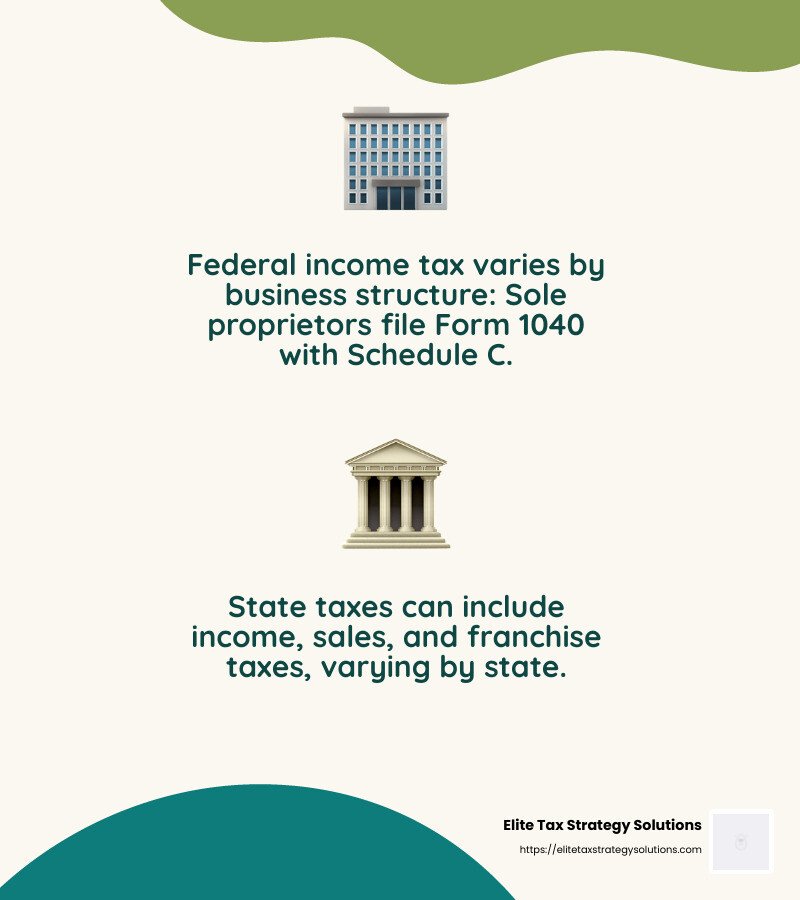
Income Tax: All businesses, except partnerships, file a federal income tax return. Partnerships file an information return using Form 1065, passing income to individual partners who report it on their personal returns. The filing type depends on your business structure. For example, sole proprietors use Form 1040 with a Schedule C.
-
Self-Employment Tax: Sole proprietors and partners must pay this tax to cover Social Security and Medicare. It’s currently set at 15.3%, a combination of 12.4% for Social Security and 2.9% for Medicare.
-
Employment Tax: If you have employees, you’re responsible for employment taxes. These include Social Security, Medicare, and unemployment taxes. Employers and employees split Social Security and Medicare taxes, but employers pay the full unemployment tax.
State Taxes
State taxes vary widely. They can include state income taxes, sales taxes, and franchise taxes. Each state has its own rules, so it’s important to know what applies to your business location.
-
State Income Tax: Not all states require this, but those that do may have different rates and rules compared to federal taxes.
-
Sales Tax: If you sell goods or services, you might need to collect sales tax. This tax is added to the sale price and passed on to the state.
-
Franchise Tax: Some states impose this tax on businesses for the right to operate within the state, regardless of income.
Local Taxes
Local taxes can add another layer of complexity. These include property taxes, local sales taxes, and business licenses.
-
Property Tax: If your business owns property, you’ll likely pay local property taxes. Rates and assessments vary by location.
-
Local Sales Tax: In addition to state sales tax, some localities have their own sales taxes. This can affect pricing and compliance.
-
Business Licenses and Permits: Many local governments require businesses to obtain licenses or permits, which often come with fees and taxes.
Understanding these tax obligations helps you plan effectively and avoid surprises. By knowing what you owe at each level—federal, state, and local—you can better manage your finances and look for opportunities to save.
In the next section, we’ll dive into the Top Small Business Tax Strategies to help you take advantage of deductions, credits, and more to reduce your tax burden.
Top Small Business Tax Strategies
When it comes to small business tax strategies, there are several ways to save money and reduce your tax burden. Let’s explore some of the top strategies, including deductions, credits, retirement plans, equipment deductions, and green energy credits.
Deductions
Deductions are a powerful tool for reducing your taxable income. By lowering the amount of income that is subject to tax, you can significantly decrease your tax liability. Common deductible expenses include:
-
Business Expenses: Wages, rent, utilities, travel, office supplies, and advertising costs are generally deductible. Keep good records to maximize these deductions.
-
Home Office Deduction: If you use part of your home exclusively for business, you may qualify for a home office deduction. This allows you to deduct a portion of your mortgage interest, utilities, and repairs.
-
Depreciation: Instead of deducting the full cost of assets like furniture and equipment in one year, you can spread the deduction over several years. This can provide ongoing tax savings.
Credits
Tax credits directly reduce the amount of tax you owe, dollar-for-dollar. Some credits small businesses can leverage include:
-
Work Opportunity Tax Credit: This credit is available if you hire individuals from certain groups, such as qualified veterans or recipients of public assistance.
-
Small Business Health Care Tax Credit: If you provide health insurance to your employees, you might qualify for this credit to offset premium costs.
-
Disabled Access Credit: If your business makes improvements to accommodate individuals with disabilities, you could receive a credit for part of those expenses.
Retirement Plans
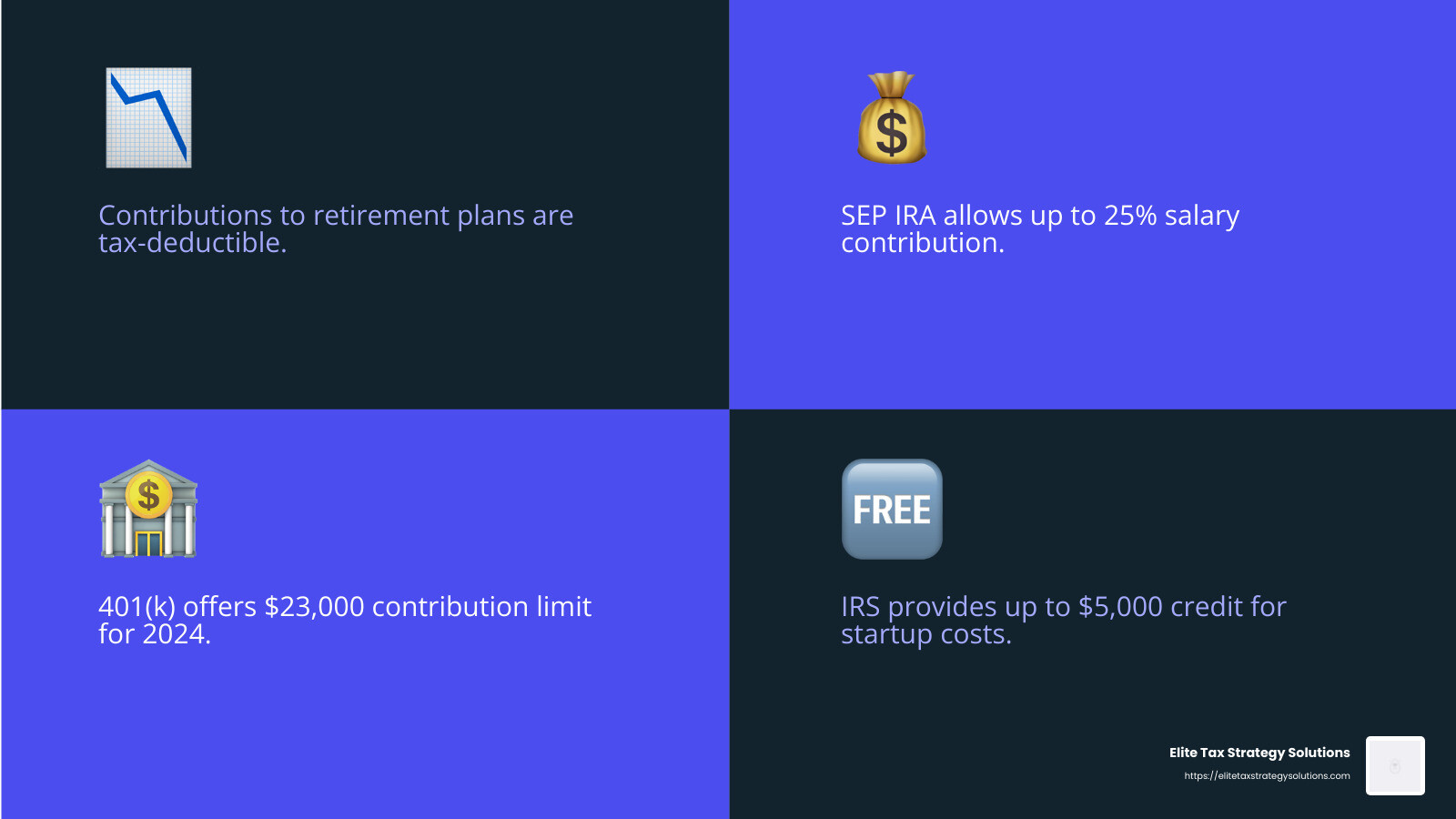
Setting up a retirement plan not only helps attract and retain employees but also offers tax advantages. Options include SIMPLE IRA, SEP IRA, and 401(k) plans. Contributions to these plans are often tax-deductible, reducing your taxable income.
- Retirement Plan Startup Costs: You may qualify for a tax credit to offset the costs of setting up a retirement plan, making it even more appealing.
Equipment Deductions
Purchasing new or used equipment for your business can lead to significant tax savings:
-
Section 179 Deduction: This allows you to expense the cost of qualifying equipment in the year of purchase, up to a certain limit.
-
Bonus Depreciation: For 2024, you can deduct 60% of the cost of qualifying property. This is particularly useful for businesses looking to invest in new equipment.
Green Energy Credits
Going green can be good for the environment and your bottom line. The Inflation Reduction Act offers incentives for businesses investing in clean energy technologies:
-
Clean Vehicle Credits: If you purchase electric or hybrid vehicles for your business, you may qualify for federal tax credits.
-
Energy Efficiency Improvements: Investing in energy-efficient upgrades can also lead to tax savings through available credits.
By understanding and utilizing these strategies, you can optimize your tax savings and improve your financial health. Up next, we’ll explore how to maximize retirement contributions to further improve your tax strategy.
Maximize Retirement Contributions
Contributing to retirement plans is a smart move for small business owners. Not only do these plans help secure your future, but they also offer tax-deductible contributions that can significantly reduce your taxable income. Let’s explore some of the most popular retirement plan options for small businesses: SIMPLE IRA, SEP IRA, and 401(k).
SIMPLE IRA
The SIMPLE IRA (Savings Incentive Match Plan for Employees) is designed for small businesses with fewer than 100 employees. It’s easy to set up and manage, making it a popular choice for small business owners.
- Employer Contributions: Employers are required to match employee contributions up to 3% of their salary or make a 2% non-elective contribution for all eligible employees.
- Tax Benefits: Contributions are tax-deductible, which means you can lower your taxable income while saving for retirement.
SEP IRA
The SEP IRA (Simplified Employee Pension) is another excellent option for small business owners, especially those who are self-employed.
- Flexibility: Employers can contribute up to 25% of each employee’s salary, with a maximum contribution limit of $66,000 for 2024.
- Tax Advantages: Like the SIMPLE IRA, contributions are tax-deductible, offering immediate tax savings.
401(k) Plans
401(k) plans are a bit more complex but offer significant benefits for both employers and employees.
- Contribution Limits: Employees can contribute up to $23,000 in 2024, with an additional $7,500 catch-up contribution for those aged 50 or older.
- Employer Contributions: Employers can also make matching or non-elective contributions, further boosting the retirement savings of their employees.
- Tax Savings: Contributions are pre-tax, reducing your taxable income and offering a powerful way to save on taxes.
Retirement Plan Startup Costs
Starting a retirement plan can be daunting, but the IRS offers a tax credit to help offset the initial setup costs. This credit can be as much as $5,000 per year for the first three years, making it an attractive incentive for small business owners to establish a retirement plan.
By maximizing your retirement contributions, you not only invest in your future but also enjoy significant tax benefits today. Next, we’ll explore how equipment and green energy incentives can further improve your tax strategy.
Equipment and Green Energy Incentives
When it comes to small business tax strategies, leveraging equipment and green energy incentives can offer substantial savings. Let’s break down some key opportunities: Section 179, bonus depreciation, and the Inflation Reduction Act.
Section 179 Deduction
The Section 179 deduction allows businesses to deduct the full cost of qualifying equipment purchased or financed during the tax year. This means if you buy a new piece of machinery, you can write off the entire cost instead of depreciating it over several years.
- 2024 Limit: You can deduct up to $1,220,000 in equipment costs for 2024. This is a significant increase from previous years, allowing more flexibility and savings.
- Phase-Out Threshold: The deduction begins to phase out after $3.05 million in total equipment purchases, so plan your investments accordingly.
This deduction is perfect for small businesses that need to upgrade or expand their equipment. It encourages timely investments, as the equipment must be in use by the end of the tax year to qualify.
Bonus Depreciation
Bonus depreciation is another powerful tool. It allows businesses to deduct a percentage of the cost of eligible equipment in the year it’s placed in service.
- Current Rate: For 2024, the bonus depreciation rate is set at 60%.
- Eligibility: Unlike Section 179, bonus depreciation can be applied to both new and used equipment, offering more options for businesses.
This incentive is particularly useful if you’ve already maxed out your Section 179 deduction or if your business had a profitable year and you need to offset more income.
Inflation Reduction Act and Green Energy Credits
The Inflation Reduction Act, signed into law in 2022, provides numerous incentives for businesses investing in green energy technologies. These credits aim to reduce the carbon footprint and promote sustainable practices.
- Clean Energy Credits: Businesses can receive federal tax credits for purchasing electric vehicles, installing solar panels, or other energy-efficient upgrades.
- State Incentives: Some states offer additional incentives, so it’s worth checking local programs for further savings.
Investing in green energy not only reduces your environmental impact but also provides financial benefits through tax credits, making it a win-win for your business.
By taking advantage of these equipment and green energy incentives, you can make strategic investments that improve your business operations while significantly reducing your tax burden. Next, we’ll explore how selecting the right business structure can further optimize your tax strategy.
Optimize Business Structure
Choosing the right business structure is crucial for optimizing your small business tax strategies. The structure you select can influence how much tax you pay, your legal liability, and your ability to raise capital. Let’s explore some common options: LLCs, S Corporations, and pass-through entities.
Limited Liability Company (LLC)
An LLC offers flexibility and protection. As an owner, you aren’t personally liable for business debts, which keeps your personal assets safe.
- Tax Benefits: LLCs can choose how they’re taxed. You can opt to be taxed as a sole proprietorship, partnership, or even as a corporation. This flexibility allows you to pick the structure that minimizes your tax bill.
- Pass-Through Taxation: By default, an LLC is a pass-through entity. This means business income is reported on your personal tax return, avoiding double taxation.
S Corporation
An S Corporation is another popular choice for small business owners. It provides the benefit of pass-through taxation, similar to an LLC, but with some additional perks.
- Avoid Double Taxation: Like LLCs, S Corps avoid corporate income tax. Instead, income is passed through to shareholders and taxed at individual rates.
- Salary and Dividends: As an owner, you can pay yourself a salary and take additional profits as dividends. This can reduce self-employment taxes since dividends aren’t subject to payroll taxes.
- Requirements: To qualify as an S Corp, your business must meet certain IRS criteria, such as having no more than 100 shareholders and only one class of stock.
Pass-Through Entity
Both LLCs and S Corporations are considered pass-through entities. This means profits and losses pass through the business to the owners’ personal tax returns.
- Tax Savings: By avoiding double taxation (where both the business and individual are taxed), pass-through entities can save money on taxes.
- Simplicity: Reporting business income on your personal tax return simplifies tax filing and management.
Selecting the right structure depends on your business goals, financial situation, and growth plans. Consulting with a tax professional can help you weigh the pros and cons and choose the best option for your unique circumstances.
Next, we’ll address some frequently asked questions about small business tax strategies to clarify common concerns and help you make informed decisions.
Frequently Asked Questions about Small Business Tax Strategies
How to pay no taxes for a small business?
While it’s challenging to pay no taxes at all, there are small business exemptions and strategies that can significantly reduce your tax burden. One approach is to ensure your business qualifies for any available exemptions or credits. For instance, some states offer tax incentives to new small businesses or those in specific industries.
Timely Renewal: Always renew any necessary licenses and permits on time to maintain your eligibility for these exemptions. Missing deadlines can result in losing valuable tax benefits.
How can small businesses avoid owing taxes?
To minimize what you owe, focus on maximizing deductions and leveraging retirement plans.
-
Deductions: Keep meticulous records of your expenses. Common deductions include office supplies, travel expenses, and home office costs. The more expenses you can legitimately deduct, the lower your taxable income.
-
Retirement Plans: Contributing to a retirement plan like a SIMPLE IRA or SEP IRA not only secures your future but also provides immediate tax benefits. Contributions are often tax-deductible, reducing your taxable income.
-
Business Structure: Choosing the right business structure, like an LLC or S Corporation, can also help. These structures offer pass-through taxation, which means your business income is taxed at your personal rate, often resulting in lower taxes compared to corporate taxation.
How much can a small business write off on taxes?
The amount a small business can write off depends on various factors, including your business type and income.
-
Pass-Through Deduction: Small businesses structured as pass-through entities can potentially benefit from the Qualified Business Income (QBI) deduction. This allows you to deduct up to 20% of your net business income, significantly reducing your taxable income.
-
Net Business Income: Ensure you’re calculating your net business income accurately. This figure is crucial for determining your potential deductions and tax obligations. Keep precise records of all business income and expenses to optimize your deductions.
By understanding and utilizing these strategies, small business owners can effectively manage their tax obligations and potentially lower their tax bills. Next, we will wrap up with some final thoughts on how Elite Tax Strategy Solutions can provide personalized and proactive tax planning for your business needs.
Conclusion
Navigating small business taxes can seem daunting, but with the right strategies, you can optimize your tax savings and ensure financial stability. This is where Elite Tax Strategy Solutions comes in. We specialize in offering personalized tax planning services custom to the unique needs of high earners and closely held businesses.
Our approach is proactive. We don’t just react to changes in tax laws; we anticipate them, ensuring that your tax strategy is always one step ahead. By staying informed about the latest developments, we can adjust your strategies to maximize your savings and align with your long-term financial goals.
Whether you’re looking to maximize deductions, leverage retirement plans, or optimize your business structure, our team of seasoned professionals is here to guide you every step of the way. We focus on creating a comprehensive tax plan that not only reduces your tax liability but also supports your overall financial health.
In conclusion, by partnering with Elite Tax Strategy Solutions, you’re not just getting tax advice; you’re gaining a strategic partner dedicated to your business’s success. Let’s work together to turn tax challenges into opportunities for growth and savings.