IRS tax compliance is all about ensuring that you meet your tax obligations according to the rules set by the IRS. Whether you’re an individual filing personal taxes or a business navigating complex corporate tax structures, the principle remains the same: stay compliant to avoid penalties and ensure peace of mind.
Here’s a quick guide to understanding IRS tax compliance:
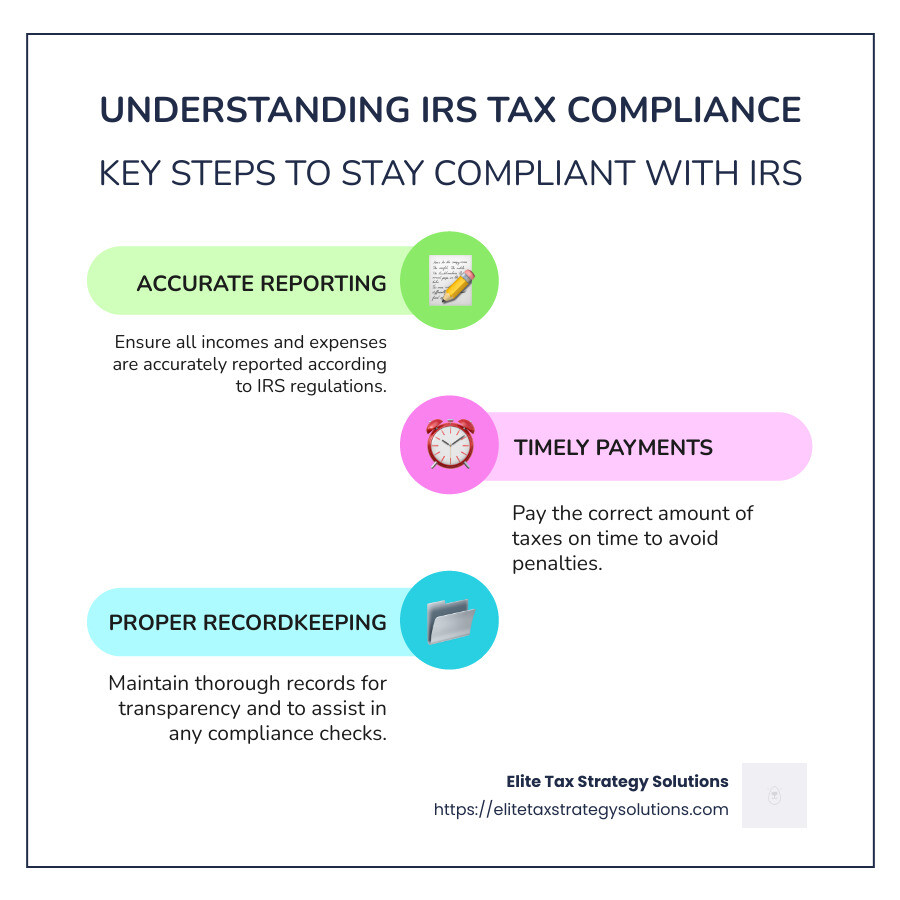
- What is IRS tax compliance? The process of following IRS regulations to accurately report income, expenses, and pay the correct amount of taxes.
- Who needs to comply? Every taxpayer, from individuals to corporations.
- Why is it important? Ensures legality, avoids penalties, and maintains public trust.
IRS tax compliance might seem overwhelming, but it is essential for managing your finances effectively.
I’m David Fritch. With 40 years of experience owning a law and CPA firm, my expertise in IRS tax compliance has helped countless small business owners and high-income earners manage their tax responsibilities. This guide aims to simplify and clarify your path to compliance.
Irs tax compliance word roundup:
– 1099 tax compliance
– accounting and tax compliance
– tax compliance for companies
Understanding IRS Tax Compliance
When it comes to IRS tax compliance, there are a few key elements that every taxpayer should be aware of: compliance checks, the role of a tax compliance officer, and the compliance program.
Compliance Check
A compliance check is like a friendly reminder from the IRS. It’s not an audit, but rather a review to make sure you’re on the right track with your tax obligations. The IRS might look at your recordkeeping and information reporting to ensure everything is in order. Think of it as a way to catch any small errors before they become big problems.
Tax Compliance Officer
Meet the tax compliance officer, your guide through the maze of tax rules. These officers are experts who help ensure that taxpayers like you are following the law. They review your financial records, assess your tax filings, and offer guidance. Their goal is to help you stay compliant and avoid penalties. In some cases, they might even assist you in resolving any issues before they escalate.
Compliance Program
The IRS compliance program is a proactive approach to ensuring tax laws are followed. One key part of this program is the Compliance Assurance Process (CAP). CAP is designed for large corporate taxpayers, but the principles apply to everyone. It focuses on real-time resolution of tax issues, meaning problems are solved before you file your tax returns. This way, you can be sure your return is accurate and you’re complying with federal tax laws.
With these tools and resources, navigating IRS tax compliance becomes a bit less daunting. Whether it’s through routine checks, the guidance of a compliance officer, or participating in compliance programs, staying on top of your tax obligations is achievable with the right support and information.
How to Obtain a Tax Compliance Report
Getting your tax compliance report is simpler than you might think. This report is crucial for showing whether you have filed your tax returns and paid your taxes on time. It’s often requested by employers, banks, and federal agencies to verify your tax status.
Understanding Letters 6201 and 6575
For individuals and sole proprietors, the tax compliance report comes in the form of Letter 6201. If you run a business, you’ll receive Letter 6575. These letters summarize your compliance status and highlight any issues, such as overdue taxes or late filings.
Steps to Download Your Report
You can easily download your tax compliance report from your online IRS account. Here’s how:
- Log in: Access your individual or business tax account online.
- Steer to the report section: Look for the option to download your tax compliance report.
- Select the appropriate letter: Choose Letter 6201 for personal compliance or Letter 6575 for business compliance.
- Download and save: Keep a digital copy for your records and print one if needed.

What the Report Shows
The report provides a snapshot of your compliance status. It won’t show your income or dependents, but it will tell you if you’re compliant, non-compliant, or have a compliance issue. Here’s what each status means:
- Compliant: You’ve filed all returns and paid taxes on time.
- Noncompliant: You have overdue returns or unpaid taxes.
- Compliance issue: You might be paying taxes through an installment plan or have a history of late payments.
Keeping this report handy can help you stay on top of your tax obligations and avoid potential issues. If you’re ever unsure about your status, this report is your go-to resource for clarification.
IRS Tax Compliance for High-Income Earners
High-income earners face unique challenges when it comes to IRS tax compliance. The IRS has increased its focus on ensuring these individuals meet their tax obligations. This focus is part of broader enforcement efforts aimed at boosting compliance across the board.
The Compliance Focus on High-Income Earners
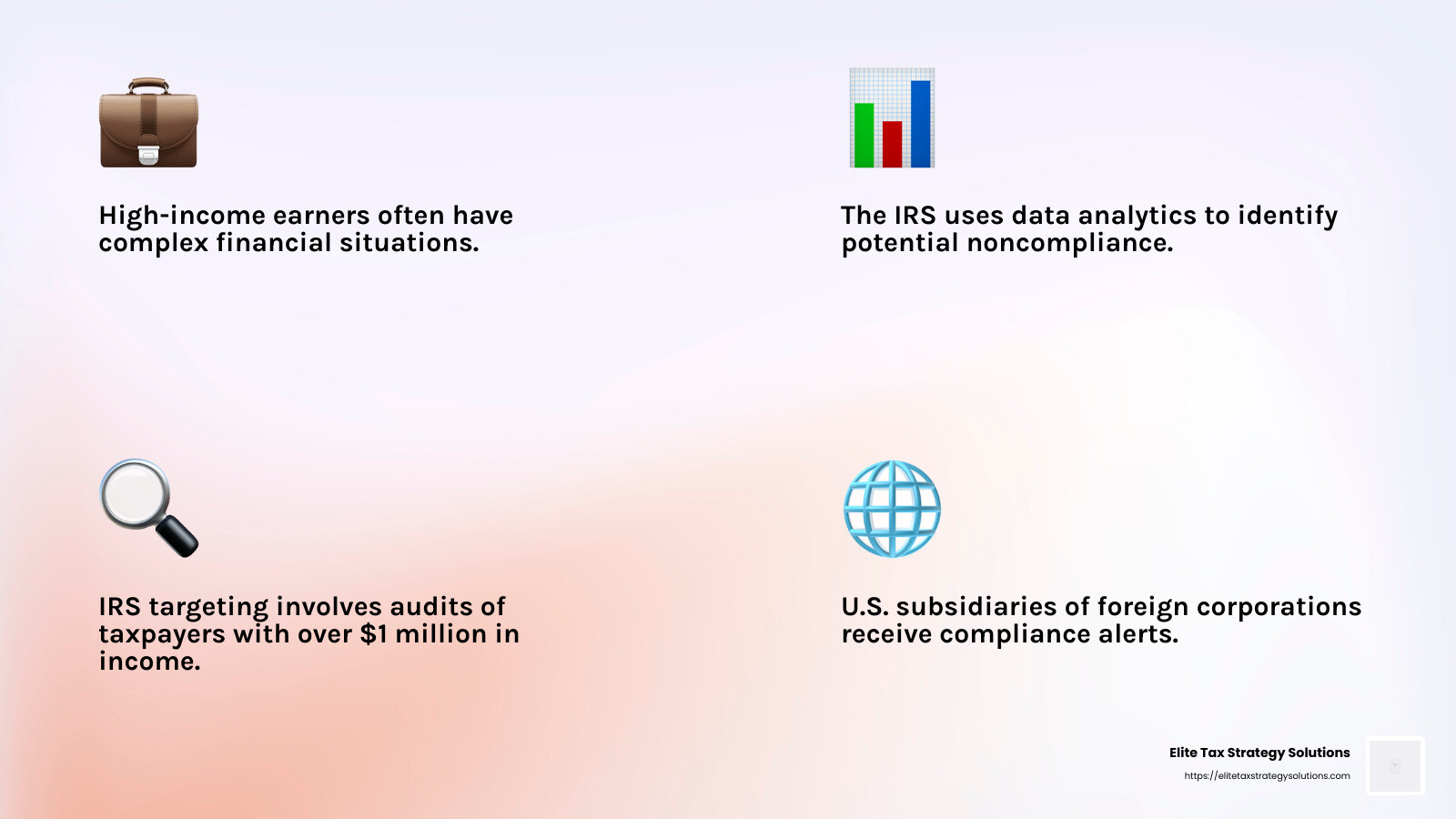
The IRS is particularly interested in high-income earners because they often have complex financial situations. These can include multiple income streams, investments, and international transactions. Such complexities make it easier for errors or omissions to occur, whether intentional or not.
To address this, the IRS has stepped up its enforcement efforts. The agency is using advanced data analytics and artificial intelligence to identify potential noncompliance among high-income earners. This means they are more likely to select these taxpayers for audits.
Recent Enforcement Efforts
In October 2023, the IRS announced new initiatives to ramp up enforcement among large corporations and high-income individuals. This includes contacting taxpayers with over $1 million in income and more than $250,000 in recognized tax debt. The IRS has already collected $122 million from 100 of these cases.
The IRS is also targeting U.S. subsidiaries of foreign corporations. They are sending compliance alerts to remind these companies of their U.S. tax obligations. This is part of a broader effort to ensure that everyone, regardless of their wealth or business structure, pays their fair share of taxes.
What High-Income Earners Can Do
If you fall into the high-income bracket, stay ahead of these compliance efforts. Here are some steps you can take:
- Review your tax filings: Ensure everything is accurate and up-to-date.
- Keep detailed records: This includes all income sources and any deductions or credits you claim.
- Consider professional help: A tax advisor can help steer complex tax situations and ensure compliance.
By staying proactive, high-income earners can avoid costly audits and penalties. It’s all about being diligent and informed when it comes to your tax obligations.
The Role of Federal Agencies in Tax Compliance
Federal agencies play a crucial role in ensuring that their employees understand and meet their tax filing responsibilities. This is not just about following the law; it’s also about maintaining public trust in government institutions.
Federal Employees and Tax Obligations
Federal employees are required to comply with specific tax obligations. According to the Office of Government Ethics Regulation 5 CFR § 2635.809, they must “satisfy in good faith their obligations as citizens, including all just financial obligations, especially those such as federal, state, or local taxes that are imposed by law.”
This means that all federal employees must file and pay their income taxes accurately and on time. Federal managers are tasked with making sure employees are aware of these responsibilities. They can use resources like Publication 4852, which provides talking points for managers to discuss federal employee tax compliance.
Office of Government Ethics
The Office of Government Ethics (OGE) plays a significant role in promoting ethical conduct among federal employees, which includes tax compliance. The OGE provides guidelines and resources to help federal agencies educate their employees about their tax obligations.
Federal managers can use these resources to hold discussions and workshops to ensure employees understand the importance of meeting their tax filing and payment obligations. This effort is crucial in preventing tax law violations and maintaining the public’s confidence in government operations.
Resources for Federal Agencies
To aid in this effort, federal agencies have access to a variety of tools and publications. For instance, Publication 594 gives a general overview of the IRS collection process and offers options for taxpayers who cannot pay their taxes immediately.
Additionally, the IRS provides several online resources, such as the IRS Online Account, where employees can securely log in to access tax transcripts, make payments, and more. These tools are designed to make tax compliance easier and more accessible for everyone.
By utilizing these resources and promoting awareness, federal agencies can ensure that their employees remain compliant with tax laws, thus upholding the integrity and trust essential to public service.
Frequently Asked Questions about IRS Tax Compliance
What is an IRS tax compliance check?
An IRS tax compliance check is a review conducted to ensure that individuals and businesses have met their tax obligations. This involves checking if all required tax returns have been filed and if taxes have been paid on time. Unlike an audit, a compliance check doesn’t dig into the specifics of tax returns. Instead, it confirms that all necessary information reporting and recordkeeping are in order.
Think of it as a routine health check-up for your taxes. It helps identify any gaps or issues before they become major problems. This is crucial for maintaining good standing with the IRS and avoiding potential penalties.
What does an IRS tax compliance officer do?
An IRS tax compliance officer plays a key role in ensuring taxpayers adhere to federal tax laws. These officers are tax specialists who review financial records and assess tax liabilities. They work with taxpayers to resolve any discrepancies and ensure that all taxes are correctly reported and paid.
The compliance officer’s job is not just about enforcement; it’s also about education. They help taxpayers understand their obligations and provide guidance on maintaining proper records. This proactive approach helps prevent future compliance issues and fosters a better relationship between taxpayers and the IRS.
What is the IRS compliance program?
The IRS compliance program, known as the Compliance Assurance Process (CAP), is designed to help large corporate taxpayers improve their federal tax compliance. This program allows the IRS and taxpayers to resolve issues in real-time, before tax returns are filed.
CAP’s real-time resolution tools and techniques ensure accurate tax returns, which can significantly shorten the IRS audit process. By working collaboratively, both the IRS and taxpayers can address potential issues early on, reducing the likelihood of lengthy disputes or penalties.
The program is part of the IRS’s broader strategy to ensure compliance with federal tax laws, using proactive measures to support taxpayers in meeting their obligations.
Conclusion
At Elite Tax Strategy Solutions, we understand that navigating IRS tax compliance can feel overwhelming. That’s why we offer personalized tax planning services custom to the unique needs of high-income earners and closely held businesses. Our approach is not just about meeting tax obligations; it’s about optimizing your financial situation for long-term stability.
Proactive Tax Planning
Our proactive approach means we don’t wait for tax season to roll around. Instead, we work year-round to ensure that your tax strategies are not only compliant but also optimized for the best possible outcomes. This involves regular reviews and updates to your tax plans, ensuring they align with the latest tax laws and your financial goals.
Personalized Services
Every client is different, and so are their tax needs. We take the time to understand your specific situation and craft a tax plan that maximizes savings and minimizes liabilities. Whether it’s through deduction maximization, credit utilization, or custom tax strategies, we ensure that your tax plan is as unique as you are.
Why Choose Us?
Choosing Elite Tax Strategy Solutions means choosing a partner who is dedicated to your financial success. Our team of experts is here to provide the guidance and support you need to steer the complexities of tax compliance with confidence.
For more information on how we can assist you with your tax compliance needs, visit our Tax Support and Compliance page. Let us help you achieve peace of mind and financial stability through expert tax planning and compliance services.