International tax compliance is a critical concern for businesses and individuals who engage in cross-border activities. It refers to the tax responsibilities that arise when hiring workers in other countries or when individuals hold financial assets abroad. Ensuring compliance involves navigating corporate taxes, employer taxes, and employee taxes, as well as adhering to specific regulations like the Foreign Account Tax Compliance Act (FATCA).
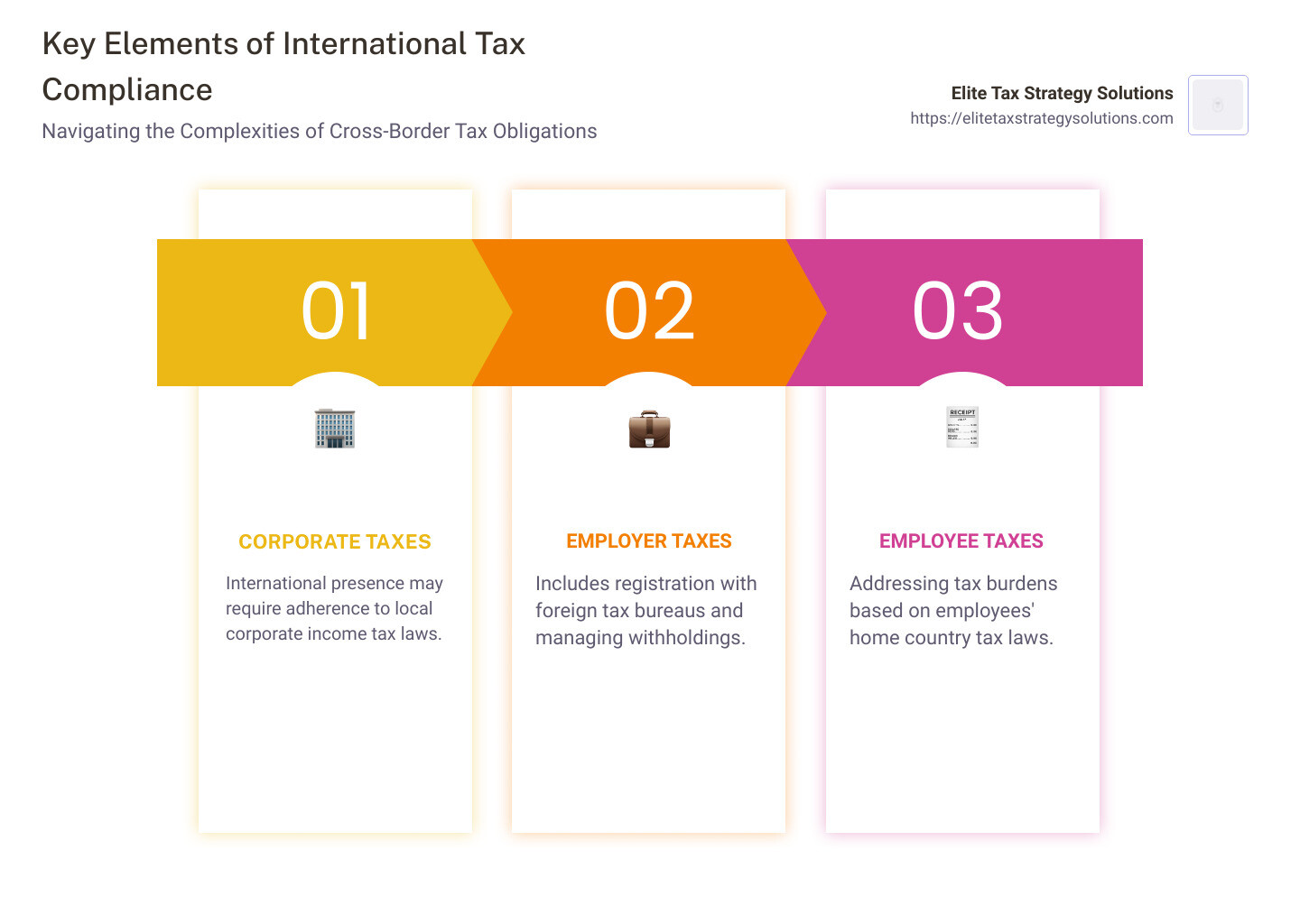
Key elements of international tax compliance include:
- Corporate Taxes: Determining if an international presence requires adherence to a country’s corporate income tax laws.
- Employer Taxes: Registering with foreign tax bureaus and managing tax withholdings and social security payments.
- Employee Taxes: Addressing any different tax burdens employees may face based on their home country’s tax laws.
Compliance is crucial to avoid costly penalties and legal issues. Businesses must identify and comply with relevant tax laws, often benefiting from the expertise of global tax compliance services.
I’m David Fritch. With 40 years of experience in law, tax, and finance, I’ve spent my career helping clients steer the often overwhelming world of international tax compliance. At Elite Tax Strategy Solutions, I specialize in crafting strategies that ensure legal compliance while maximizing financial efficiency.
Understanding International Tax Compliance
Navigating international tax compliance can be complex. It involves understanding various regulations and laws that ensure businesses and individuals meet their tax obligations when dealing with foreign financial assets or employees. Let’s break down some key components.
What is Foreign Tax Compliance?
Foreign tax compliance is about adhering to the rules and regulations that govern how taxes are reported and paid when dealing with foreign entities or assets. A major player in this arena is the Foreign Account Tax Compliance Act (FATCA).
FATCA is a U.S. law that requires foreign financial institutions (FFIs) to report information about financial accounts held by U.S. taxpayers to the IRS. This helps prevent tax evasion by ensuring that income and assets held overseas are properly reported and taxed.
FFIs must either comply with FATCA by registering with the IRS and reporting on U.S. account holders or face penalties. This requirement ensures that the IRS receives accurate data about U.S. taxpayers’ foreign assets, helping to close any loopholes in the tax system.
Who Needs to Comply with FATCA?
FATCA affects a range of entities and individuals. U.S. taxpayers with foreign financial assets exceeding certain thresholds must file Form 8938 with the IRS. This form details their foreign holdings and ensures transparency in reporting.
Foreign entities, particularly FFIs, are also required to comply with FATCA. They must disclose the identities and account details of their U.S. clients to the IRS. Failure to do so can result in being barred from the U.S. financial markets and facing a 30% withholding tax on U.S.-sourced income.
Exemptions from FATCA
Not all entities are required to comply with FATCA. There are specific exemptions, such as:
- Exempt Beneficial Owners: These include certain governmental entities, international organizations, and foreign central banks.
- Foreign Central Banks: These are generally exempt from FATCA reporting requirements due to their unique role in the global financial system.
- Controlled Entities: Entities that are controlled by exempt beneficial owners may also be exempt, provided they meet specific criteria.
Understanding these exemptions is crucial for entities to determine their FATCA compliance obligations accurately.
By grasping these elements, businesses and individuals can better steer the complexities of international tax compliance. This ensures they meet all necessary requirements and avoid potential penalties. Next, we’ll dig into the key components of international tax compliance, focusing on FATCA for individuals, institutions, and governments.
Key Components of International Tax Compliance
Navigating the complexities of international tax compliance involves understanding various laws and regulations. Let’s explore the key components related to the Foreign Account Tax Compliance Act (FATCA) for individuals, institutions, and governments.
FATCA for Individuals
For U.S. individuals, FATCA requires the reporting of foreign financial accounts and assets. If you have foreign financial assets exceeding certain thresholds, you must file Form 8938 with the IRS. This form details your foreign holdings to ensure transparency and prevent tax evasion.
In addition to Form 8938, individuals may also need to file a Foreign Bank Account Report (FBAR) if their foreign account balances exceed $10,000 at any time during the year. This dual reporting helps the IRS track overseas assets and ensures compliance with U.S. tax laws.
FATCA for Institutions
Foreign financial institutions (FFIs) play a critical role in FATCA compliance. These institutions must register with the IRS and obtain a Global Intermediary Identification Number (GIIN). This registration allows them to report information about U.S. account holders to the IRS, helping to prevent tax evasion.
FFIs use the International Data Exchange Service (IDES) to securely transmit and exchange FATCA data with the United States. The IDES platform ensures that sensitive data is safely shared, maintaining the integrity of the compliance process.
FATCA for Governments
Governments worldwide have entered into Intergovernmental Agreements (IGAs) with the U.S. to facilitate FATCA compliance. These agreements streamline the reporting process, allowing local tax authorities to collect and share information about U.S. account holders with the IRS.
Data safeguarding is a critical component of these agreements. Ensuring that personal and financial data is protected is paramount. Compliance management models are in place to oversee this process, ensuring that all parties meet their obligations under FATCA while maintaining data security.
Understanding these components of FATCA is essential for ensuring compliance with international tax regulations. By adhering to these requirements, individuals, institutions, and governments can avoid penalties and maintain transparency in their financial dealings. Next, we’ll discuss strategies for effective international tax compliance, focusing on tax planning, risk management, and compliance tools.
Strategies for Effective International Tax Compliance
In today’s global economy, managing international tax compliance is more important than ever. Let’s explore strategies that can help businesses and individuals steer this complex landscape effectively.
Integrated Compliance Approach
An integrated compliance approach combines tax planning, risk management, and compliance tools to ensure that all bases are covered. At Elite Tax Strategy Solutions, we believe in a holistic method. This involves understanding the unique tax systems and regulations of each country where a business operates.
The goal is to create a seamless compliance framework that aligns with global tax compliance standards. By doing so, businesses can avoid penalties and maintain their reputation across borders.
Managing Multiple Tax Systems
Dealing with multiple tax systems can be daunting. Each country has its own set of international regulations. Companies expanding into new markets must understand these differences to stay compliant.
One effective strategy is to work with experts who have a deep understanding of international tax laws. They can guide businesses through the complexities and ensure compliance with local and international regulations.
It’s also crucial to stay updated on changes in tax laws. Regular updates help businesses adapt their strategies and avoid unexpected issues.
Leveraging Technology for Compliance
Technology plays a pivotal role in simplifying international tax compliance. Tools like the International Data Exchange Service (IDES) facilitate secure data exchange between institutions and governments.
IDES helps financial institutions transmit FATCA data to the United States securely. Compliance software can automate reporting processes, reducing errors and saving time.
By leveraging these technologies, businesses can improve their compliance efforts. This not only streamlines operations but also provides peace of mind by ensuring all regulatory requirements are met.
Incorporating these strategies into your compliance plan can make a significant difference. With the right approach, managing international tax obligations becomes less of a burden and more of an opportunity to strengthen your global presence.
Frequently Asked Questions about International Tax Compliance
Navigating international tax compliance can be tricky. Here are some common questions to help you understand it better.
What is foreign tax compliance?
Foreign tax compliance refers to the obligation of businesses and individuals to adhere to tax laws in countries where they operate or hold financial assets. This includes understanding regulations like the Foreign Account Tax Compliance Act (FATCA), which requires foreign financial institutions to report on the assets held by U.S. account holders.
FATCA’s main goal is to prevent tax evasion by ensuring transparency in global financial transactions. Individuals and entities must report their foreign financial accounts and assets to avoid penalties.
Who needs to comply with FATCA?
FATCA compliance is essential for a variety of parties:
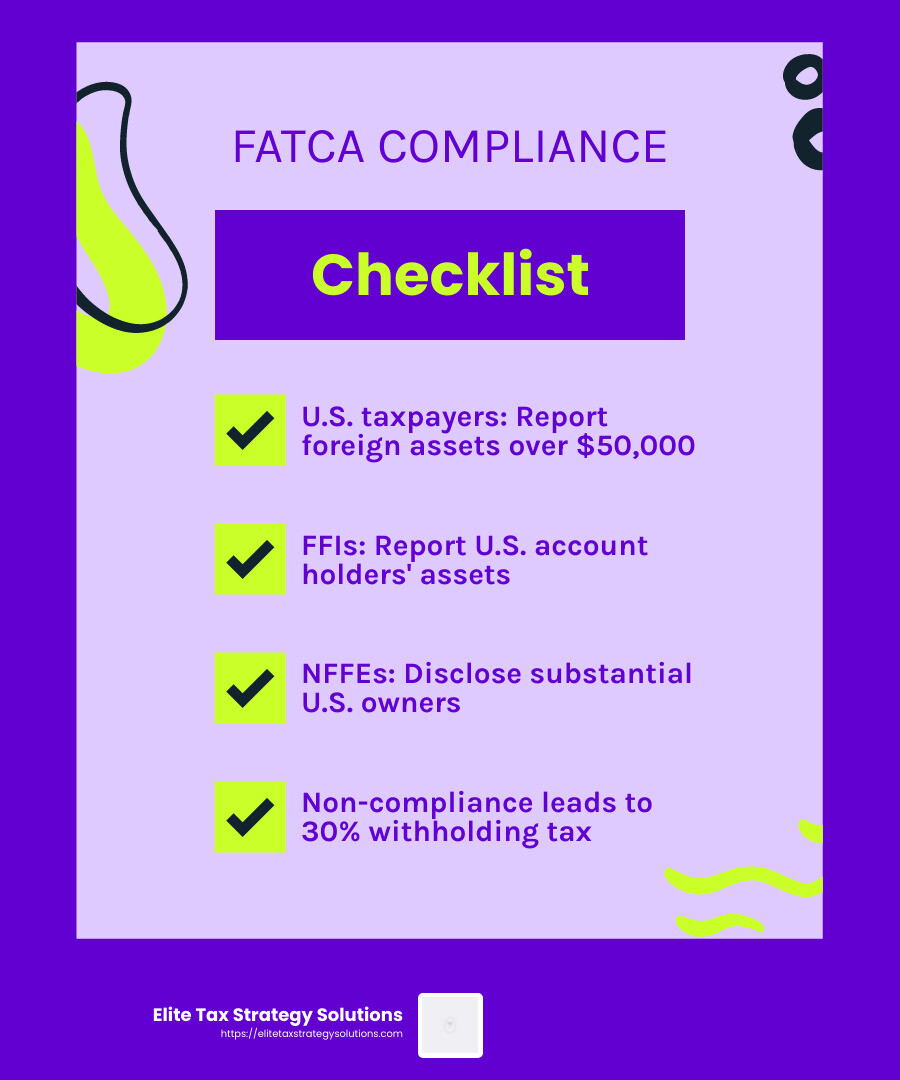
- U.S. taxpayers: Any U.S. citizen or resident with foreign financial assets totaling $50,000 or more must file Form 8938 annually.
- Foreign financial institutions (FFIs): These institutions must report information about financial accounts held by U.S. taxpayers. Failure to comply can result in a 30% withholding tax on certain payments.
- Non-financial foreign entities (NFFEs): These entities must disclose information about substantial U.S. owners or face similar withholding penalties.
Am I exempt from the Foreign Tax Compliance Act?
Certain entities are exempt from FATCA requirements:
- Exempt beneficial owners: Entities like certain retirement funds and nonprofit organizations may qualify for exemption.
- Foreign central banks: These are generally exempt due to their governmental functions.
- Controlled entities: Some entities controlled by foreign governments may also be exempt.
It’s crucial to verify if you qualify for any exemptions to ensure proper compliance and avoid unnecessary reporting.
Understanding these aspects of international tax compliance can help you steer your obligations with confidence. If you’re unsure about your specific situation, consulting with a tax professional can provide clarity and guidance.
Conclusion
In summary, international tax compliance is a crucial aspect of global financial operations. It involves understanding and adhering to complex regulations, like the Foreign Account Tax Compliance Act (FATCA), which aims to prevent tax evasion and ensure transparency in financial dealings worldwide.
At Elite Tax Strategy Solutions, we understand that navigating these regulations can be daunting. That’s why we offer personalized tax planning services custom to high earners and closely held businesses. Our proactive approach focuses on maximizing tax savings while ensuring compliance with international tax laws.
By integrating tax planning into your broader financial strategy, we aim to provide stability and optimize your tax position. Our team of seasoned professionals is dedicated to staying informed about the latest tax law developments, ensuring that your strategies are always up to date.
If you’re looking for expert guidance to manage your international tax obligations, consider partnering with us. We are committed to helping you achieve your financial goals while maintaining compliance with global tax regulations.
For more information on how we can assist you with tax compliance, visit our Tax Support and Compliance page.