How to defer taxes can seem daunting, but it’s a crucial part of tax planning that can significantly improve your financial health. By strategically delaying the taxation of certain income or investments, you can keep more money in your pocket now while planning for a better financial future. Here’s how:
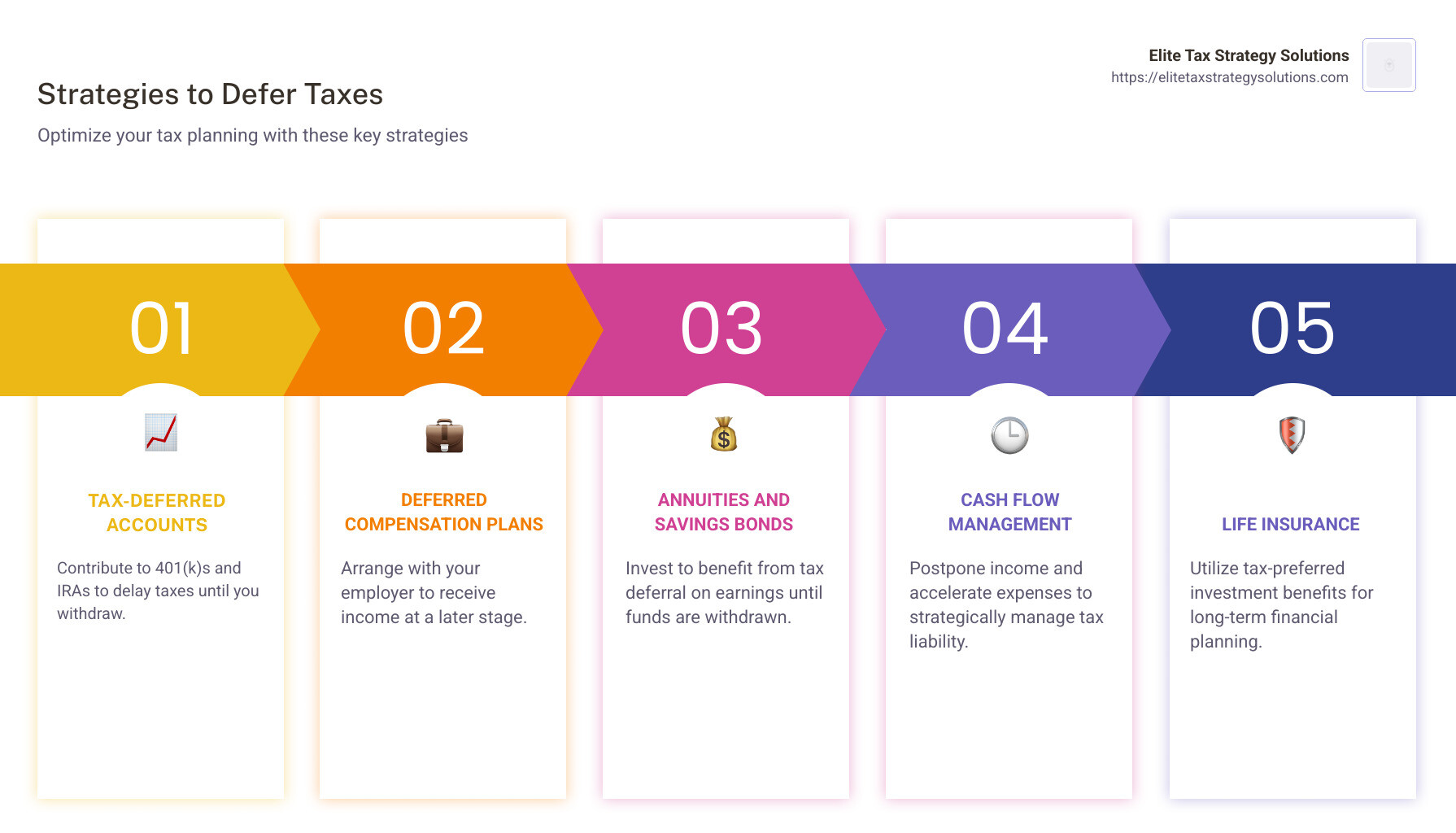
- Use Tax-Deferred Accounts: Contribute to accounts like 401(k)s and IRAs to delay taxes until withdrawal.
- Opt for Deferred Compensation Plans: Arrange with your employer to receive parts of your income at a later stage.
- Invest in Annuities and Savings Bonds: These options offer tax deferral on the earnings until you withdraw the funds.
- Engage in Cash Flow Management: Postpone income and accelerate expenses to manage your tax liability strategically.
These strategies form the backbone of a proactive approach to tax planning, ensuring you’re not only compliant but also optimizing your financial situation for the long term.
My name is David Fritch, and with over 40 years of experience as a CPA and tax advisor, I’m here to guide you on how to defer taxes for better financial outcomes. Stay tuned to explore these strategies in detail and transform your tax planning journey.
Understanding Tax Deferral
Tax deferral is a powerful tool in your financial toolkit, especially when planning for retirement. It allows you to postpone paying taxes on certain investments until a later date, typically when you withdraw the money. This can be a game-changer for your investment growth and overall financial health.
Tax-Deferred Accounts
Think of tax-deferred accounts like 401(k)s and IRAs as a way to boost your savings. When you contribute to these accounts, you don’t pay taxes on the money until you take it out, usually in retirement. This means your money can grow without the drag of annual taxes.
Here’s a quick look at some common tax-deferred accounts:
- 401(k): Offered by employers, contributions are made pre-tax, and withdrawals are taxed as income.
- Traditional IRA: Contributions may be tax-deductible, and taxes are paid upon withdrawal.
- 403(b) and 457 Plans: Similar to 401(k)s, but often available to public sector employees.
Investment Growth
Why is tax deferral so beneficial for investment growth? It’s all about compounding. When you don’t have to pay taxes every year, your entire investment can grow unhindered. Over time, this can lead to significantly larger savings.
Consider this: If you invest $100,000 in a tax-deferred account with a 6% annual return, you’ll have nearly $45,000 more after 15 years compared to a taxable account. That’s a big difference, all thanks to tax deferral!

Retirement Planning
Retirement planning is not just about saving money; it’s about ensuring that your money lasts as long as you do. By using tax-deferred accounts, you can potentially be in a lower tax bracket when you retire, reducing your overall tax burden.
Here’s how tax deferral fits into a retirement strategy:
- Maximize Contributions: Contribute as much as possible to tax-deferred accounts while you’re working.
- Plan Withdrawals: Strategically time your withdrawals to minimize taxes, especially if you’re in a lower tax bracket during retirement.
- Diversify Income Sources: Combine tax-deferred accounts with other income sources like Social Security and taxable investments for a balanced approach.
By understanding and utilizing tax deferral, you’re not just saving money—you’re strategically planning for a secure and comfortable retirement. Next, we’ll dig into specific strategies for deferring taxes and how they can benefit you.
How to Defer Taxes
Deferring taxes can be a savvy strategy to keep more money in your pocket. By postponing income and strategically managing your finances, you can reduce your current tax burden and potentially benefit from lower tax rates in the future. Let’s explore some effective tax deferment strategies.
Income Postponement
One of the most straightforward ways to defer taxes is by postponing income. If you anticipate being in a lower tax bracket next year, delaying income can be beneficial. Here are some practical methods:
-
Delay Collections: If you’re self-employed, consider sending invoices in late December. This way, payments are received in the next year, pushing the income—and the associated tax—into the future.
-
Defer Bonuses: If possible, ask your employer to delay your year-end bonus until January. This shifts the income to the next tax year, potentially reducing your current year’s tax liability.
-
Hold Incentive Stock Options: If you have stock options, holding onto them for a longer period can defer both income and capital gains taxes.
Tax Strategies
Implementing smart tax strategies can further improve your ability to defer taxes. Here are some to consider:
-
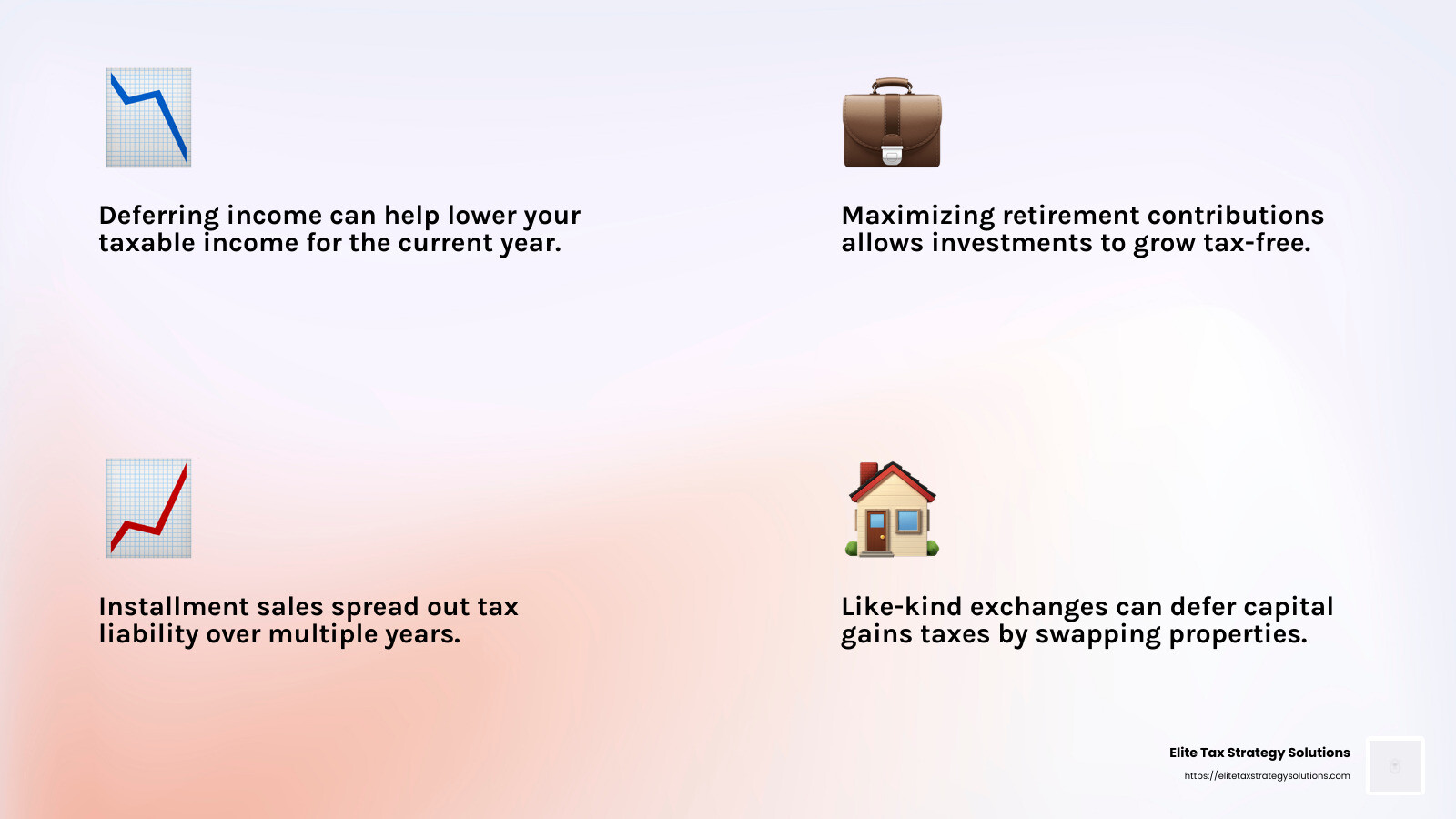
Maximize Retirement Plan Contributions: Contribute the maximum allowable amount to tax-deferred retirement accounts like 401(k)s and IRAs. This not only reduces your taxable income now but also allows your investments to grow tax-free until withdrawal.
-
Use Installment Sales: If selling property, opt for installment payments spread over several years. This spreads out the tax liability, potentially reducing your tax bracket each year.
-
Like-Kind Exchanges: For business or investment properties, consider a like-kind exchange to defer capital gains. By swapping properties, you can postpone recognizing gains until a later date.
Tax Strategies in Action
Consider Jane, a small business owner. She decides to defer income by sending invoices at the end of December and delays her year-end bonus to January. She also maximizes her 401(k) contributions. These moves reduce her taxable income for the current year, allowing her to save on taxes and increase her retirement savings.
By understanding and applying these tax strategies, you can effectively manage your tax liabilities and improve your financial health. Next, we’ll dive into specific strategies for deferring taxes, including retirement accounts and other tools that can help you save even more.
Strategies for Deferring Taxes
When it comes to how to defer taxes, there are several strategies that can help you save more and grow your wealth over time. Let’s explore some effective methods:
Traditional IRAs
Contributing to a Traditional IRA is a classic way to achieve tax-deferred growth. You can contribute up to $6,500 annually (or $7,500 if you’re 50 or older) for 2023. These contributions can reduce your taxable income, and the investments grow tax-deferred until you withdraw them in retirement. This strategy is particularly beneficial if you expect to be in a lower tax bracket when you retire.
Non-Qualified Deferred Compensation Plans
For those with access to employer plans, Non-Qualified Deferred Compensation (NQDC) Plans offer a unique way to defer income. By setting aside a portion of your salary, you can postpone taxation until you receive the funds, often during retirement when your tax rate may be lower. However, keep in mind that these funds are subject to the employer’s financial health, as they remain part of the company’s assets.
Life Insurance
Life insurance can serve as a tax-preferred investment. While the primary goal is to provide for beneficiaries, certain policies allow your cash value to grow tax-deferred. This means you can accumulate wealth without immediate tax implications. Additionally, beneficiaries typically receive the death benefit tax-free, making it a strategic tool for estate planning.
Annuities
Annuities are a reliable way to secure tax-deferred income. You pay a premium to an insurance company, and in return, you receive a stream of income in the future. This can be particularly advantageous in retirement, as your tax rate may be lower. Plus, annuities offer the peace of mind of guaranteed payments, helping you manage your retirement income more effectively.
Employee Stock Options
If you have access to equity compensation, employee stock options can be a powerful tool for tax deferral. With Incentive Stock Options (ISOs), you can defer taxes until you sell the shares, potentially benefiting from lower long-term capital gains rates. This not only postpones your tax liability but also allows your investments to grow.
Health Savings Accounts
Health Savings Accounts (HSAs) offer dual benefits: they help cover healthcare costs and provide tax advantages. Contributions are made pre-tax, and funds grow tax-free if used for qualified medical expenses. This can be a valuable strategy to manage healthcare costs while also deferring taxes on the account’s growth.
By exploring these strategies for deferring taxes, you can make informed decisions that align with your financial goals. Next, we’ll address some frequently asked questions about tax deferral to help clarify this complex topic.
Frequently Asked Questions about Tax Deferral
How do I defer my taxes from the IRS?
To defer your taxes, you can file for an extension using Form 4868. This gives you more time to submit your tax return, pushing the deadline from April 15 to October 15. You can easily file this form electronically through the IRS e-file system, which is a quick and reliable method. However, an extension to file is not an extension to pay. You still need to estimate and pay any taxes owed by the original due date to avoid penalties and interest.
Is deferring income a good idea?
Deferring income can be a smart move, especially if you anticipate being in a lower tax bracket in the future. For example, if you’re nearing retirement, postponing income to a time when your earnings are reduced can minimize your tax liability. This strategy helps in reducing your taxable income now, potentially saving you money on your current tax bill. However, it’s crucial to weigh the benefits against any potential risks, such as changes in tax laws or personal financial needs.
Can you defer income taxes?
Yes, income postponement is a viable strategy to defer taxes. By delaying the receipt of income to a future year, you can reduce your taxable income for the current year. Common methods include deferring bonuses, delaying billing for services, or utilizing retirement accounts like 401(k)s and IRAs. These strategies not only provide tax reduction benefits but also allow your investments to grow, giving you a financial advantage in the long run.
By understanding these aspects of tax deferral, you can make informed decisions that align with your financial goals. Next, we’ll explore how Elite Tax Strategy Solutions can help you with proactive tax planning for financial stability.
Conclusion
At Elite Tax Strategy Solutions, we believe that proactive tax planning is essential for achieving long-term financial stability. Our team specializes in offering personalized tax planning services that focus on maximizing tax savings and ensuring compliance with ever-changing tax regulations.
Why Choose Us for Your Tax Planning Needs?
Our approach is thorough and custom to fit your unique financial situation. We understand that tax planning shouldn’t be a one-size-fits-all solution. By working closely with you, we identify the best strategies to defer taxes, allowing you to keep more money in your pocket.
Proactive Tax Planning for Financial Stability
Our philosophy centers around being proactive rather than reactive. By integrating tax planning into your overall financial strategy, we help you make informed decisions that align with your long-term goals. This includes leveraging tax-deferred accounts, optimizing investment growth, and planning for a secure retirement.
Whether you’re a high-income earner or a small business owner, our expertise can guide you through the complexities of the tax code. We are committed to helping you achieve financial optimization and stability.
For more information about how we can assist you with proactive tax planning, visit our Innovative Tax Planning page. Let us help you steer the intricacies of tax planning and secure a brighter financial future.