
Introduction: From High Income to High Net Worth
High income financial planning is not just about making a lot of money; it’s about converting that income into lasting wealth. For those with significant earnings, financial planning becomes more complex but also presents unique opportunities.
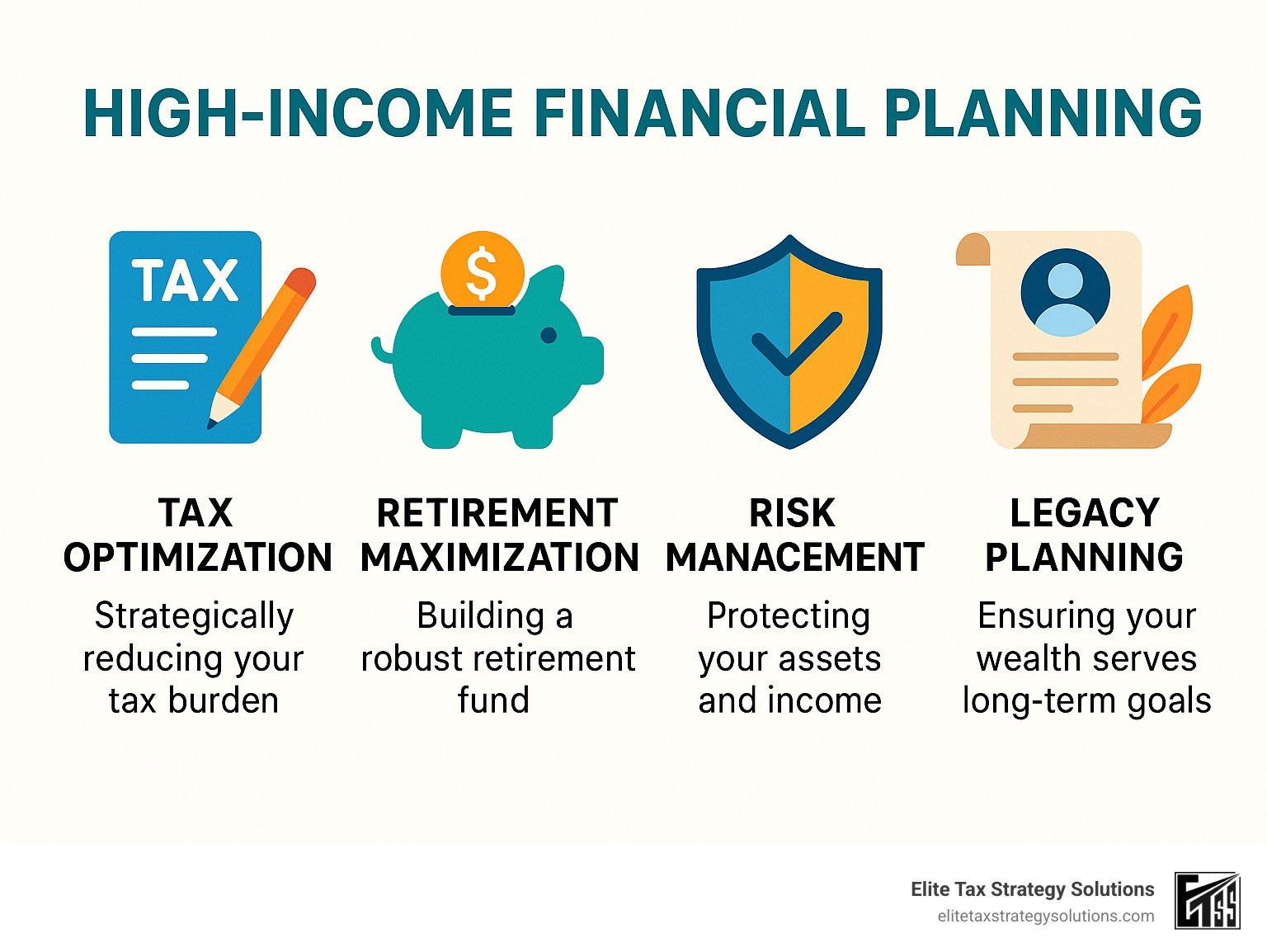
To maximize your financial plan as a high-income earner, focus on these key pillars:
- Tax Optimization: Strategically reducing your tax burden.
- Retirement Maximization: Building a robust retirement fund.
- Risk Management: Protecting your assets and income.
- Legacy Planning: Ensuring your wealth serves future generations.
Earning a high income is a great achievement, but it doesn’t automatically lead to a high net worth. Many struggle to convert earnings into wealth due to complexities in saving, investing, and tax planning. Proper preparation is vital for building a strong financial foundation, especially for high earners.
I’m David Fritch. With over 40 years of experience in law and CPA practice, and 20 years as an Investment Advisor, I help high-income earners and small business owners open up their financial potential through strategic high income financial planning. My goal is to help you manage and grow your profits while simplifying complex tax rules.
High income financial planning terms explained:
The Foundation: Mastering Your Cash Flow and Risk Management
Earning a substantial income doesn’t automatically translate into a high net worth. The key is not just how much flows in, but how much you keep, spend wisely, and strategically protect. This is where solid cash flow management and smart risk protection become the bedrock of your high income financial planning.
A critical first step is building a robust emergency fund. For high-income earners, we recommend 6 to 12 months of living expenses. Your life often comes with higher expenses and bigger financial commitments, making a larger cushion necessary. This fund should be in a high-yield savings account, keeping it accessible and safe from market fluctuations. It’s your financial safeguard against unexpected events like a medical bill or job change. To dive deeper, explore Ways to Improve Your Personal and Financial Stability and Planning.
Eliminating High-Interest Debt Strategically
Even for high earners, debt can be a silent wealth destroyer. High-interest burdens like credit card debt, personal loans, or luxury car loans chip away at your money. Their interest charges can snowball, making it hard to get ahead. Prioritizing the swift elimination of these debts is a non-negotiable step in smart high income financial planning.
Student loans are also a significant part of the financial landscape for many professionals. If you’re pursuing Public Service Loan Forgiveness (PSLF), stay diligent with the program’s requirements. If you have private student loans or PSLF isn’t your path, consider private loan refinancing. The goal is to reduce the interest rate, freeing up more income for investing and wealth building.
Protecting Your Wealth with Robust Insurance

As your income and assets grow, so do potential risks. Insurance is a critical shield protecting everything you’ve worked for. We consistently advise high-income earners to secure adequate disability insurance. Your ability to earn an income is your most valuable asset. Disability insurance replaces a significant portion of your lost earnings if an illness or accident prevents you from working.
Term life insurance is another essential piece, providing a financial safety net for your loved ones. We generally recommend term life over more complex permanent policies for most pure coverage needs, as it’s more cost-effective for providing substantial protection during your prime earning years.
Finally, consider an umbrella liability policy. This offers an extra layer of protection beyond your homeowner’s and auto insurance, safeguarding your wealth from lawsuits or large liability claims. It’s also crucial to review your employer-sponsored coverage regularly, as it might not be sufficient for your unique circumstances. Protecting your existing wealth is as important as growing it. For further insights, explore our resources on Tax-Efficient Estate Planning.
Supercharging Your Retirement and Investment Accounts
Once you’ve mastered cash flow and built a solid financial foundation, it’s time to accelerate your wealth accumulation through smart retirement and investment planning. As a high earner, your biggest advantage is time, which open ups the power of compounding interest.
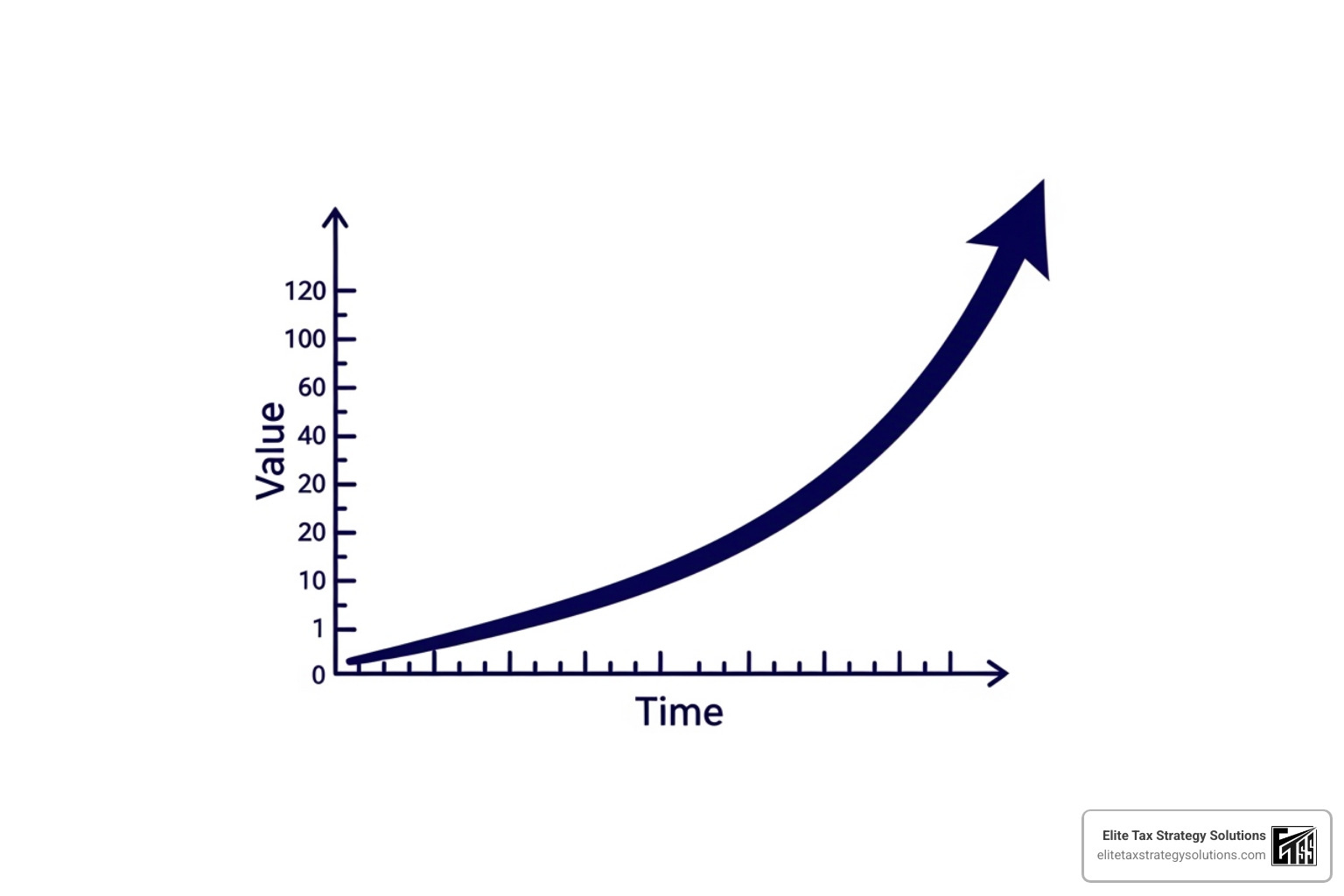
Compounding is when your money earns money, and then that money earns even more. Getting started early with consistent contributions is crucial. Beyond saving, you need a well-diversified investment portfolio that fits your risk tolerance and timeline, spreading your money across assets like stocks and bonds. Regularly rebalancing your portfolio keeps it on track. A clear Investment Policy Statement (IPS) acts as a roadmap, ensuring your investments align with your long-term goals.
Maximizing Tax-Advantaged Retirement Contributions
For high-income earners, annual contribution limits can feel restrictive. For instance, in 2025, the 401(k) limit is $23,500 for those under 50, while the Roth and Traditional IRA limit is $7,000. This requires a multi-pronged approach to your high income financial planning for retirement.
First, max out your 401(k) contributions, especially to capture any employer match—it’s essentially free money.
Next, consider a Backdoor Roth IRA. If your income is too high for direct Roth contributions, this strategy allows you to contribute to a traditional IRA and then convert it to a Roth, enabling tax-free growth and withdrawals in retirement. This requires careful handling, including filing IRS Form 8606 and navigating the “pro-rata” rule.
For the self-employed or small business owners, a SEP IRA (Simplified Employee Pension) is a fantastic option with much higher contribution limits than traditional IRAs, allowing for significant tax-deferred growth.
Don’t overlook the Health Savings Account (HSA). It’s a retirement powerhouse with a “triple tax advantage”: contributions are tax-deductible, money grows tax-free, and withdrawals for qualified medical expenses are also tax-free. It’s a secret weapon for your financial future.
For more detailed strategies, see our insights on Retirement Tax Strategies for High Income Earners. There are annual limits on contributions, so planning is key.
Beyond Retirement: Building Wealth in Taxable Accounts
After maximizing tax-advantaged accounts, build more wealth in taxable brokerage accounts, where tax efficiency is crucial for high income financial planning.
Consider Tax-Managed Mutual Funds or ETFs, which are designed to minimize your tax bill by managing capital gains and losses.
Municipal Bonds are often a hidden gem. Their interest income is typically tax-free at the federal level (and sometimes state and local), which can lower your Net Investment Income Tax (NIIT) exposure.
Real Estate Investing can offer tax benefits like depreciation deductions to offset rental income.
Finally, as your wealth grows, you might explore Alternative Investments like private equity or hedge funds. These can offer greater diversification but often come with higher risk and less liquidity.
To learn how to make your investments work smarter, see our guide on Tax-Efficient Investments.
Core Strategies for High Income Financial Planning and Tax Minimization
For high earners, managing your tax burden is about proactive planning that can lead to significant savings. Tax minimization involves legally organizing your financial life to pay only what you owe. This is a critical component of high income financial planning, as progressive tax systems can take a large bite out of your earnings.

Understanding how different income types are taxed is key. Ordinary income from your job is usually taxed at higher rates than long-term capital gains. State and local taxes add another layer of complexity. Proactive planning makes a world of difference. For a deeper dive, see our insights on Taxes and Financial Planning.
Effective Tax-Reduction Techniques for High Earners
With a few clever strategies, you can keep more of your hard-earned money.
One powerful tool is Tax-Loss Harvesting. This involves selling investments at a loss to offset capital gains and up to $3,000 of ordinary income annually. Any excess losses can be carried forward to future years, boosting your after-tax returns.
Another technique is Capital Gains Management. The tax rate on investments held for more than a year is often much lower than on short-term holdings. Patience can lead to tax savings, and strategically timing when you sell assets can help manage your overall tax bill.
You can also Offset Ordinary Income with certain deductions from business activities or specific investments, which lowers your taxable income.
Finally, review your Withholding Adjustments on your W-4 or estimated tax payments. The goal is to pay just enough to avoid penalties, keeping more cash in your pocket during the year instead of giving the government an interest-free loan. For more powerful strategies, see our guide on 5 Outstanding Tax Strategies for High Income Earners.
Using Charitable Giving for Tax-Efficient Philanthropy
Generosity can also be a smart tax strategy. It’s a win-win: you support causes you believe in and reduce your tax burden.
A Donor-Advised Fund (DAF) is like a personal charitable savings account. You contribute cash or appreciated assets, get an immediate tax deduction, and then recommend grants to charities over time. This is useful for “bunching” several years’ worth of donations into one high-income year for a larger tax break.
Donating Appreciated Securities directly to a charity or DAF is another smart move. You avoid paying capital gains tax on the growth and still get a deduction for the full market value.
For those over 70.5, a Qualified Charitable Distribution (QCD) allows you to send money directly from your IRA to a charity. This distribution can satisfy your Required Minimum Distribution (RMD) but isn’t included in your taxable income.
Bunching Contributions can be effective if you itemize. By concentrating several years of charitable gifts into one year (perhaps via a DAF), you can exceed the standard deduction and maximize your tax benefit. Strategic giving is a cornerstone of High Net Worth Tax Planning.
Advanced Wealth and Legacy Planning Strategies
As your financial success grows, your focus shifts from making money to preserving it, growing it wisely, and ensuring it benefits your loved ones. This is where advanced high income financial planning moves beyond the basics to sophisticated strategies for preserving and transferring wealth.
Sophisticated Structures for High Income Financial Planning
For those with significant wealth, especially business owners, advanced structures can provide tax advantages, asset protection, and flexibility in wealth transfer.
- Family Trusts: These legal entities hold assets like investments or real estate, protecting them from creditors and lawsuits. They also allow you to control how wealth is distributed to future generations, ensuring it aligns with your long-term goals.
- Individual Pension Plans (IPPs): For business owners and executives, an IPP is a super-charged retirement plan. It often allows for much larger tax-deferred contributions than a standard RRSP (in Canada), building a bigger nest egg.
- Incorporation for Business Owners: Structuring your business as a corporation can lower your immediate tax burden, as corporate tax rates are often lower than personal rates. It also creates a liability shield, separating personal assets from business debts.
- Family Limited Partnerships (FLPs): An FLP allows you to transfer assets to younger family members at a potential discount for gift and estate tax purposes, while you retain control over the assets.
These strategies are complex, which is why we stress the importance of Strategic Tax Planning with expert guidance.
Key Financial Milestones to Achieve by Age 40
For high-income earners approaching their 40s, it’s a great time to check in on your financial progress. Aiming for these milestones builds a foundation for a life with more choices and less financial stress.
Key financial goals to aim for by age 40:
- High-Interest Debt Eliminated: Consumer debts like credit card balances should be gone, freeing up cash flow for investing.
- Fully Funded Emergency Fund: Have 6 to 12 months of living expenses in a high-yield savings account as a shield against unexpected events.
- Substantial Net Worth: Your net worth should reflect years of smart saving and investing, ideally reaching a multiple of your annual income.
- Consistent Retirement Savings: You should be consistently maxing out your 401(k) and other tax-advantaged retirement accounts to leverage compounding.
- Home Ownership Plan: Have a clear strategy for homeownership, whether you already own or plan to buy. Renting can also be a sensible choice in some markets.
- Kids’ Education Planning: If you have children, have a plan for their education costs, utilizing accounts like 529 plans (U.S.) or RESPs (Canada).
Achieving these milestones empowers you to control your financial destiny, potentially creating the option to retire in your 50s. To explore this path, Start mapping out your financial independence timeline.
Frequently Asked Questions about High-Income Financial Planning
Here are some of the most common questions we hear about the unique aspects of high income financial planning.
How is financial planning different for high-income earners?
Making more money introduces new layers of complexity. Financial planning for high-income earners is different due to:
- Greater Complexity: Finances often include stock options, deferred compensation, or business ownership, requiring a more detailed, customized plan.
- Higher Tax Burden: As income rises, so do marginal tax rates, making proactive tax minimization strategies essential.
- Advanced Investment Opportunities: More capital allows access to a broader range of investments like private placements or sophisticated real estate deals, which require specialized knowledge.
- Greater Need for Asset Protection: With more to lose, strategies like trusts, FLPs, and umbrella insurance become vital to safeguard wealth from lawsuits or creditors.
- Estate Planning Importance: Ensuring significant assets are passed down according to your wishes with minimal tax impact becomes a central focus.
What are the first steps in high income financial planning?
Starting your journey begins with understanding where you are and where you want to go.
- Assess Your Net Worth: Calculate your assets minus your liabilities to establish a financial baseline.
- Organize Financial Documents: Gather statements, policies, and debt information to simplify decision-making and tax preparation.
- Establish a Budget: Track your cash flow to identify savings opportunities and direct funds toward your goals.
- Define Financial Goals: Clearly articulate your short-, mid-, and long-term goals to create a roadmap for your financial journey.
- Build an Emergency Fund: Secure 6 to 12 months of living expenses in a high-yield savings account to absorb financial shocks.
- Maximize Retirement Accounts: Max out contributions to 401(k)s, IRAs, and HSAs to take full advantage of tax-advantaged growth.
When should I hire a professional for tax and financial advice?
While you can manage basic finances, the complexity for high-income earners often makes professional guidance essential. You should seek professional advice when:
- You have a complex tax situation: Multiple income streams, a business, or significant capital gains require an expert to steer tax codes.
- You own a closely held business: Business owners face unique tax, succession, and compensation challenges that demand specialized expertise.
- You have significant investment assets: Managing a large, diversified portfolio and implementing strategies like tax-loss harvesting is best handled with expert guidance.
- You have estate planning needs: An attorney and financial advisor are indispensable for distributing wealth, minimizing taxes, and protecting assets for future generations.
- You desire a coordinated strategy: A financial advisor can act as your financial “CFO,” coordinating with your tax professional and attorney to ensure all parts of your financial life work together.
- You want peace of mind: Knowing a team of experts is guiding your decisions frees you to focus on your career and passions.
Unless you are an expert, we suggest you talk to a financial advisor. For more on this, here are key steps to follow when finding an advisor.
Conclusion: Taking Control of Your Financial Future
You’ve worked hard to achieve a high income. As we’ve explored, high income financial planning is about converting that income into lasting wealth and financial freedom. This is an ongoing journey that requires a proactive mindset.
By mastering cash flow, eliminating debt, and using robust insurance, you build a solid foundation. By maximizing retirement and investment accounts, you put your money to work. And by implementing advanced tax and legacy strategies, you ensure your wealth grows efficiently and serves your long-term goals.
The motto “Always be prepared!” is especially powerful in financial planning. For high-income earners, this preparation is critical because the stakes are higher and the opportunities are greater.
At Elite Tax Strategy Solutions, we specialize in personalized tax planning for high earners and closely held businesses. Our proactive approach is designed to optimize your financial structure, maximize tax savings, and boost your financial stability. Whether you’re navigating complex investments or growing a business, our goal is to help you transform your high income into substantial, lasting wealth.
If you’re ready to take the next step towards comprehensive high income financial planning, we invite you to explore how we can help. Take the next step with our comprehensive financial planning services today.