Why High-Income Canadians Face a Complex Tax Challenge
Canadian tax strategies for high income earners are essential for managing tax burdens that can exceed 50% of income. Canada’s progressive tax system places those earning over $235,675 in the highest federal tax bracket, making strategic planning crucial for wealth preservation.
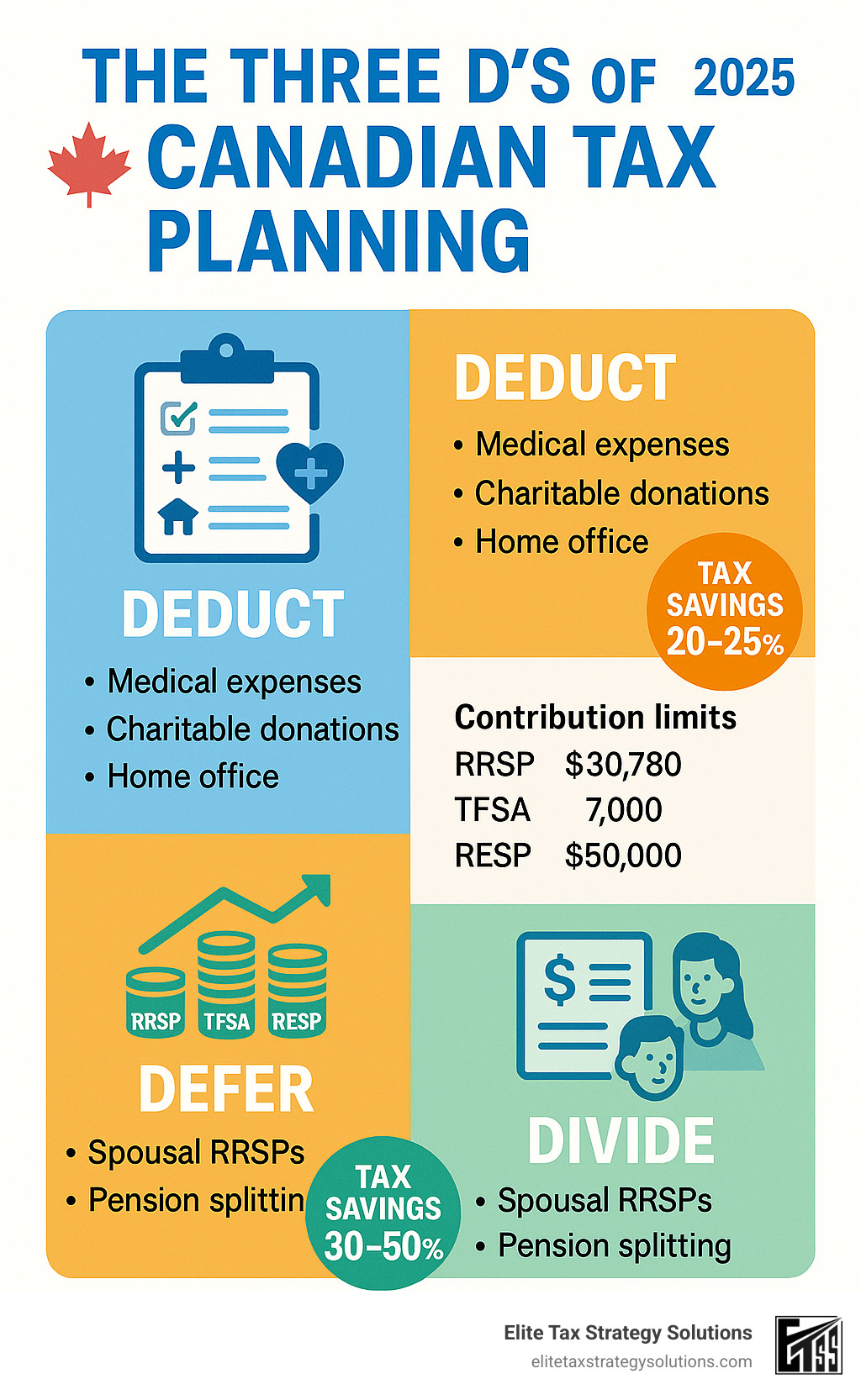
Without a plan, high earners can lose nearly half their income to taxes. However, legitimate tax minimization strategies can significantly reduce this burden. The foundation of effective tax planning rests on the “Three D’s”:
- Deduct: Maximize all available deductions and credits.
- Defer: Use registered accounts to postpone or eliminate taxes.
- Divide: Split income with family members to lower the household tax rate.
I’m David Fritch, and with 40 years of experience, I’ve helped high-income earners and business owners save thousands annually through optimized canadian tax strategies for high income earners. My expertise in advanced tax planning helps clients steer complex regulations and maximize their wealth.
While Elite Tax Strategy Solutions is headquartered in Jasper, Indiana, we work virtually with clients across Canada, ensuring that geography is never a barrier to accessing specialized Canadian tax expertise.
Canadian tax strategies for high income earners vocabulary:
- financial planning for high income earners
- tax planning strategies for high income earners
- wealth management tax planning
The Three D’s of Tax Planning: Deduct, Defer, and Divide
Effective canadian tax strategies for high income earners are built on three core principles: Deduct, Defer, and Divide. Mastering these strategies is the foundation for saving thousands of dollars annually. Tax planning is not a one-time event; it requires regular attention to adapt to changing laws and life circumstances.
Deduct: Maximizing Every Available Claim
Tax deductions reduce your taxable income, while tax credits directly lower your tax bill. For those in top brackets, every dollar deducted can save about 50 cents in taxes. Key areas to focus on include often-overlooked medical expenses, and charitable donations, where donating appreciated stocks can eliminate capital gains tax while providing a full donation receipt. With the rise of remote work, home office expenses have become a significant deduction for eligible individuals. Don’t forget carrying charges and interest expenses on investment loans, as well as professional dues and childcare costs. For a complete picture, the CRA offers a comprehensive guide on all deductions, credits, and expenses. To see how we help clients maximize these, visit our page on tax optimization strategies.
Defer: Postponing Your Tax Bill for Future Growth
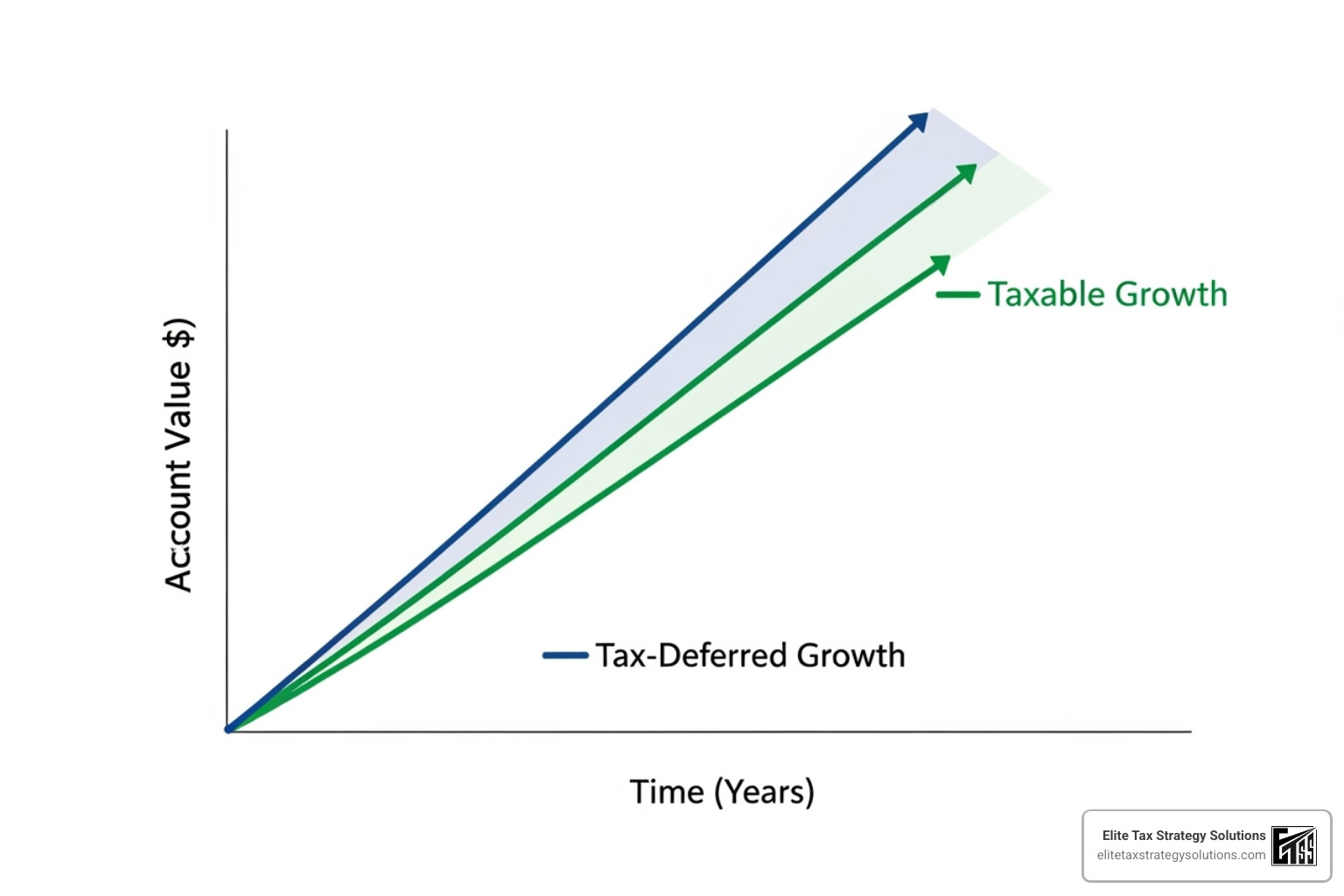
Tax deferral means postponing your tax bill, allowing your money to grow more quickly without an annual tax drag. RRSP contributions are a primary tool, providing an immediate tax deduction and tax-deferred growth until retirement. While TFSA contributions aren’t deductible, all growth and withdrawals are completely tax-free, making it a powerful vehicle. For families, an RESP offers tax-deferred growth and government grants for education savings. The FHSA provides the best of both worlds for first-time home buyers: a tax deduction on contributions and tax-free withdrawals for a home purchase. At age 71, your RRSP converts to a RRIF, continuing the tax deferral into retirement.
Divide: Effective Income Splitting for Family Tax Savings
Canada’s progressive tax system allows families to reduce their overall tax burden by shifting income from a high-earning member to a lower-earning one. Spousal RRSP contributions allow the high-income spouse to get the deduction while the income is taxed in the lower-income spouse’s hands at retirement. Pension income splitting lets you transfer up to 50% of eligible pension income to your spouse. For business owners, paying reasonable salaries to family members for genuine work can shift income to lower tax brackets. More sophisticated strategies like prescribed rate loans can also be effective but require careful execution to steer CRA attribution rules. For detailed guidance, see our page on tax strategies for high income earners.
Advanced Canadian Tax Strategies for High Income Earners
Beyond the foundational “Three D’s,” more sophisticated canadian tax strategies for high income earners can open up substantial savings, especially for business owners, incorporated professionals, and serious investors.

For Business Owners & Incorporated Professionals
Incorporating your business is a powerful first step, creating a separate legal entity with a much lower corporate tax rate (as low as 9-13%) compared to personal rates. This allows for significant tax deferral, as profits can be left in the corporation to grow at this lower rate. The key decision of paying yourself a salary versus dividends depends on your need for RRSP room and overall tax integration. For established professionals, Individual Pension Plans (IPPs) and Retirement Compensation Arrangements (RCAs) offer ways to make tax-deferred contributions far exceeding RRSP limits, providing improved retirement savings and creditor protection. These advanced strategies require expert navigation, which we detail in our Advanced Tax Planning Strategies.
For Savvy Investors: Building Wealth Tax-Efficiently
Smart investors focus on after-tax returns. A key advantage in Canada is that only 50% of capital gains are taxable, though gains above $250,000 annually now face a 2/3 inclusion rate, making timing critical. Canadian dividends also receive favorable tax treatment through a tax credit. An effective asset location strategy is crucial: place interest-bearing investments like GICs in registered accounts (RRSP/TFSA), high-growth stocks in a TFSA for tax-free gains, and Canadian dividend stocks in non-registered accounts to benefit from the tax credit. Using tax-deductible investment loans can further improve net returns. Our Tax-Efficient Investing page provides more detail.
For Legacy Builders: Estate Planning & Charitable Giving
Effective estate planning preserves wealth for future generations. Family trusts can help split income and protect assets, but require careful management to handle the 21-year deemed disposition rule. For philanthropists, donating appreciated securities in-kind is highly efficient, as it eliminates capital gains tax while providing a full tax receipt. Donor-advised funds offer a simpler alternative to a private foundation. Finally, tax-exempt life insurance can provide tax-free liquidity to an estate, cover tax liabilities, and serve as a tax-advantaged investment vehicle within a corporation. These strategies are integral to long-term wealth transfer, as explored on our Retirement Tax Strategies for High Income Earners page.
Navigating Tax Complexities and The Role of Professional Advice
Successfully implementing canadian tax strategies for high income earners requires deep knowledge of Canada’s ever-changing tax laws. The Canada Revenue Agency (CRA) is sophisticated in its review processes, and complex strategies can attract scrutiny. This doesn’t mean avoiding legitimate strategies, but rather ensuring they are implemented flawlessly.

Understanding the Alternative Minimum Tax (AMT)
The AMT is a parallel tax calculation designed to ensure high-income individuals who use significant deductions still pay a minimum amount of tax. Certain tax preferences, like large capital gains or stock option benefits, can trigger the AMT. If the AMT calculation results in a higher tax bill than your regular tax, you pay the AMT. Significant changes to the AMT regime in 2024 have broadened its scope, making it a more critical planning consideration for wealthy Canadians than ever before. For detailed guidance, visit our page on More info about High Income Tax Planning.
Why Professional Guidance is Non-Negotiable for High Earners
Given the high stakes and complexity, professional guidance is essential. Advanced strategies involve intricate rules where one misstep can negate the benefits and attract CRA audit risk. A professional provides a personalized approach, ensuring your tax plan is compliant, well-documented, and fully integrated with your broader financial goals for wealth accumulation, retirement, and legacy building. Tax laws and personal situations change, so ongoing strategy review is crucial to maintain an optimized position. At Elite Tax Strategy Solutions, we provide this proactive approach to tax optimization and compliance. Learn more about our methodology on our More info about Proactive Tax Planning page.
Frequently Asked Questions about Canadian Tax Strategies for High Income Earners
How can a high-income earner effectively reduce taxes in Canada?
A comprehensive approach is key. The most effective strategies include:
- Maximizing Registered Accounts: Fully fund your RRSP, TFSA, RESP, and FHSA to benefit from tax deductions and tax-free or tax-deferred growth.
- Claiming All Deductions: Carefully track medical expenses, charitable donations (especially appreciated securities), home office costs, and investment carrying charges.
- Income Splitting: Use spousal RRSPs, pension splitting, and prescribed rate loans to shift income to family members in lower tax brackets.
- Investing Strategically: Focus on tax-efficient capital gains and Canadian dividends, and use a smart asset location strategy.
- Incorporating a Business: Benefit from low corporate tax rates and tax deferral opportunities.
What is the most tax-efficient way to withdraw funds from my corporation?
There is no single answer, as the best strategy depends on your situation. It often involves a strategic mix of salary and dividends. The Capital Dividend Account (CDA) is the most efficient, allowing for tax-free withdrawals.
| Withdrawal Method | Tax Treatment | Best Used When |
|---|---|---|
| Salary | Fully taxable as employment income; creates RRSP room; deductible to corporation | You need RRSP contribution room; consistent income needs |
| Eligible Dividends | Taxed at preferential rates due to dividend tax credit; no RRSP room created | Corporate tax already paid; lower personal tax rates desired |
| Capital Dividends | Completely tax-free to shareholder from Capital Dividend Account | Corporation has realized capital gains or received life insurance proceeds |
Is tax avoidance legal in Canada?
Yes, absolutely. Tax avoidance through legitimate tax planning is legal and encouraged by the Canadian tax system. Contributing to an RRSP or using a TFSA are common examples of legal tax avoidance. This is fundamentally different from tax evasion, which is the illegal act of hiding income or falsifying information. The CRA distinguishes between legitimate planning and “abusive” tax avoidance, which involves artificial transactions. Our focus at Elite Tax Strategy Solutions is exclusively on legitimate, well-established strategies that align with the law and help you minimize taxes effectively.
The Three D’s of Tax Planning: Deduct, Defer, and Divide
At Elite Tax Strategy Solutions, we believe effective tax planning begins with a solid foundation. We call this the “Three D’s”: Deduct, Defer, and Divide. These core principles are the bedrock of any successful strategy to reduce your overall tax burden, ensuring you keep more of your hard-earned money. Tax planning should always be an ongoing process, adapting to your life’s changes and the evolving tax landscape. It’s truly the cumulative result of different tax planning strategies working in harmony.
Deduct: Maximizing Every Available Claim
When we talk about tax deductions and credits, it’s crucial to understand the difference. A deduction reduces your taxable income, meaning you pay tax on a smaller amount. A tax credit, on the other hand, directly reduces the amount of tax you owe. For high-income earners, maximizing both can lead to significant savings.
Key areas where you can claim deductions and credits include:
- Medical Expenses: Keep a running tally of eligible medical expenses for yourself and your family.
- Charitable Donations: Donating publicly listed securities that have increased in value directly to charity means you won’t pay capital gains tax on the appreciation, and you still get the donation tax receipt for the full market value.
- Home Office Expenses: If you’re using your home office for work more than 50% of the time, you may be able to claim a portion of your home-related costs.
- Carrying Charges and Interest Expenses: If you’ve borrowed money to invest, the interest on that loan may be deductible.
For a comprehensive list of what you can claim, we always recommend reviewing the official Canada Revenue Agency (CRA) guidelines on All deductions, credits, and expenses. To dive deeper into how we help clients maximize these, visit our page on More info about Tax Optimization Strategies.
Defer: Postponing Your Tax Bill for Future Growth
Tax deferral is about delaying when you pay taxes, allowing your money to compound more rapidly. Registered accounts are our best friends when it comes to tax deferral:
- RRSP Contributions: The Registered Retirement Savings Plan (RRSP) is a powerhouse for high-income earners, as contributions are tax-deductible.
- TFSA Tax-Free Growth: While contributions aren’t tax-deductible, any investment income earned within a Tax-Free Savings Account (TFSA) and withdrawals are completely tax-free.
- RESP for Education Savings: The Registered Education Savings Plan (RESP) allows income to grow tax-deferred and provides access to government grants.
- FHSA for First-Time Home Buyers: The First Home Savings Account (FHSA) combines the best features of RRSPs (tax-deductible contributions) and TFSAs (tax-free withdrawals) for a first home purchase.
- RRIF Conversion at Age 71: At 71, you must convert your RRSP to a Registered Retirement Income Fund (RRIF), which allows you to continue deferring tax while making mandatory withdrawals.
Divide: Effective Income Splitting for Family Tax Savings
Income splitting leverages Canada’s progressive tax system by shifting income from a higher-income earner to a lower-income family member to reduce the overall household tax bill.
Key income splitting strategies include:
- Spousal RRSP Contributions: The higher-income spouse contributes and gets the tax deduction, while funds are taxed in the lower-income spouse’s hands at retirement.
- Pension Income Splitting: You can transfer up to 50% of eligible pension income to a lower-income spouse.
- Prescribed Rate Loans: A higher-income spouse lends funds to a lower-income family member at the CRA’s prescribed rate, with investment returns taxed at the lower rate.
- Paying Reasonable Salaries to Family Members: Business owners can employ family members and pay them a reasonable salary for genuine work performed.
While powerful, these strategies require careful navigation of the CRA’s attribution and Tax on Split Income (TOSI) rules. For a deeper dive, explore our insights on More info about Tax Strategies for High Income Earners.
Advanced Canadian Tax Strategies for High Income Earners
Once we’ve mastered the foundational “Three D’s,” we can lift our game with more sophisticated canadian tax strategies for high income earners, particularly for business owners, incorporated professionals, and serious investors.
For Business Owners & Incorporated Professionals
- Incorporation Benefits: Incorporating your business allows you to access the low small business tax rate (9% to 13%), deferring personal tax and retaining more earnings for reinvestment.
- Salary vs. Dividend Decision: As an owner, you can choose to withdraw funds as a salary (creating RRSP room) or dividends (often taxed at a lower personal rate). The optimal mix depends on your specific situation.
- Individual Pension Plans (IPP): Suited for those over 40, an IPP is a corporate pension plan that often allows for significantly larger tax-deferred contributions than an RRSP.
- Retirement Compensation Arrangements (RCA): An RCA is a complex deferred compensation plan allowing corporations to deduct contributions while funds grow tax-deferred for the recipient.
Learn more about these approaches on our More info about Advanced Tax Planning Strategies page.
For Savvy Investors: Building Wealth Tax-Efficiently
- Capital Gains Taxation: Only half (50%) of a capital gain is typically taxable. However, as of June 25, 2024, annual gains above $250,000 are subject to a 2/3 inclusion rate, making strategic timing critical.
- Canadian Dividend Tax Credit: Dividends from Canadian corporations are taxed at a lower personal rate than interest income due to this credit.
- Asset Location Strategy: Strategically place investments in the most tax-advantageous accounts (e.g., interest-bearing assets in RRSPs/TFSAs, high-growth stocks in TFSAs).
- Tax-Deductible Investment Loans: Interest on money borrowed to invest in income-generating assets may be tax-deductible.
For more detailed guidance, visit our More info about Tax-Efficient Investing page.
For Legacy Builders: Estate Planning & Charitable Giving
- Family Trusts: A trust can hold assets to split income among family members and protect wealth, but requires planning for the 21-year deemed disposition rule.
- Donating Securities In-Kind: Donating appreciated public securities directly to charity eliminates the capital gains tax and provides a tax receipt for the full market value.
- Donor-Advised Funds: A flexible way to manage your philanthropy, allowing you to contribute now and advise on distributions to charities over time.
- Tax-Exempt Life Insurance: A sophisticated tool where cash value grows tax-deferred and the death benefit is paid tax-free, providing liquidity for your estate.
We can help you integrate these into your broader financial plan on our More info about Retirement Tax Strategies for High Income Earners page.
Navigating Tax Complexities and The Role of Professional Advice
The Canadian tax system is a complex, constantly evolving beast. Successfully implementing powerful strategies requires deep knowledge and meticulous record-keeping to stay compliant with the Canada Revenue Agency (CRA). This is where professional guidance becomes non-negotiable for high-income earners.
Understanding the Alternative Minimum Tax (AMT)
The Alternative Minimum Tax (AMT) is a parallel tax calculation designed to ensure that high-income individuals who claim significant deductions or credits still pay a minimum amount of tax. Certain tax preferences, like a portion of capital gains or large charitable donations, can trigger the AMT. The regime is proposed to change on January 1, 2024, which may significantly impact higher-income individuals by broadening its scope. This makes planning for AMT more critical than ever. We help clients steer these complexities on our More info about High Income Tax Planning page.
Why Professional Guidance is Non-Negotiable for High Earners
Given the intricate nature of canadian tax strategies for high income earners, professional advice is paramount for several reasons:
- Complexity of Strategies: Advanced strategies like family trusts or IPPs involve intricate rules that can negate their benefits if not executed flawlessly.
- Risk of CRA Audits: Improperly implemented strategies can attract CRA scrutiny. Professional advisors ensure your strategies are compliant and well-documented.
- Personalized Advice: Your financial situation is unique and requires a custom approach, not a one-size-fits-all solution.
- Integrating Tax with Financial Goals: Tax planning should be a subset of your overall financial and business planning, not an isolated activity.
- Ongoing Strategy Review: Tax laws and personal circumstances change, requiring regular review to ensure your plan remains optimized.
At Elite Tax Strategy Solutions, we pride ourselves on a thorough, proactive approach to tax optimization. For more on our approach, see our More info about Proactive Tax Planning page.
Frequently Asked Questions about Canadian Tax Strategies for High Income Earners
Here are answers to the most common questions I hear from high-income earners about reducing their tax burden in Canada.
How can a high-income earner effectively reduce taxes in Canada?
Canadian tax strategies for high income earners work best when you combine multiple approaches. The foundation includes maximizing registered accounts (RRSP, TFSA), claiming every eligible deduction, and using income-splitting techniques. For investors, structuring for tax efficiency by prioritizing capital gains and Canadian dividends is key, especially with the new rule applying a 67% inclusion rate on gains over $250,000. For business owners, incorporation offers dramatic savings through lower corporate tax rates and tax deferral. Finally, strategic charitable giving, like donating appreciated securities, provides significant tax credits while eliminating capital gains tax.
What is the most tax-efficient way to withdraw funds from my corporation?
There’s no single “best” way; the optimal approach usually involves a strategic mix of salary and dividends. Many clients take enough salary to maximize their RRSP room, then supplement with dividends. The most efficient withdrawal method is using the Capital Dividend Account (CDA), which allows for tax-free payments to you personally. Repaying shareholder loans is another tax-free option.
| Withdrawal Method | Tax Treatment | Best For |
|---|---|---|
| Salary | Fully deductible for corporation; creates RRSP room; subject to CPP/EI | When you need RRSP contribution room or want to build CPP benefits |
| Eligible Dividends | Not deductible for corporation; dividend tax credit reduces personal tax; no CPP/EI | When corporation has paid regular corporate tax rates |
| Capital Dividends | Tax-free to recipient from Capital Dividend Account (CDA) | When available – always the first choice for withdrawals |
Is tax avoidance legal in Canada?
Absolutely. Legitimate tax avoidance, also known as tax planning, is not only legal but encouraged by our tax system. Contributing to your RRSP or using a TFSA are forms of tax avoidance. This is fundamentally different from illegal tax evasion, which involves deliberate concealment or fraud. The CRA has rules to prevent “abusive” tax avoidance schemes that lack economic substance. Proper tax planning is transparent and uses the tax system as it was designed. At Elite Tax Strategy Solutions, we help you minimize your taxes using proven, legitimate strategies while keeping you completely on the right side of the law.