Business tax planning services are crucial for any business aiming to reduce tax liability and ensure financial stability. These services help businesses strategically manage their taxes, leading to improved savings and reduced risks. Whether you aim to realize substantial cost savings, limit future interest and penalty payments, or reduce the likelihood of an IRS audit, business tax planning services can be pivotal in achieving these goals.
Here’s a quick overview of how business tax planning services can benefit you:
- Cost-effective tax strategies custom to your business needs.
- Maximization of tax-saving opportunities through up-to-date knowledge of tax law changes.
- Increased assurance of compliance with federal, state, and international tax regulations.
I’m David Fritch. With 40 years of experience in tax planning for businesses, I specialize in developing innovative strategies that optimize tax savings and align with your financial goals. At Elite Tax Strategy Solutions, I help clients steer the complexities of tax regulations to achieve financial optimization.
Business tax planning services further reading:
– Comprehensive tax planning
– Tax management services
– Tax risk management
Understanding Business Tax Planning Services
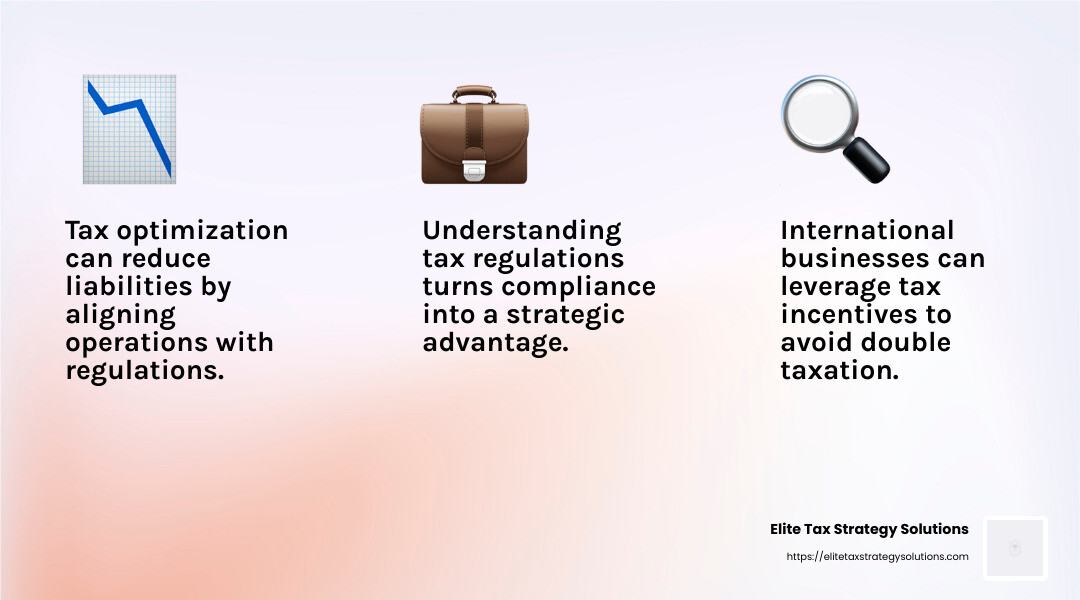
In business, tax compliance is not just about following the rules; it’s about understanding them and using them to your advantage. Companies need to steer a maze of federal, state, and international tax regulations. This can be overwhelming, but with the right strategies, businesses can turn compliance into an opportunity.
Tax optimization is the art of aligning your business operations with tax regulations in a way that minimizes tax liabilities. Imagine a business that, by restructuring its operations, can take advantage of certain tax credits or deductions. This isn’t just about saving money; it’s about making your business more efficient and competitive. For example, businesses operating internationally can reduce the risk of double taxation by understanding and applying international tax incentives.
Tax savings are the direct result of effective tax planning. By staying informed about the latest tax law changes and proactively adjusting strategies, businesses can maximize their tax-saving opportunities. For instance, by utilizing credits and deductions effectively, a company can significantly lower its tax bill. This is where the expertise of a seasoned tax advisor becomes invaluable.
Here’s how tax planning can play out in real life: A small business in Jasper, Indiana, might be eligible for certain state tax incentives that it wasn’t aware of. By working with a tax advisor, the business learns about these incentives and applies them, resulting in substantial savings.
In summary, business tax planning services are not just about avoiding penalties or audits. They’re about leveraging tax laws to your business’s benefit, ensuring compliance while optimizing for savings. With a strategic approach, businesses can reduce their tax burden and focus on what really matters—growth and success.
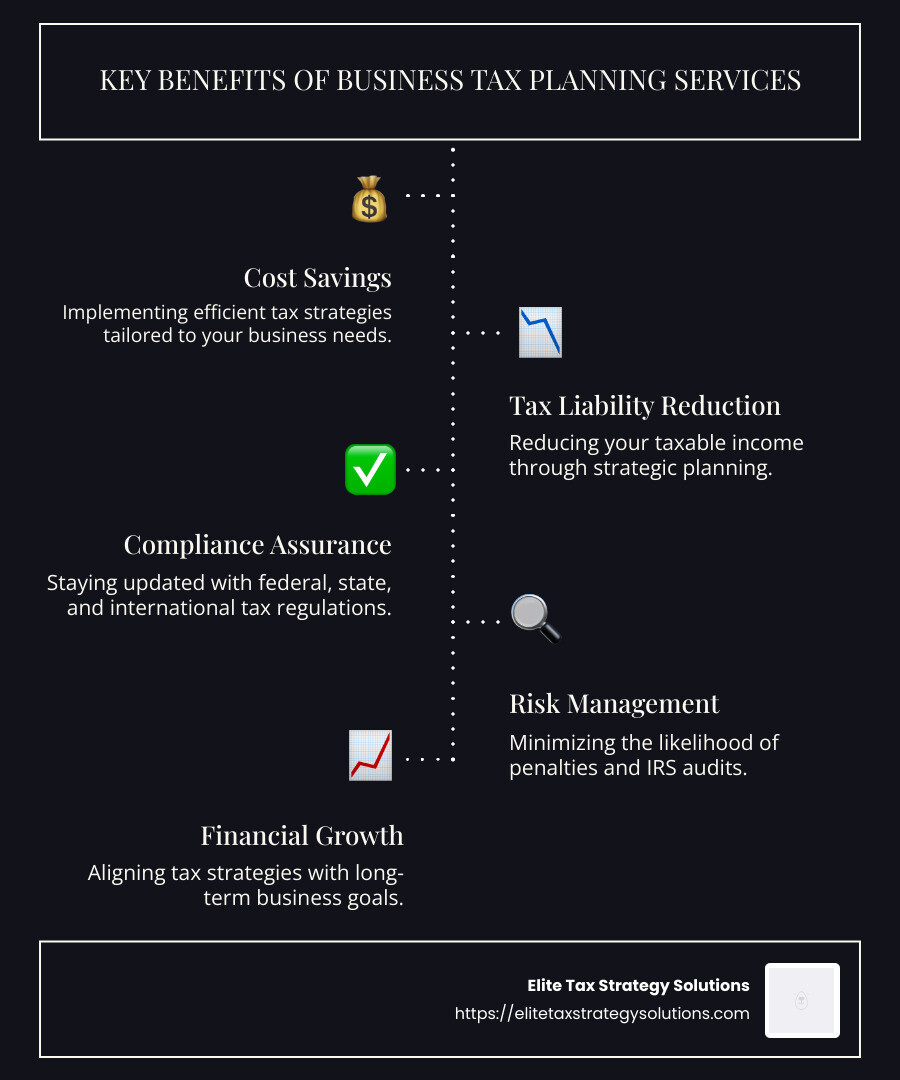
Key Benefits of Business Tax Planning Services
Cost Savings
One of the primary benefits of business tax planning services is the potential for cost savings. By identifying tax credits and deductions, businesses can significantly reduce their tax bill. For example, a company might find it qualifies for research and development tax credits, which can lead to thousands of dollars in savings.
Another way businesses save is by avoiding unnecessary penalties. With professional guidance, companies ensure they meet all filing deadlines and requirements, which helps avoid costly fines.
Tax Liability Reduction
Reducing tax liability is another crucial advantage. Through strategic planning, businesses can lower their taxable income. This might involve restructuring operations or making timely investments that qualify for tax benefits.
For instance, a business might decide to invest in energy-efficient equipment. This not only reduces operational costs but also qualifies for specific tax breaks, further lowering tax liability.
Financial Growth
Beyond immediate savings, effective tax planning supports long-term financial growth. By optimizing tax strategies, businesses free up capital that can be reinvested into growth opportunities.
Consider a company that saves on taxes and uses those savings to expand its product line or enter a new market. The initial tax savings translate into increased revenue and market presence, driving overall financial growth.
In summary, business tax planning services offer a pathway to not only save money but also strategically position a business for future success. By reducing tax liability, businesses can allocate more resources to growth initiatives, ensuring they remain competitive and profitable.
This leads us to explore the common pitfalls businesses should avoid to maximize these benefits.
Common Tax Mistakes to Avoid
When it comes to managing taxes, even small mistakes can lead to big problems. Here are some common tax pitfalls businesses should avoid:
Record Keeping
Good record keeping is essential for accurate tax filing. Without organized records, businesses might miss out on deductions or face audits. Keep all receipts, invoices, and financial statements neatly filed. Use digital tools to track expenses and income regularly.
Bad record keeping can lead to overpaying taxes or missing out on refunds. Make it a habit to update your records monthly to avoid last-minute scrambles.
Missing Deductions
Many businesses lose money simply by not claiming all the deductions they’re entitled to. From office supplies to travel expenses, many costs can be deducted.
It’s crucial to understand what qualifies as a deductible expense. Hiring a tax professional can help identify these opportunities. For instance, small businesses often overlook deductions like home office expenses or vehicle use.
Lack of Professional Guidance
Navigating the tax code can be complex. Without professional guidance, businesses might make costly mistakes. A tax advisor can help you understand the intricacies of tax laws and ensure compliance.
Professional guidance also means having someone to turn to with questions or concerns. This support can prevent errors and provide peace of mind.
Avoiding these mistakes with the help of business tax planning services ensures you’re not leaving money on the table. Proper record keeping, claiming all deductions, and seeking professional advice can significantly impact your financial health.
Next, let’s address some frequently asked questions about business tax planning services.
Frequently Asked Questions about Business Tax Planning Services
How much does a tax planner cost?
The cost of hiring a tax planner can vary widely. It depends on the complexity of your business and the services you need. For small businesses, fees might range from a few hundred to a few thousand dollars per year.
If your business has more complex financial activities, expect to pay more. The investment in a tax planner can often save you money in the long run by optimizing your tax strategy and minimizing liabilities.
What is the difference between a tax planner and a CPA?
A tax planner focuses on creating strategies to minimize your tax liability and improve financial growth. They evaluate your financial situation and suggest ways to optimize your taxes.
On the other hand, a CPA (Certified Public Accountant) offers a broader range of financial services. CPAs handle tax preparation, auditing, and financial reporting. They ensure compliance with tax laws and can represent you during audits.
Both professionals are valuable, but the choice depends on your specific needs. If you need a proactive approach to reduce taxes, a tax planner is ideal. For comprehensive financial services, a CPA might be better suited.
Which tax service is best for small businesses?
For small businesses, choosing the right tax service can make a big difference. Small business tax software is a popular choice for those who prefer a DIY approach. These tools can help you file taxes and keep records organized.
However, software might not offer the personalized touch that some businesses need. In such cases, hiring a tax advisor can be beneficial. They provide custom advice and audit support, ensuring you meet all compliance requirements.
In conclusion, the best tax service depends on your business’s size and complexity. Whether you choose software or a professional, ensure it aligns with your financial goals and offers the support you need.
Conclusion
At Elite Tax Strategy Solutions, we believe that personalized tax planning services are not just a luxury, but a necessity for high-income earners and closely held businesses. Our proactive approach ensures that our clients are not only compliant with current tax regulations but are also maximizing their savings and financial stability.
We understand that every business is unique. That’s why we tailor our services to fit the specific needs of each client. By taking the time to understand your financial situation, we can develop a strategy that aligns with your long-term goals and helps you steer the complexities of tax laws.
Our team of seasoned professionals is dedicated to providing guidance that goes beyond mere tax compliance. We focus on tax optimization, ensuring that you can take full advantage of the available deductions and credits. This approach not only reduces your tax liability but also positions your business for growth.
Choosing the right tax partner can make all the difference. With our expertise and dedication, we aim to be more than just a service provider. We strive to be a trusted advisor, committed to helping you achieve financial success.
For more details on how our business tax planning services can benefit you, visit our Tax Planning for Small Businesses page. Let us help you make strategic moves towards a more secure financial future.