
Business expense categories are crucial for any business aiming to understand and manage its financial landscape. If you’re curious about the key components of business expense categories, here’s a quick overview:
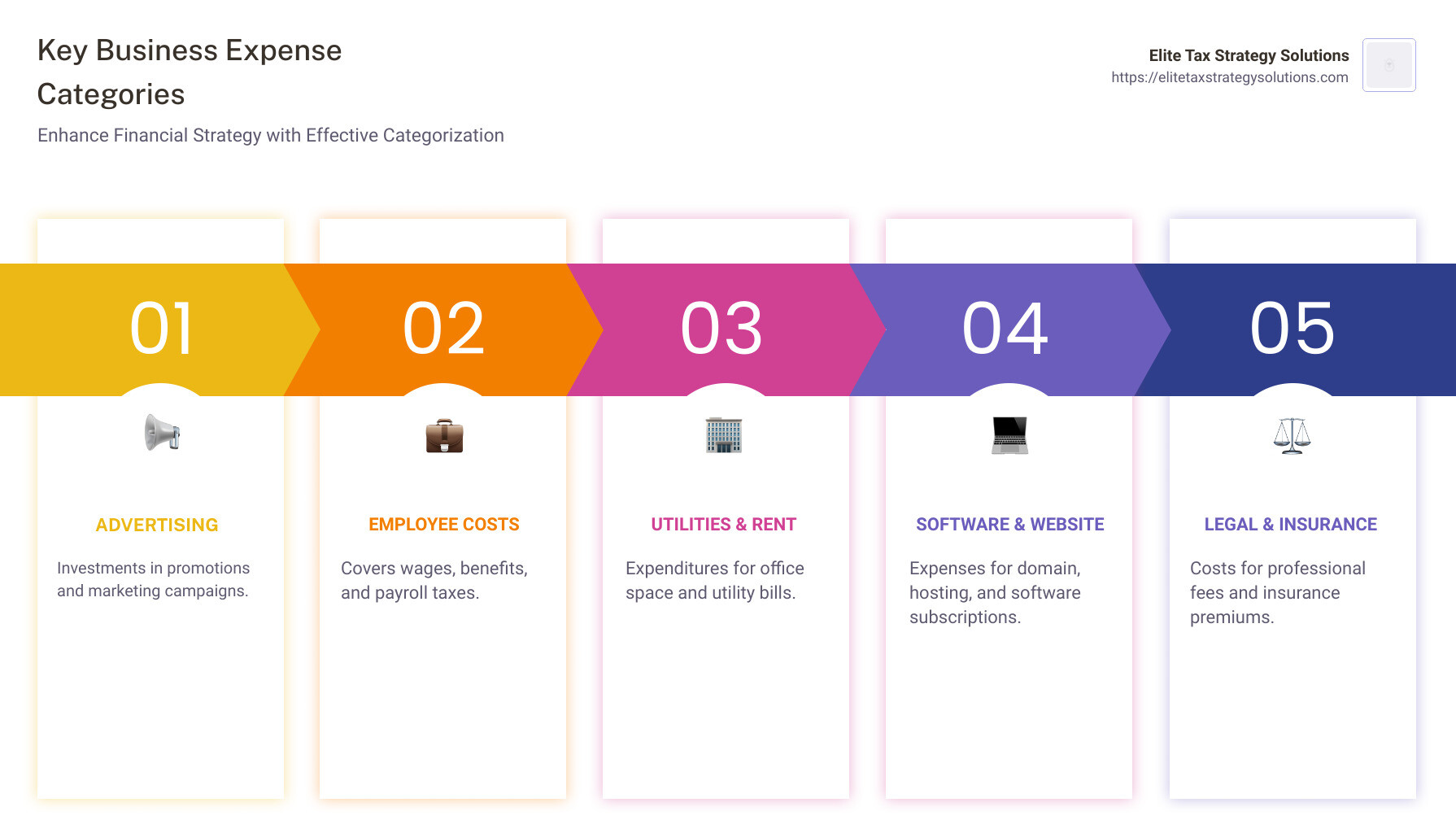
- Advertising and marketing costs: Includes all promotional activities.
- Website and software expenses: Covers domain, hosting, and subscriptions.
- Business meals and travel expenses: Deductible if properly documented.
- Employee wages and benefits: Payroll, health insurance, and retirement plans.
- Rent and utilities: Costs associated with maintaining office space.
- Office supplies and equipment: Day-to-day operational tools.
- Insurance premiums: Business liability, workers’ compensation, etc.
- Legal and professional fees: Charges for expertise and consultation.
- Vehicle expenses: Business use of cars, including mileage and maintenance.
- Membership and subscription fees: Professional associations and publications.
Understanding these categories allows businesses to deduct expenses effectively, optimize tax obligations, and ensure compliance with tax regulations. By organizing expenses into these distinct categories, companies can improve cash flow management and identify opportunities for cost savings.
My name is David Fritch, and I’ve spent over 40 years helping businesses and high-income earners steer their financial strategies. Through my experience with Fritch Law Office and Elite Tax Strategy Solutions, I’ve provided insights into organizing and leveraging business expense categories to maximize tax benefits and achieve financial goals.
Simple guide to business expense categories terms:
– Business tax management
– Comprehensive tax planning
– Tax management services
Understanding Business Expense Categories
When it comes to managing your business finances, understanding business expense categories is key. These categories help you track where your money is going and ensure you’re taking full advantage of tax deductions.
Capital Expenditures vs. Operational Expenditures
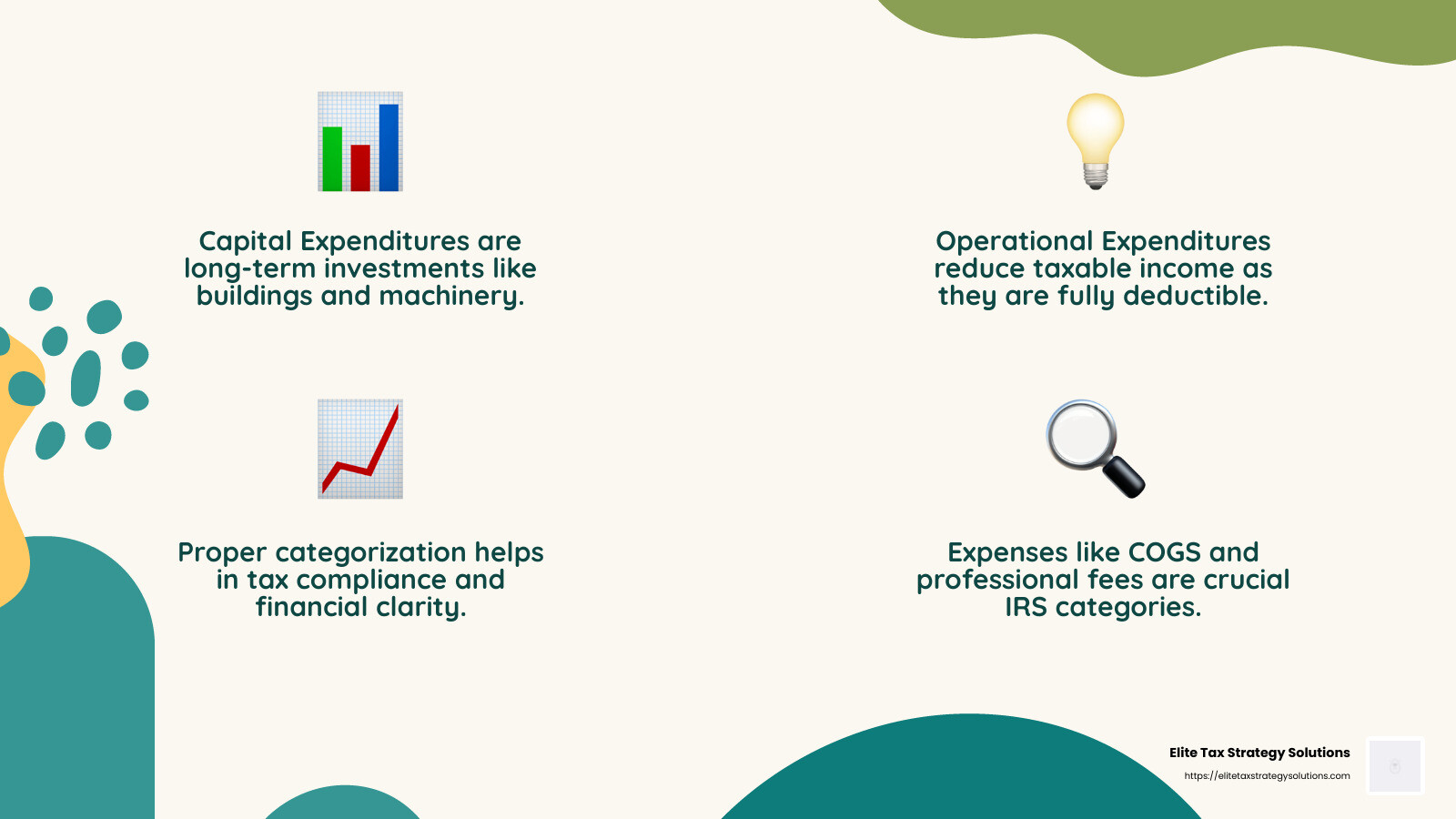
Capital Expenditures (CapEx) are investments in assets that will benefit your business for more than one year. Think of things like purchasing a new building, machinery, or upgrading your IT infrastructure. These are considered long-term investments and are capitalized, meaning you spread the expense over the useful life of the asset.
In contrast, Operational Expenditures (OpEx) are the day-to-day expenses necessary for running your business. These include things like rent, utilities, and office supplies. OpEx is typically fully deductible in the year they are incurred, making them crucial for reducing your taxable income.
IRS Categories
The IRS categorizes business expenses to help you determine what’s deductible. These categories include:
- Cost of Goods Sold (COGS): Direct costs related to producing your product.
- Employee Wages and Benefits: Salaries, health insurance, and other employee-related expenses.
- Rent and Utilities: Costs for office space and essential services like electricity and internet.
- Travel and Meals: Expenses incurred for business travel and meals with clients.
- Professional Fees: Payments for services like accounting and legal advice.
Understanding these categories helps you organize your expenses and ensure compliance with tax laws. It also makes it easier to prepare for tax season and identify areas where you might save money.
By clearly defining and categorizing your expenses, you can gain insights into your spending patterns, optimize your budget, and make informed financial decisions. This strategic approach not only helps in tax planning but also in achieving long-term financial stability.
10 Essential Business Expense Categories
Understanding and organizing your business expense categories is crucial for efficient financial management. Here are ten essential categories that every business should consider:
1. Advertising and Marketing
Promoting your business is key to growth. Advertising expenses can include everything from social media ads to print brochures. According to the IRS, these costs are generally fully deductible, so keep detailed records of every campaign.
2. Employee Costs
This category includes wages, bonuses, and benefits. Employee costs are often the largest expense for a company. Tracking these expenses separately helps you understand their impact on your budget. Payroll taxes should be categorized separately for clarity.
3. Bank Fees
Running a business account often incurs various fees, such as monthly maintenance or transaction charges. These are deductible, so keep track of them. Having a separate business account simplifies this process and helps avoid confusion with personal expenses.
4. Rent
If you lease office space, rent is a significant expense. It’s crucial to record this separately. The interest on your rent payments is likely deductible, providing an opportunity for tax savings.
5. Utilities
Utilities like electricity, water, and internet are essential for daily operations. Track these expenses to manage costs effectively. If you work from home, you might qualify for a home office deduction, which includes a portion of your utilities.
6. Office Supplies
Items like pens, paper, and printer ink may seem minor, but they add up. Keeping a record of these expenses ensures nothing slips through the cracks. It also helps in planning future purchases and sourcing better deals.
7. Business Insurance
Insurance is a necessary safeguard against unforeseen events. This category includes liability insurance, workers’ compensation, and more. Understanding these costs helps you manage risks and budget effectively.
8. Website Expenses
A website is non-negotiable. Costs can include domain registration, hosting fees, and maintenance. Consider whether a simpler site could meet your needs and reduce costs.
9. Software Subscriptions
From design tools to inventory management systems, software subscriptions are a recurring expense. Categorizing these separately helps you evaluate their value and decide if they align with your business needs.
10. Legal Expenses
Legal fees extend beyond litigation. They can include advice from CPAs or financial planners. Tracking these expenses can highlight areas for cost reduction and ensure you’re adequately covered.
By categorizing these essential expenses, you not only streamline your financial operations but also position your business for better budgeting and potential tax savings. This organized approach can lead to more strategic financial planning and improved business health.
How to Categorize Your Business Expenses
Categorizing your business expenses might sound daunting, but it’s essential for smart financial management. Here’s a simple guide to get you started:
Tracking Expenses
The first step in categorizing expenses is tracking them diligently. This means recording every purchase, whether it’s a large equipment buy or a small office supply order. Use accounting software or even a simple spreadsheet to log each expense as it happens. Consistency is key here.
A practical tip: Set aside time weekly to update your expense records. This habit ensures nothing gets overlooked and keeps your financial data current.
Reviewing Financial Accounts
Once you’ve tracked your expenses, the next step is to review your financial accounts. Look at your bank statements, credit card bills, and receipts to ensure everything matches your records. This review helps you spot any discrepancies and understand your spending patterns better.
Consider setting up separate accounts for business and personal expenses. This separation makes it easier to track business-related costs and simplifies tax time.
Grouping Expenses
Now it’s time to group your expenses into categories. This is where you decide how to organize your costs based on their nature. For example, group all advertising-related costs under “Advertising and Marketing” and all software-related costs under “Software Subscriptions.”
Here are some tips for effective grouping:
-
Don’t Overdo It: Aim for simplicity. Too many categories can lead to confusion. Stick to broad categories that capture the essence of your spending.
-
Be Specific: While simplicity is crucial, ensure your categories are specific enough to give you useful insights. For instance, instead of just “Office Expenses,” consider having “Office Supplies” and “Office Equipment” as separate categories.
-
Handle the Unusual: If you encounter expenses that don’t fit neatly into your existing categories, set them aside temporarily. Revisit them later with a fresh perspective or create an “Other” category for such costs.
-
Update Regularly: Your business evolves, and so should your expense categories. Review and adjust your categories periodically to reflect any changes in your spending patterns.
By following these steps, you’ll develop a robust system for organizing your business expenses. This system not only makes financial management more straightforward but also improves your ability to make informed business decisions.
Next, we’ll explore the benefits of proper expense categorization and how it can lead to data-driven decisions, better budgeting, and cost savings.
Benefits of Proper Expense Categorization
Properly categorizing your business expenses isn’t just about ticking boxes for tax season. It’s a powerful tool that can transform your financial management. Let’s explore how effective business expense categories can lead to smarter decisions, more accurate budgeting, and significant cost savings.
Data-Driven Decisions
When your expenses are well-organized, you gain a clear picture of where your money is going. This clarity allows for data-driven decisions. Imagine you’re running a small marketing agency. By categorizing expenses, you might notice that a large chunk of your budget goes to online advertising. With this insight, you can assess whether the return on investment justifies the cost or if reallocating funds might yield better results.
“Tracking your spending helps you see what the different aspects of your business really cost.”
Budgeting
Effective categorization is the backbone of successful budgeting. It allows you to see spending trends over time, helping you forecast future expenses more accurately. For instance, if you notice a spike in employee costs each December due to bonuses, you can plan for it in your annual budget. This foresight prevents cash flow issues and ensures you’re prepared for predictable expenses.
Cost Savings
Identifying areas where you can cut costs is another advantage of proper categorization. When you categorize expenses, you can easily spot areas where you’re overspending. Perhaps you realize that your office supply costs are unusually high. With this knowledge, you can negotiate better deals with suppliers or explore more cost-effective alternatives.
Moreover, by categorizing expenses, you can ensure you’re maximizing potential tax deductions. For example, many advertising costs are tax-deductible. By accurately categorizing these expenses, you can take full advantage of these deductions, ultimately saving money.
By embracing these benefits, you’re not just organizing your expenses—you’re empowering your business to operate more efficiently and profitably.
Next, we’ll tackle some frequently asked questions about business expense categories, including IRS guidelines and practical tips for categorizing your expenses.
Frequently Asked Questions about Business Expense Categories
What are the IRS categories for business expenses?
The IRS defines business expenses as costs that are “ordinary and necessary” for your industry. These expenses are divided into several categories for tax purposes. Some key categories include advertising and marketing, employee wages, bank fees, utilities, office supplies, and more.
Understanding these categories is crucial because it helps you identify which expenses are deductible. For example, most advertising costs are fully deductible, so keeping track of these can reduce your taxable income significantly. To see a comprehensive list, refer to IRS guidelines, which are frequently updated to reflect current tax laws.
How do I categorize my expenses?
Categorizing your expenses doesn’t have to be complicated. Start by tracking expenses carefully. Use financial software or even a simple spreadsheet to record each expense as it occurs.
Review your financial records regularly to identify patterns and group similar expenses together. For instance, group all costs related to your office under “office supplies” or “rent.”
Capital expenditures (like buying new equipment) should be separated from operational expenditures (like electricity bills). Capital expenditures are usually spread over several years through depreciation, while operational expenditures are often fully deductible in the year they’re incurred.
Do I need to categorize business expenses?
Absolutely. Categorizing business expenses is not just a good practice; it’s essential for both capital expenditures and operational expenditures. Proper categorization helps you understand your financial health, aids in budgeting, and ensures compliance with tax regulations.
By categorizing expenses, you can also maximize tax deductions, leading to potential cost savings. This process simplifies tax filing and helps you avoid potential audits by maintaining clear and organized financial records.
Next, we’ll wrap up with some final thoughts on how Elite Tax Strategy Solutions can help optimize your financial stability through effective tax planning.
Conclusion
In business, understanding and managing business expense categories is a game-changer. At Elite Tax Strategy Solutions, we specialize in helping you steer this complex landscape. Our expert team is dedicated to maximizing your tax savings and ensuring your financial stability.
Why Choose Us?
We offer personalized, proactive tax planning services custom to your unique needs. Our approach goes beyond mere compliance. We aim to optimize your tax position, allowing you to focus on what you do best—growing your business.
Tax Optimization and Financial Stability
Proper categorization of business expenses is crucial for tax optimization. By identifying deductible expenses, you can significantly reduce your taxable income. This not only saves money but also provides a clearer picture of your financial health, enabling better budgeting and strategic planning.
With our expertise, we help you make data-driven decisions that improve your financial stability. We stay ahead of tax law changes, ensuring that your strategies are always up-to-date and effective.
Ready to take control of your business finances? Let us guide you to a more secure financial future. Learn more about our small business tax strategies here.
In conclusion, categorizing your business expenses is more than a task—it’s a strategic tool. With Elite Tax Strategy Solutions by your side, you can confidently steer this process, optimize your taxes, and secure long-term financial success.